 Bug FAQ
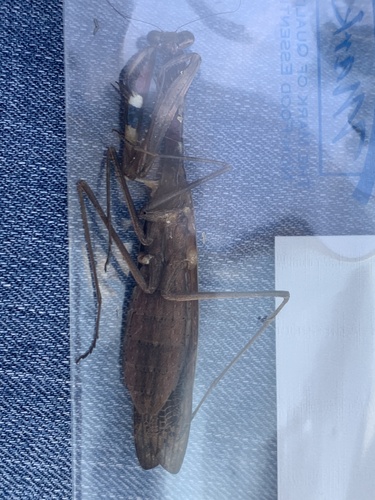
Asian Jumping Mantis
Statilia maculata · Order: Mantodea · Family: Mantidae
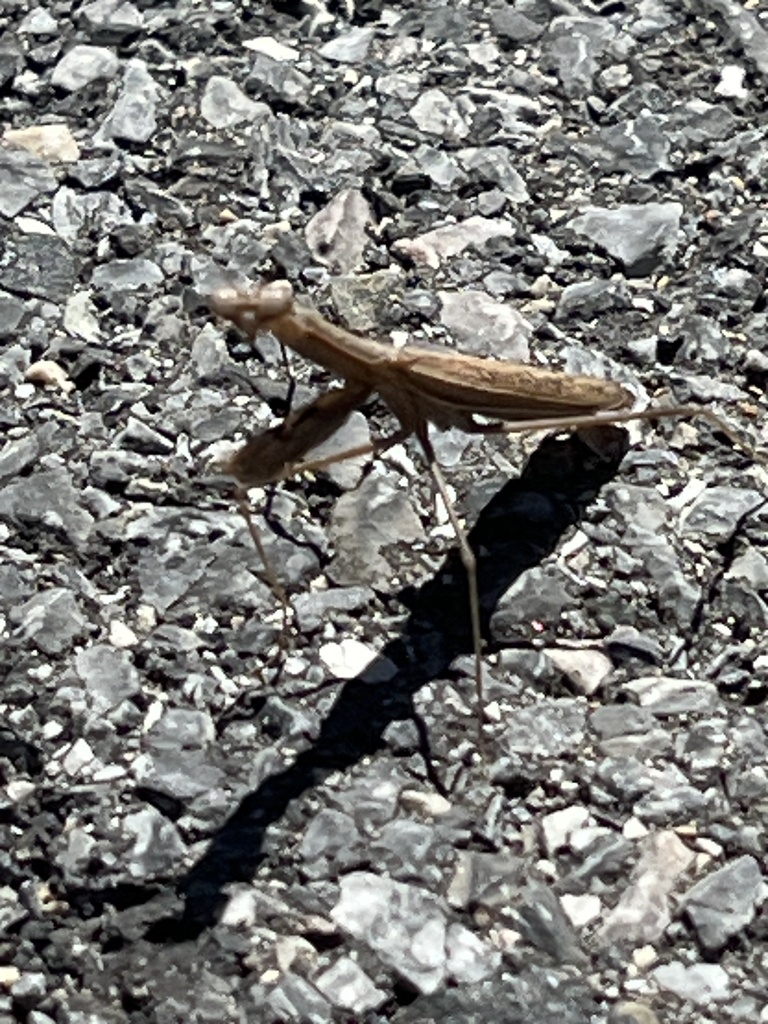
Adult males measure about 40 to 50 mm and females about 45 to 58 mm in length. It is native to parts of Asia, including Russia, China, Japan, Korea and Sri Lanka. In Japan the mantis is eaten after removing wings, limbs and guts, and its egg cases are used medicinally in Japan and China.
Source: Wikipedia
Size
Males are 40 to 50 mm long as adults. Females are 45 to 58 mm long as adults.
Source: Wikipedia
What it eats
In Japan the mantis is cooked after removing wings, limbs and guts. Its egg cases are used for medicinal purposes in Japan and China.
Source: Wikipedia
Where it is found in the US
Recorded in 10 of 51 states and DC. Most records: Maryland, Virginia, New York, District of Columbia, New Jersey, Pennsylvania, Delaware, Indiana.
Darker = more records. Counts are museum and citizen-science records, not population size.
Source: GBIF
Status: introduced in North America; introduced in United States. Source: iNaturalist
Months it is reported in the US
Source: GBIF
More photos
Questions people ask
How is the Asian jumping mantis used as food?
In Japan the mantis is cooked after the wings, limbs and guts are removed.
Source: Wikipedia
Are the egg cases of this mantis used medicinally?
Yes, the egg cases are used for medicinal purposes in Japan and China.
Source: Wikipedia
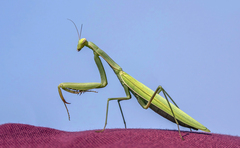
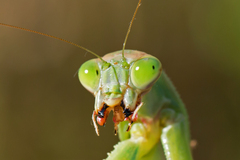
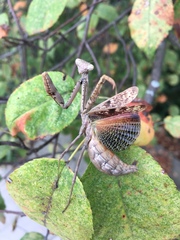
Same family (Mantidae)
Sources
- Wikipedia: https://en.wikipedia.org/wiki/Statilia_maculata
Look it up elsewhere: GBIF · iNaturalist · BugGuide · Wikipedia
Text written 2026-10-22 from the sources above and checked sentence by sentence against them. Data fetched 2026-10-22.