 Bug FAQ
Asian Comma
Polygonia c-aureum · Order: Lepidoptera · Family: Nymphalidae
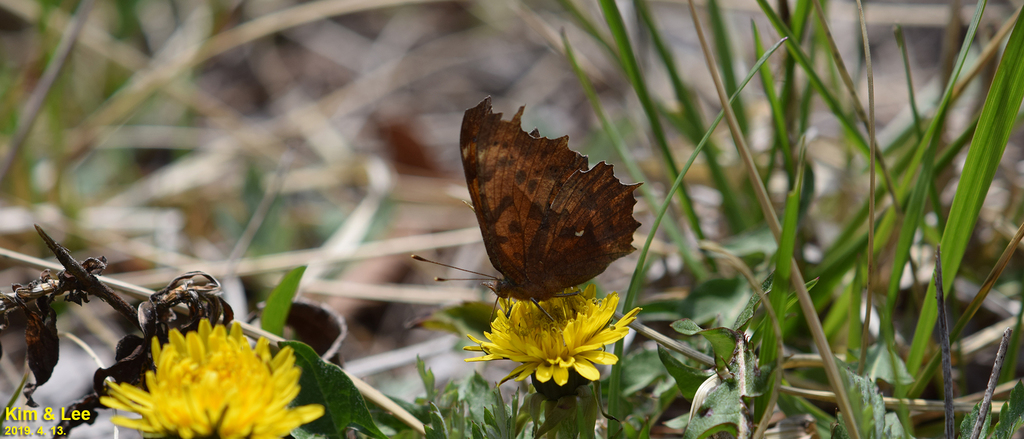
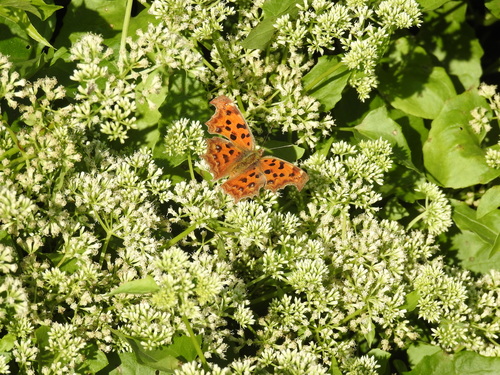
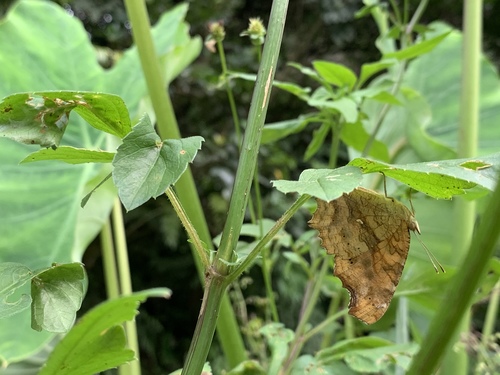
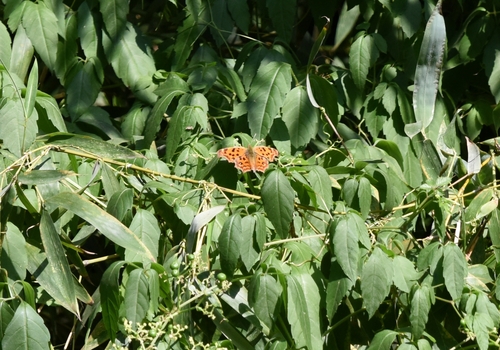
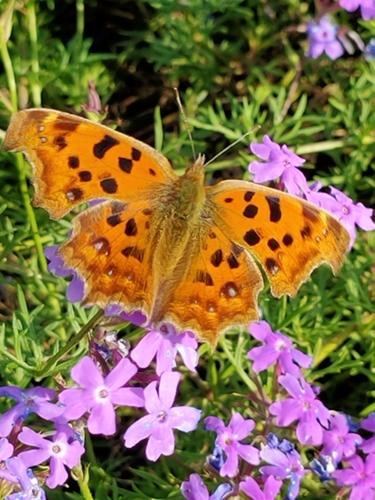
The Asian comma has a wingspan of about 27 mm and orange wings with black dots on top. Its underside is mottled brown like tree bark and shows a shiny comma-shaped mark on the centre of the hindwing, with bluish markings that set it apart from other comma butterflies. It is common in suburban areas across Japan, Korea, China, Taiwan and Indochina and its larvae feed on Japanese hop (Humulus japonicus).
Source: Wikipedia
How to recognize it
The upper wings are orange with black dots. The underside is mottled brown and has a shiny comma mark in the centre of the hindwing, plus bluish markings on the lower hindwing.
Source: Wikipedia
Size
Wingspan is about 27 mm.
Source: Wikipedia
Where it lives
It is common in suburban areas.
Source: Wikipedia
What it eats
Caterpillars feed on Japanese hop (Humulus japonicus).
Source: Wikipedia
Life cycle
The species is not threatened.
Source: Wikipedia
Where it comes from
Found from Hokkaidō to Tanegashima in Japan, the Korean Peninsula, China, Taiwan and Indochina.
Source: Wikipedia
Lookalikes
Blueish markings on the underside of the hindwing distinguish it from other comma butterflies.
Source: Wikipedia
More photos
Questions people ask
What does the comma mark look like?
A shiny, comma-shaped spot appears in the centre of the hindwing’s underside.
Source: Wikipedia
Where can I find the Asian comma?
It is common in suburban gardens throughout Japan, Korea, China, Taiwan and Indochina.
Source: Wikipedia
Same family (Nymphalidae)






Sources
- Wikipedia: https://en.wikipedia.org/wiki/Polygonia_c-aureum
Look it up elsewhere: GBIF · iNaturalist · BugGuide · Wikipedia
Text written 2026-10-22 from the sources above and checked sentence by sentence against them. Data fetched 2026-10-22.