 Bug FAQ
Asian Chestnut Gall Wasp
Dryocosmus kuriphilus · Order: Hymenoptera · Family: Cynipidae
Also called: Chestnut Gall Wasp, Oriental chestnut gall wasp
Source: Wikipedia

Females are tiny, about 2.5 to 3 mm long, glossy black with brown legs. They lay eggs in chestnut buds in summer, and the larvae develop inside galls that damage new growth, cutting fruit production by up to 70 % and sometimes killing the tree.
Source: Wikipedia
How to recognize it
The adult female is shiny black, 2.5 to 3 mm long, with brown legs.
Source: Wikipedia
Size
Females measure roughly 2.5 to 3 mm in length.
Source: Wikipedia
Is it a pest in the house?
It attacks many chestnut species, including cultivated varieties, and the galls can damage the tree enough to kill it.
Source: Wikipedia
Does it bite or sting?
No male has ever been observed, and the species is noted for its impact on chestnut crops rather than any bite or sting.
Source: Wikipedia
How to get rid of it
Removing infested buds and covering buds with netting can help manage the wasp. Introducing the parasitoid Torymus sinensis has been an effective biological control method.
Source: Wikipedia
Where it lives
It attacks many chestnut species, including most cultivated varieties, and is regarded as the world’s worst chestnut pest.
Source: Wikipedia
What it eats
Females insert eggs into chestnut buds, and the hatched larvae feed inside protective galls.
Source: Wikipedia
Life cycle
The species reproduces asexually, producing fertile eggs without males. Larvae hatch but pause growth until the following spring when chestnut buds develop.
Source: Wikipedia
When you see it
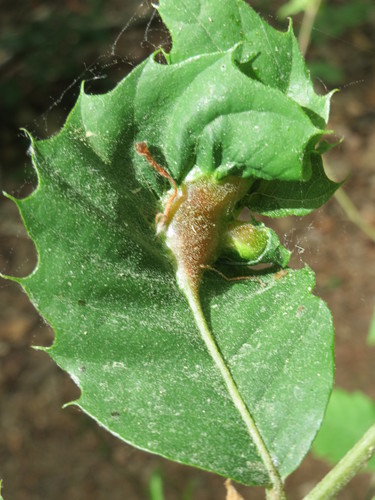
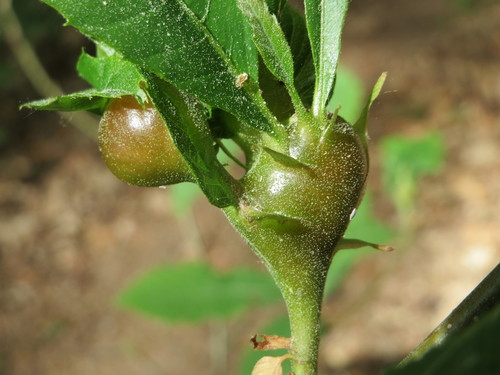
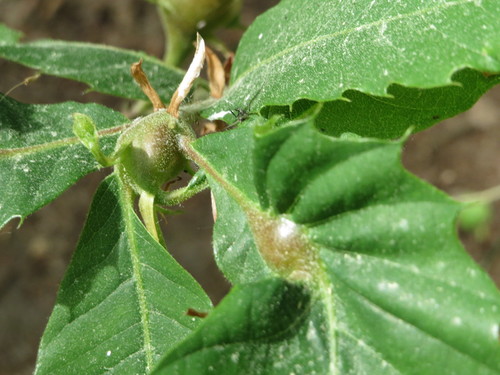
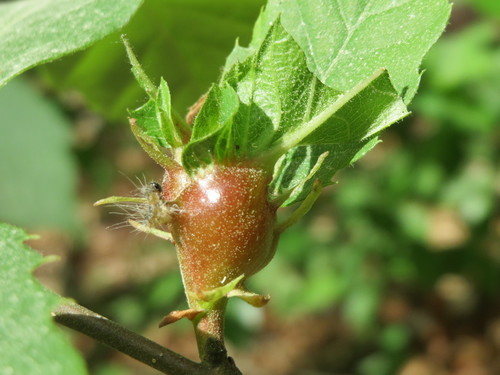
Egg-laying occurs during the summer months. The resulting galls appear on new growth and can severely reduce the tree’s fruit yield.
Source: Wikipedia
Where it comes from
The wasp originates from China.
Source: Wikipedia
Where it is found in the US
Recorded in 14 of 51 states and DC. Most records: Ohio, Massachusetts, Virginia, Tennessee, New York, Pennsylvania, Connecticut, Georgia.
Darker = more records. Counts are museum and citizen-science records, not population size.
Source: GBIF
Status: introduced in United States. Source: iNaturalist
Months it is reported in the US
Source: GBIF
More photos
Questions people ask
How can I control Asian chestnut gall wasp?
Prune off infected buds and protect new buds with netting; releasing the parasitoid Torymus sinensis has also worked well.
Source: Wikipedia
When does the wasp lay its eggs?
Eggs are deposited in chestnut buds during the summer.
Source: Wikipedia
What damage does the gall wasp cause?
Its galls form on new growth, can cut fruit yield by up to 70 % and may even kill the tree.
Source: Wikipedia
Same family (Cynipidae)


Sources
- Wikipedia: https://en.wikipedia.org/wiki/Dryocosmus_kuriphilus
Look it up elsewhere: GBIF · iNaturalist · BugGuide · ITIS · Wikipedia
Text written 2026-10-23 from the sources above and checked sentence by sentence against them. Data fetched 2026-10-22.