 Bug FAQ
Ash Bark Beetle
Hylesinus varius · Order: Coleoptera · Family: Curculionidae
Source: Wikipedia
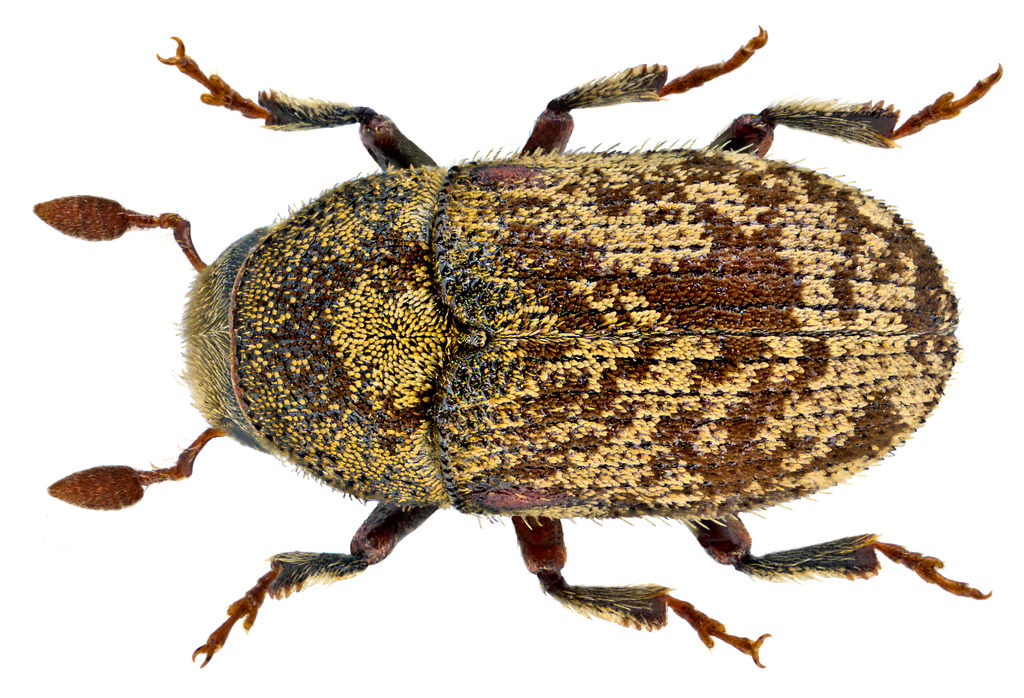
Adult Hylesinus varius are tiny beetles about 2.5 to 3.5 mm long and have a mottled yellow-brown, overlapping scale covering the back. They live in the bark of many hardwoods, especially ash species, and feed under the green bark of crowns and young poles, where they also hibernate. One generation appears each year, flying from March to May when temperatures reach about 16 °C, and the next generation emerges in July-August, often in large numbers.
Source: Wikipedia
How to recognize it
The beetle’s back is covered with overlapping yellow-brown scales that give it a mottled look.
Source: Wikipedia
Size
Adults measure between 2.5 and 3.5 mm in length.
Source: Wikipedia
Is it a pest in the house?
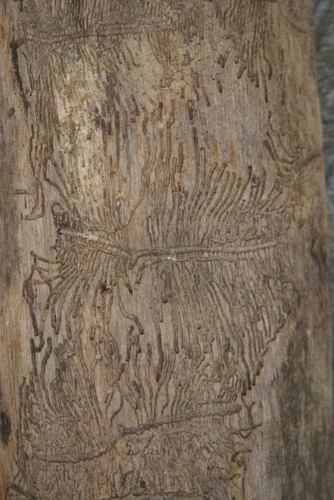
Feeding under the bark creates small crab-like spots that later develop into beetle scabs.
Source: Wikipedia
Where it lives
It is found on a wide range of trees such as ash, olive, walnut, oak, pear, apple, locust, beech, maple, hazel, hornbeam and lilac. The beetle lives in the bark and the area immediately around it.
Source: Wikipedia
What it eats
It feeds beneath the green bark of tree crowns or young poles. It also spends the winter hibernating in these bark growths.
Source: Wikipedia
Life cycle
One generation develops each year, with adults taking flight from March to May once temperatures reach about 16 °C. The next generation of adults emerges in July and August.
Source: Wikipedia
When you see it
Large numbers of adults emerge during their flight period.
Source: Wikipedia
Where it comes from
The species is widespread across Europe, reaching as far east as the Ural Mountains.
Source: Wikipedia
Where it is found in the US
Recorded in 5 of 51 states and DC. Most records: California, Alaska, Pennsylvania, Montana, Washington.
Darker = more records. Counts are museum and citizen-science records, not population size.
Source: GBIF
Months it is reported in the US
Source: GBIF
More photos
Questions people ask
When are Hylesinus varius adults active?
Adults fly from March to May when it’s about 16 °C, and a second wave appears in July-August.
Source: Wikipedia
How does this beetle damage trees?
It feeds under the green bark, leaving tiny spots that turn into beetle scabs, which can weaken the bark.
Source: Wikipedia
What trees does it infest?
It is commonly found on ash, olive, walnut, oak, pear, apple, locust, beech, maple, hazel, hornbeam and lilac.
Source: Wikipedia
Same family (Curculionidae)
 Green Immigrant Leaf WeevilPolydrusus formosusDamages trees, gardens or crops
 Black Vine WeevilOtiorhynchus sulcatusDamages trees, gardens or crops
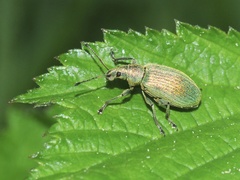 Nettle weevilPhyllobius pomaceusDamages trees, gardens or crops
 Asian Oak WeevilCyrtepistomus castaneusDamages trees, gardens or crops
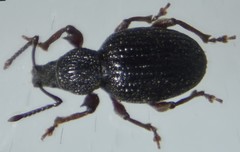 Strawberry Root WeevilOtiorhynchus ovatusDamages trees, gardens or crops
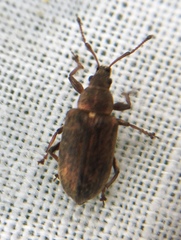 Common Leaf WeevilPhyllobius pyriDamages trees, gardens or crops
Sources
- Wikipedia: https://en.wikipedia.org/wiki/Hylesinus_fraxini
Look it up elsewhere: GBIF · iNaturalist · BugGuide · Wikipedia
Text written 2026-10-24 from the sources above and checked sentence by sentence against them. Data fetched 2026-10-24.