 Bug FAQ
Great Spangled Fritillary
Argynnis cybele · Order: Lepidoptera · Family: Nymphalidae
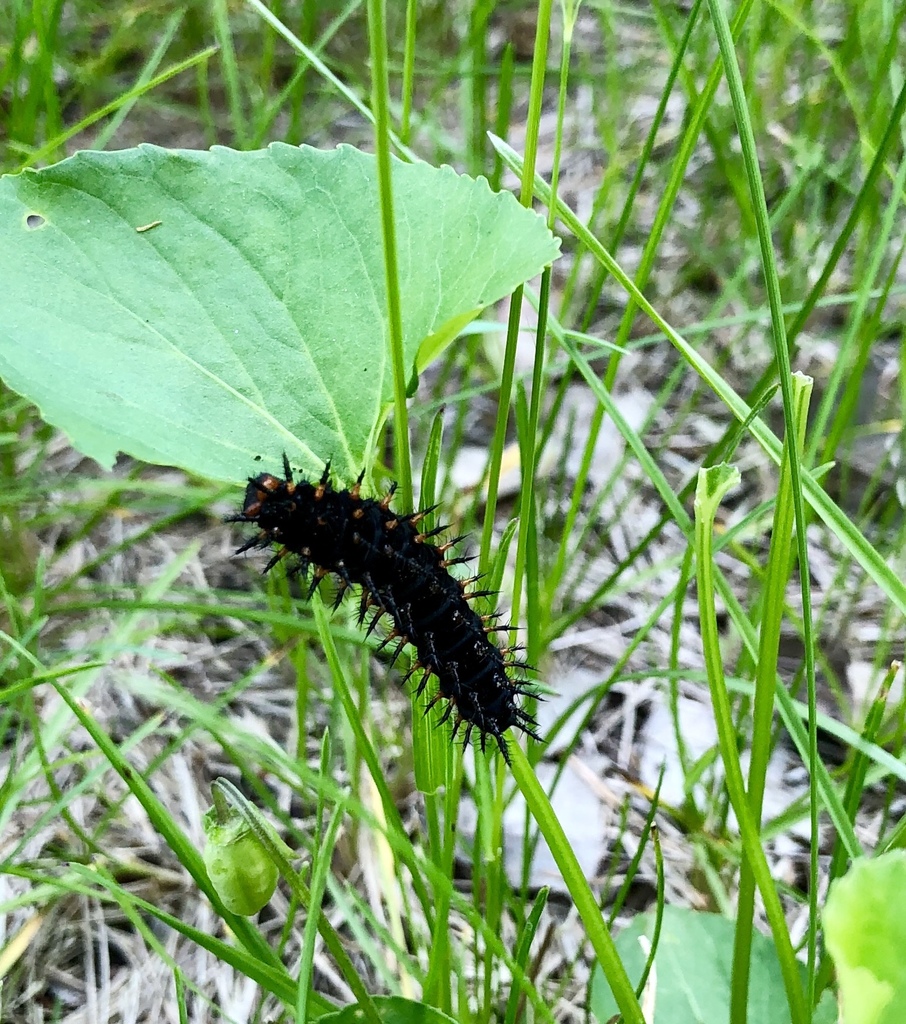
The great spangled fritillary is a North American butterfly with a wingspan of about 62 to 88 mm (2.4 to 3.5 in). It lives in moist meadows and at the edges of woods across a broad range from southern Canada to northern California and North Carolina. Caterpillars feed on native violet species, and adults can be confused with other Speyria fritillaries but have distinctive black dashes and a wide light band on the hindwing.
Source: Wikipedia
How to recognize it
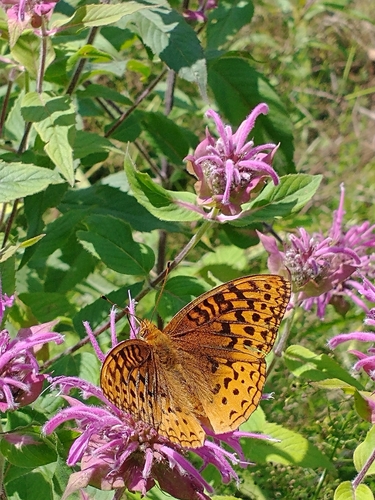
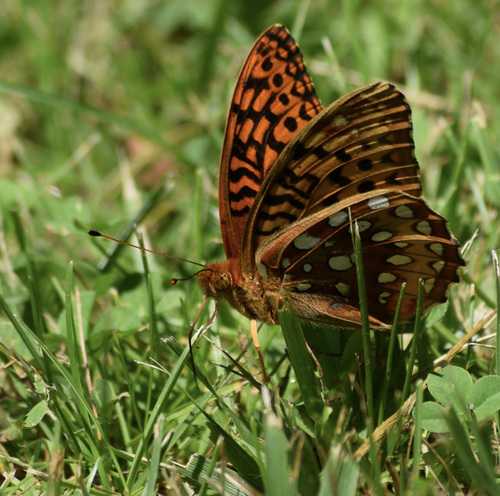
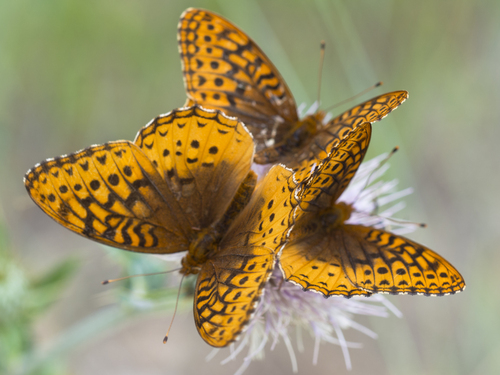
The upper side is orange with five black dashes near the forewing base and irregular dashes at the hindwing base, plus two rows of black crescents along the wing edges. It differs from similar fritillaries by a broad light sub-marginal band on the hindwing and black dashes rather than spots on the forewing margins.
Source: Wikipedia
Where it lives
Found in moist meadows and woodland edges.
Source: Wikipedia
What it eats
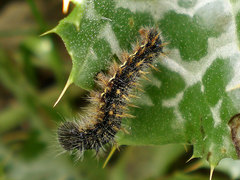
Larvae feed on various native violet species.
Source: Wikipedia
Where it comes from
Occurs from southern Canada west to northern California and east to North Carolina.
Source: Wikipedia
Lookalikes
Similar species are the Aphrodite fritillary, Atlantis fritillary, and northwestern fritillary.
Source: Wikipedia
Where it is found in the US
Recorded in 48 of 51 states and DC. Most records: Illinois, Vermont, Virginia, Pennsylvania, Ohio, New York, Missouri, Tennessee.
Darker = more records. Counts are museum and citizen-science records, not population size.
Source: GBIF
Status: native in North America; native in Canada; native in United States. Source: iNaturalist
Months it is reported in the US
Source: GBIF
More photos
Same family (Nymphalidae)





Sources
- Wikipedia: https://en.wikipedia.org/wiki/Great_spangled_fritillary
Look it up elsewhere: GBIF · iNaturalist · BugGuide · ITIS · Wikipedia
Text written 2026-10-22 from the sources above and checked sentence by sentence against them. Data fetched 2026-10-22.