 Bug FAQ
Argentine Bagworm
Oiketicus kirbyi · Order: Lepidoptera · Family: Psychidae
Source: Wikipedia

The larvae eat a wide range of plants, including banana, cacao, oil palm, coconut, citrus, teak, eucalyptus, avocado, loquat and tropical almond. It is a major pest in Peruvian avocado orchards, where it can reduce fruit yield.
Source: Wikipedia
How to recognize it
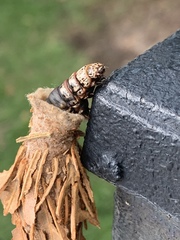
Adults look very different between sexes, with females lacking wings.
Source: Wikipedia
Size
Female adults have no wings.
Source: Wikipedia
Is it a pest in the house?
It is a key pest in Peruvian avocado orchards.
Source: Wikipedia
Where it lives
It lives in lowland areas from Argentina up through Mexico and on Caribbean islands.
Source: Wikipedia
What it eats
Larvae feed on many plants such as banana, cacao, oil palm, coconut, citrus, teak, eucalyptus, avocado, loquat and tropical almond.
Source: Wikipedia
Where it comes from
Its native range covers lowlands from Argentina to Mexico and the Caribbean islands.
Source: Wikipedia
More photos


Questions people ask
What crops does the Argentine Bagworm damage?
Its larvae feed on banana, cacao, oil palm, coconut, citrus, teak, eucalyptus, avocado, loquat and tropical almond.
Source: Wikipedia
Is the Argentine Bagworm a problem for avocado trees?
Yes, it is a key pest in avocado orchards, especially in Peru.
Source: Wikipedia
Where is the Argentine Bagworm found?
It occurs in lowland regions from Argentina through Mexico and on Caribbean islands.
Source: Wikipedia
How can I tell male and female Argentine Bagworms apart?
Females are wingless, while males have wings, showing strong sexual dimorphism.
Source: Wikipedia
Same family (Psychidae)


Sources
- Wikipedia: https://en.wikipedia.org/wiki/Oiketicus_kirbyi
Look it up elsewhere: GBIF · iNaturalist · BugGuide · Wikipedia
Text written 2026-10-23 from the sources above and checked sentence by sentence against them. Data fetched 2026-10-22.