 Bug FAQ
Evergreen Bagworm Moth
Thyridopteryx ephemeraeformis · Order: Lepidoptera · Family: Psychidae
Also called: Common bagworm, Common basket worm, Eastern bagworm, Evergreen Bagworm
Source: Wikipedia
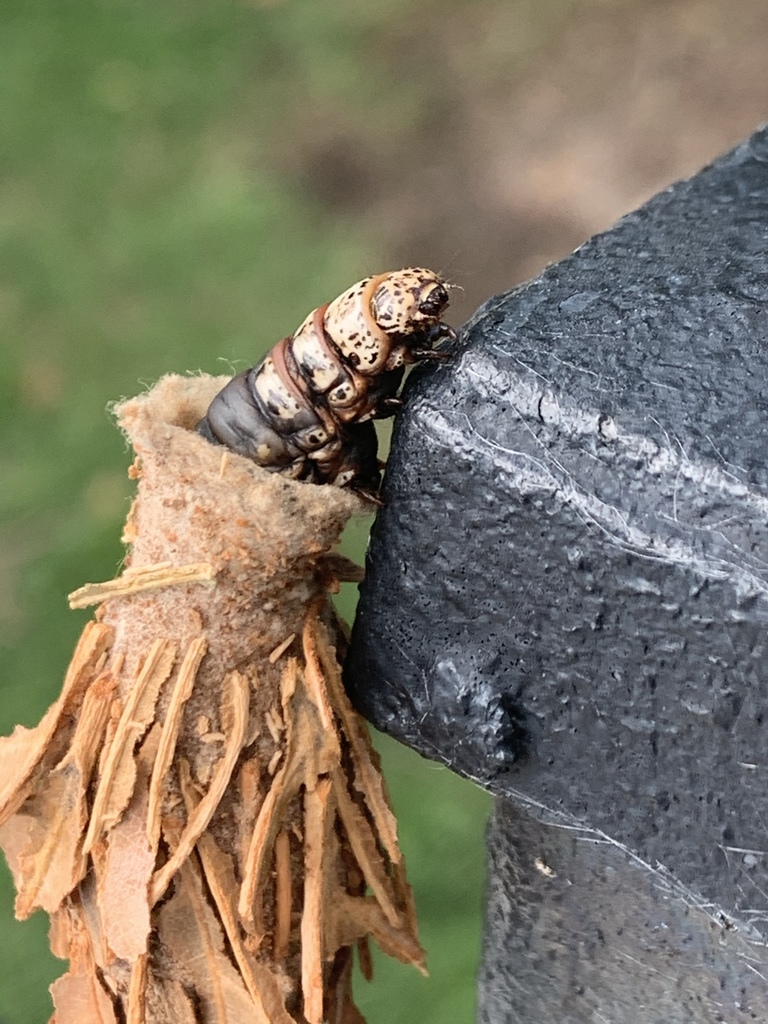
Males have a 25 mm wingspan with clear wings and a fuzzy black body, while females look like yellow-white maggots about 20 mm long. The larvae feed on the leaves and buds of many trees, especially arborvitae and red cedar, and can defoliate and kill the host.
Source: Wikipedia
How to recognize it
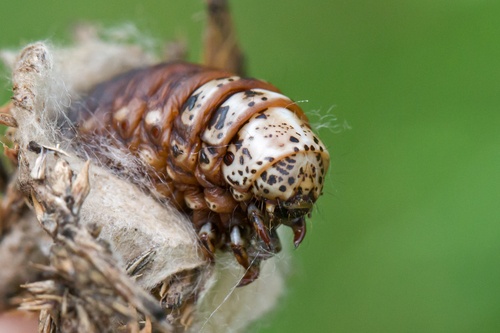
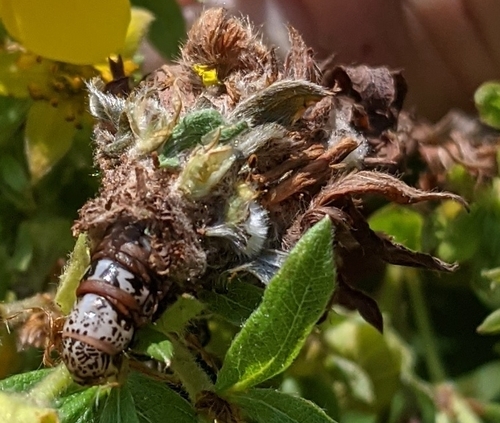
Newly hatched larvae are dark black and become brown-tan with black mottling as they grow. Adult females are soft, yellow-white maggot-like bodies 19 to 23 mm long with small hair tufts near the abdomen tip.
Source: Wikipedia
Size
Males have a wingspan of about 25 mm and transparent wings. Females are 19 to 23 mm long and lack wings.
Source: Wikipedia
Is it a pest in the house?
Bagworms have a voracious appetite and are considered a serious pest. Heavy feeding can defoliate host trees and eventually kill them if not controlled.
Source: Wikipedia
How to get rid of it
If discovered early, remove last year’s cases by hand before the end of May. Bacterial sprays (Bt/Spinosad) and insecticides like carbaryl can be applied to control infestations.
Source: Wikipedia
Where it lives
They thrive in urban areas where few predators are present. Mature larvae may stay on the host tree or move nearby before attaching for pupation.
Source: Wikipedia
What it eats
Larvae eat leaves and buds of their host trees. Preferred hosts are arborvitae and red cedar, but they will feed on over 100 other tree species.
Source: Wikipedia
Life cycle
In mid-August mature larvae spin silk, hang head-down from a branch, and pupate.
Source: Wikipedia
When you see it
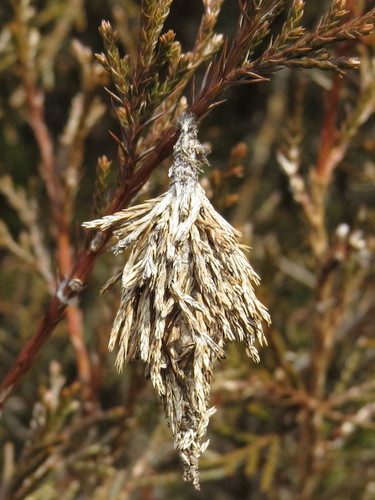
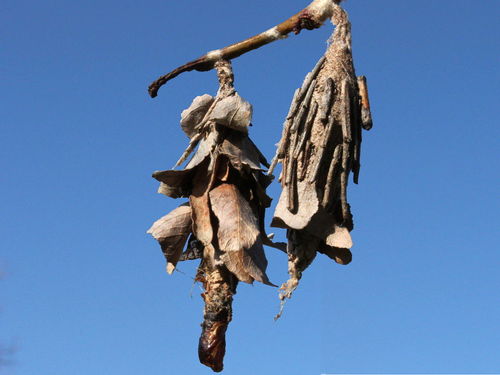
The bags are easiest to spot in fall when they turn brown on evergreen trees.
Source: Wikipedia
Where it comes from
In North America they occur from New England west to Nebraska and south along the Gulf to Texas. They have also been reported in South Africa, Croatia, and northeastern Iran.
Source: Wikipedia
Lookalikes
Bagworms are often parasitized by ichneumonid wasps such as Itoplectis conquisitor. Natural predators include vespid wasps, hornets, woodpeckers, and sapsuckers.
Source: Wikipedia
Where it is found in the US
Recorded in 39 of 51 states and DC. Most records: Texas, Virginia, Oklahoma, Pennsylvania, Maryland, Illinois, New Jersey, Kansas.
Darker = more records. Counts are museum and citizen-science records, not population size.
Source: GBIF
Status: native in North America; native in Canada; native in United States. Source: iNaturalist
Months it is reported in the US
Source: GBIF
More photos
Questions people ask
How can I get rid of bagworms on my trees?
Remove the old bags by hand early in the season and treat with Bt, Spinosad, or carbaryl if needed.
Source: Wikipedia
Same family (Psychidae)
Sources
- Wikipedia: https://en.wikipedia.org/wiki/Evergreen_bagworm
Look it up elsewhere: GBIF · iNaturalist · BugGuide · Wikipedia
Text written 2026-10-22 from the sources above and checked sentence by sentence against them. Data fetched 2026-10-22.