 Bug FAQ
New Zealand Common Bag Moth
Liothula omnivora · Order: Lepidoptera · Family: Psychidae
Also called: Common Bag Moth
Source: Wikipedia
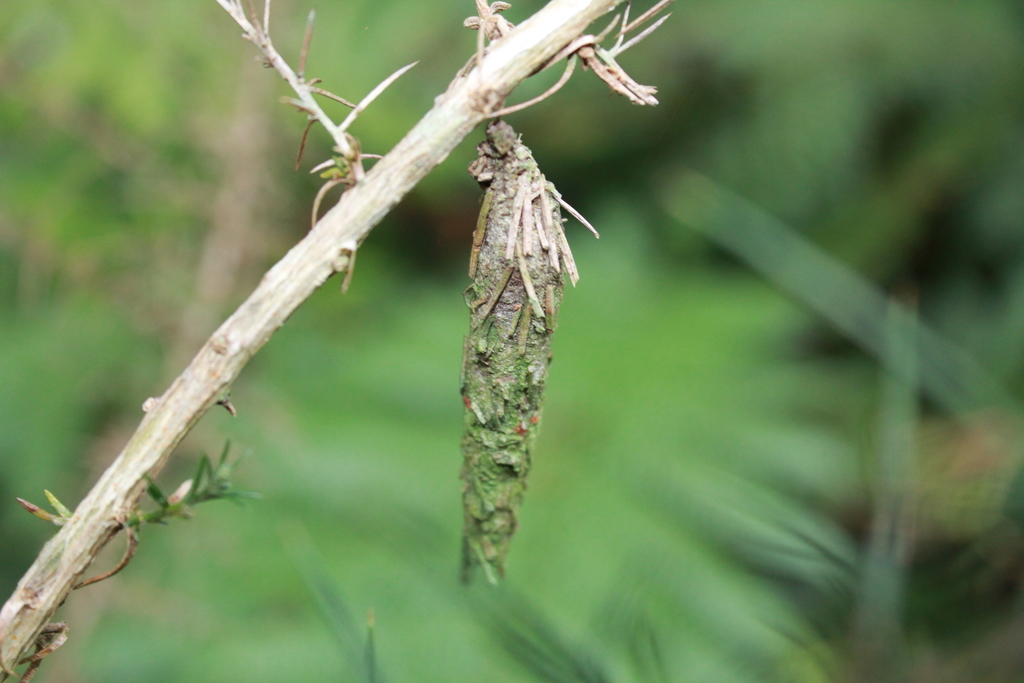
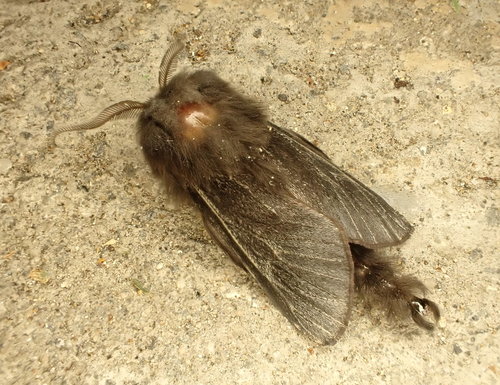
Males are small black moths with a wingspan of about 3 cm, while females stay inside a silk bag and never fly. Caterpillars live inside a portable silk bag and eat a wide range of broad-leaved and coniferous plants at night. They are native to New Zealand and many other Psychidae species look similar.
Source: Wikipedia
How to recognize it
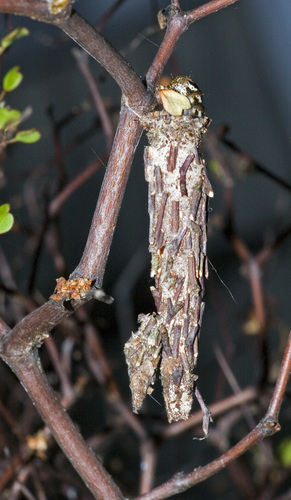
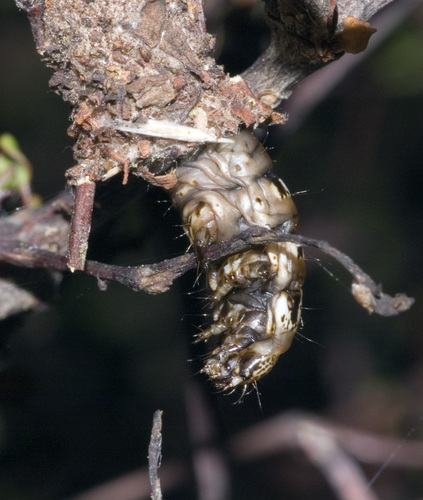
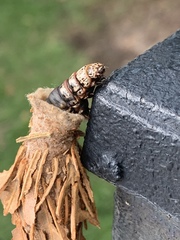
The caterpillar’s head and thorax are speckled black or brown and white, while the rest of its body is plain brown. Female bags are slightly larger than male bags, averaging about 45 mm versus 42 mm.
Source: Wikipedia
Size
Male moths have a wingspan between 28 and 38 mm.
Source: Wikipedia
Where it lives
Caterpillars build and live inside a small, tapered silk bag that they carry around for camouflage and protection.
Source: Wikipedia
Life cycle
Pupation usually takes place during winter. Only the male emerges as a winged moth; the female remains in the bag and has no wings.
Source: Wikipedia
When you see it
Male moths are attracted to light and are often caught in mercury-vapour light traps.
Source: Wikipedia
Where it comes from
The common bag moth is endemic to New Zealand.
Source: Wikipedia
Lookalikes
There are more than 50 Psychidae species in New Zealand, including at least two other Liothula species.
Source: Wikipedia
More photos
Questions people ask
What does the caterpillar look like?
It has a speckled black or brown and white head and thorax, with the rest of its body plain brown.
Source: Wikipedia
Are the males attracted to light?
Yes, male moths are drawn to light and are often caught in mercury-vapour light traps.
Source: Wikipedia
Same family (Psychidae)
Sources
- Wikipedia: https://en.wikipedia.org/wiki/Liothula_omnivora
Look it up elsewhere: GBIF · iNaturalist · BugGuide · Wikipedia
Text written 2026-10-23 from the sources above and checked sentence by sentence against them. Data fetched 2026-10-22.