 Bug FAQ
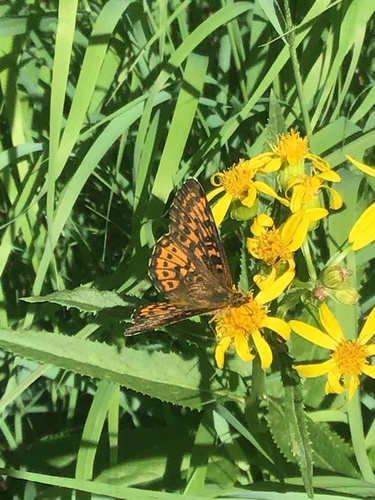
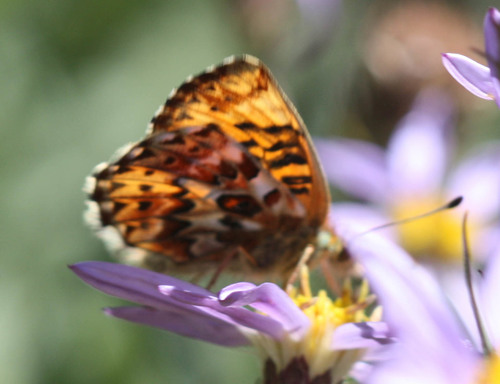
Arctic Fritillary
Boloria chariclea · Order: Lepidoptera · Family: Nymphalidae
Also called: Purplish Fritillary

The Arctic fritillary is found across the northern parts of both the Palearctic and Nearctic regions, giving it a Holarctic distribution. It lives in cold habitats such as tundra, taiga, alpine meadows, stream edges and acidic bogs, and the adults fly in July and August.
Source: Wikipedia
How to recognize it
The Arctic fritillary has a Holarctic distribution.
Source: Wikipedia
What it eats
In North America the larvae feed on violet species, dwarf willows and possibly blueberries. In Europe the larvae are thought to feed on yellow wood violet and Arctic white heather.
Source: Wikipedia
Life cycle
Depending on location, larvae need one or two years to become adults, hibernating as newly hatched caterpillars the first winter and as fourth-stage caterpillars the second winter.
Source: Wikipedia
When you see it
Adults are on the wing from July to August, varying by location.
Source: Wikipedia
Where it is found in the US
Recorded in 12 of 51 states and DC. Most records: Alaska, Colorado, Washington, Wyoming, New Hampshire, Montana, New Mexico, Utah.
Darker = more records. Counts are museum and citizen-science records, not population size.
Source: GBIF
Status: native in North America; native in United States; native in Canada. Source: iNaturalist
Months it is reported in the US
Source: GBIF
More photos


Questions people ask
When can I see Arctic fritillary butterflies?
They fly during July and August, depending on where you are.
Source: Wikipedia
What do the caterpillars eat?
In North America they feed on violets, dwarf willows and possibly blueberries; in Europe they eat yellow wood violet and Arctic white heather.
Source: Wikipedia
Same family (Nymphalidae)






Sources
- Wikipedia: https://en.wikipedia.org/wiki/Boloria_chariclea
Look it up elsewhere: GBIF · iNaturalist · BugGuide · ITIS · Wikipedia
Text written 2026-10-23 from the sources above and checked sentence by sentence against them. Data fetched 2026-10-23.