 Bug FAQ
Apple Twig Borer
Amphicerus bicaudatus · Order: Coleoptera · Family: Bostrichidae
Source: Wikipedia
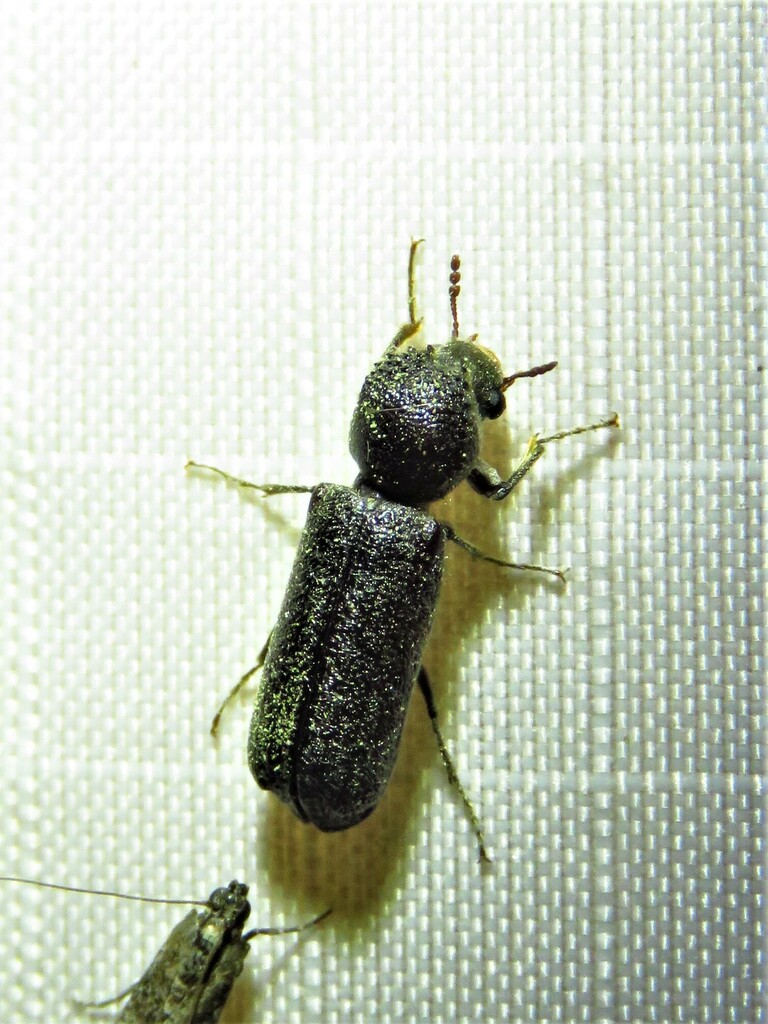
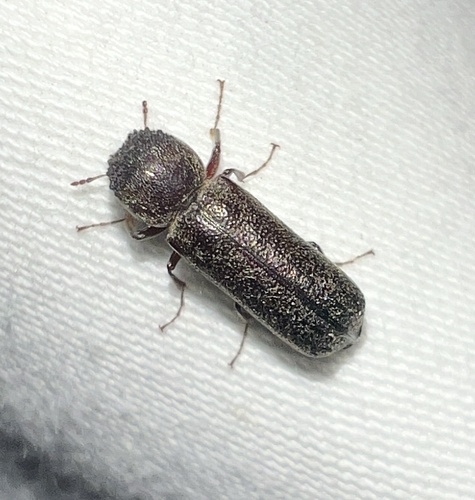
Adult apple twig borers are long, cylindrical beetles about 6 to 13 mm in length and range in color from reddish-brown to black. The larvae are creamy white with a brown head and mandibles and grow to about 10 mm long. Studies have shown that their populations can show periodic or quasiperiodic fluctuations, sometimes with chaotic elements, when interacting with insecticides, cane removal, and grapevine hosts.
Source: Wikipedia
How to recognize it
Adults vary in color from reddish brown to black.
Source: Wikipedia
Size
Adults measure about 6 to 13 millimeters long. Larvae reach roughly 10 millimeters in length.
Source: Wikipedia
Is it a pest in the house?
It attacks orchard trees and grape vines, causing damage to those crops.
Source: Wikipedia
Life cycle
Population studies report periodic and quasiperiodic dynamics, with occasional chaotic patterns, when the beetle interacts with insecticides, cane removal, and grapevine hosts.
Source: Wikipedia
Where it is found in the US
Recorded in 20 of 51 states and DC. Most records: Texas, Florida, Kansas, Nebraska, Pennsylvania, Oklahoma, New Mexico, Michigan.
Darker = more records. Counts are museum and citizen-science records, not population size.
Source: GBIF
Status: native in North America; native in Canada. Source: iNaturalist
Months it is reported in the US
Source: GBIF
More photos
Questions people ask
What does the adult apple twig borer look like?
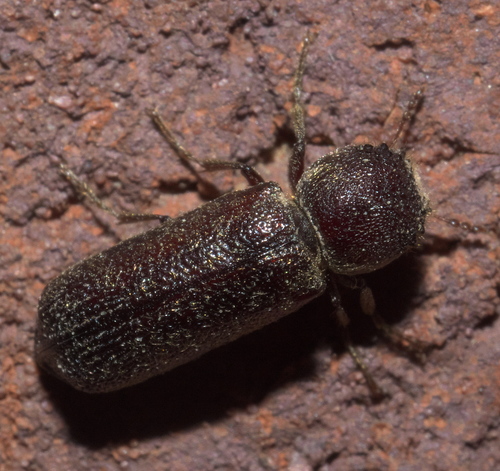
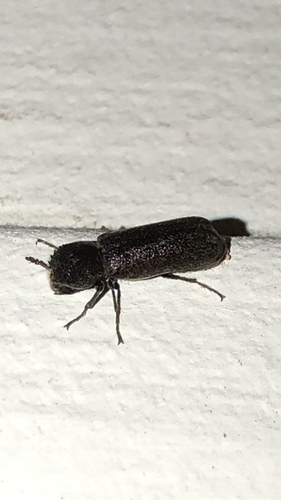
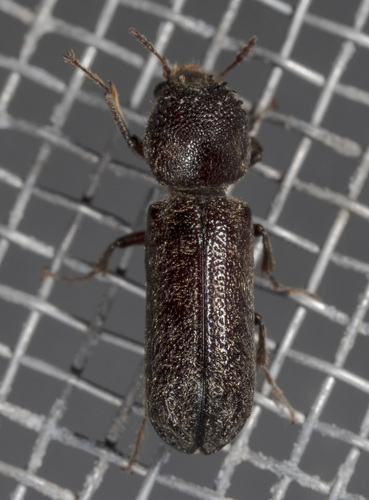
Adults are long, cylindrical beetles about 6 to 13 mm long and can be reddish-brown to black in color.
Source: Wikipedia
What plants does the apple twig borer damage?
It feeds on cultivated orchard trees and grape vines, acting as a pest to those crops.
Source: Wikipedia
How do apple twig borer populations change over time?
Research shows their numbers can follow periodic or quasiperiodic cycles, sometimes showing chaotic fluctuations when interacting with insecticides, cane removal, and grapevine hosts.
Source: Wikipedia
Same family (Bostrichidae)



Sources
- Wikipedia: https://en.wikipedia.org/wiki/Amphicerus_bicaudatus
Look it up elsewhere: GBIF · iNaturalist · BugGuide · ITIS · Wikipedia
Text written 2026-10-25 from the sources above and checked sentence by sentence against them. Data fetched 2026-10-25.