 Bug FAQ
Stout's Hardwood Borer
Polycaon stoutii · Order: Coleoptera · Family: Bostrichidae
Also called: Black Polycaon, Powderpost beetle
Source: Wikipedia
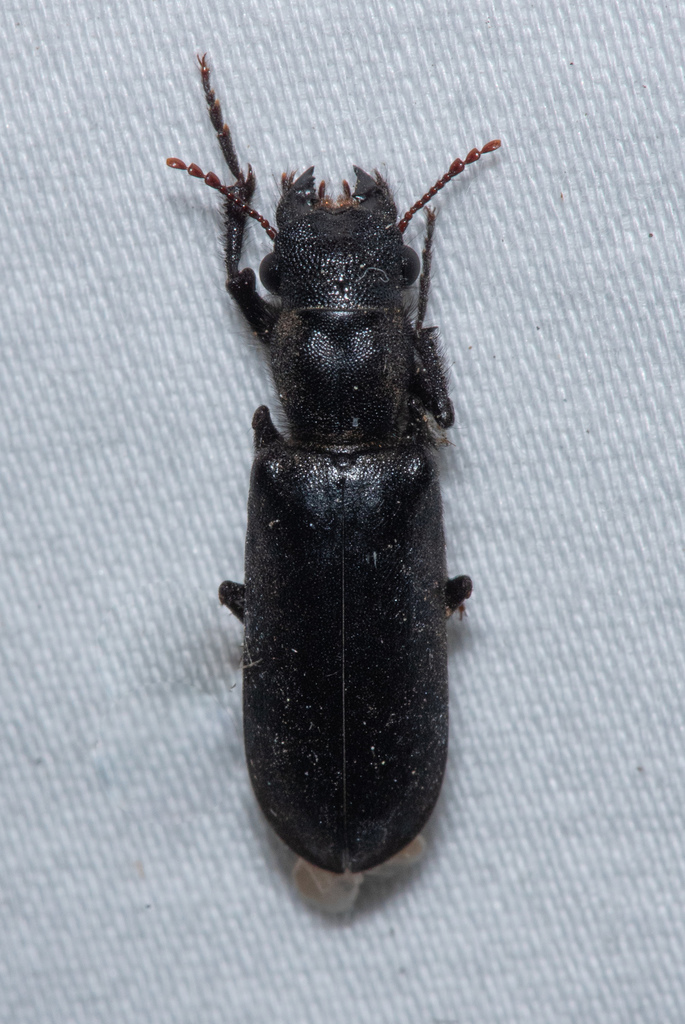
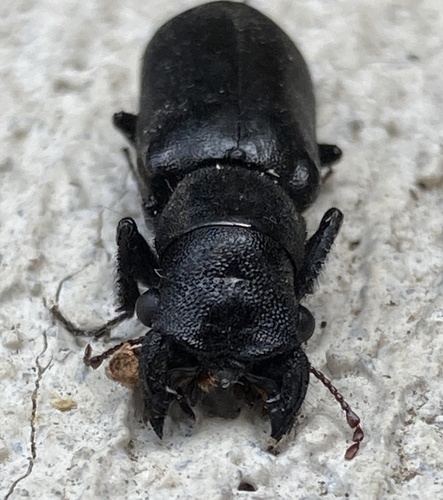
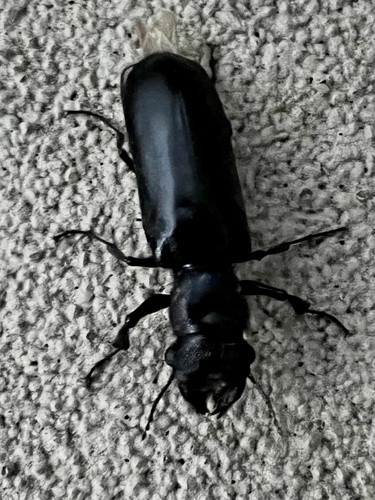
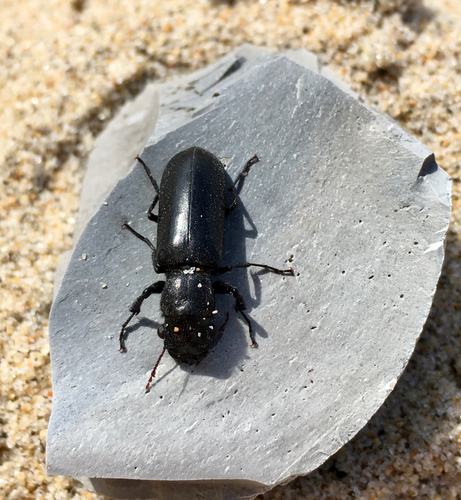
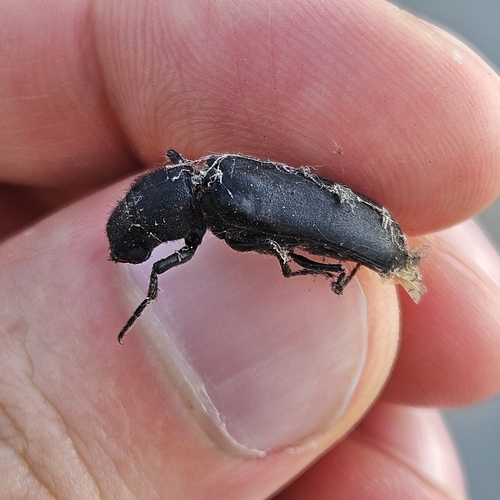
Stout's hardwood borer is a black, cylindrical beetle about 10 to 23 mm long with a slightly down-turned head. Its larvae live inside hardwood for many years, sometimes over two decades, and the adults may emerge from furniture or lumber.
Source: Wikipedia
How to recognize it
The beetle is black, cylindrical, and covered in hairs. Its head is slightly down-turned.
Source: Wikipedia
Size
Adults measure between 10 and 23 mm in length.
Source: Wikipedia
Is it a pest in the house?
Adults are known to occasionally emerge from wooden furniture. Infestations can start before trees are harvested or in lumberyards.
Source: Wikipedia
What it eats
The species breeds in hardwood trees.
Source: Wikipedia
Lookalikes
It differs from P. granulatus by having antennae with 11 segments and cylindrical second and third tarsal segments. It differs from P. punctatus by its black colour and a much shorter third antennal segment compared with the fourth.
Source: Wikipedia
Where it is found in the US
Recorded in 5 of 51 states and DC. Most records: California, Texas, Arizona, Oregon, New Mexico.
Darker = more records. Counts are museum and citizen-science records, not population size.
Source: GBIF
Status: native in North America; native in Canada. Source: iNaturalist
Months it is reported in the US
Source: GBIF
More photos
Questions people ask
Why are beetles appearing in my wooden furniture?
The adults can emerge from hardwood that has been in furniture for many years.
Source: Wikipedia
How can I tell Stout's hardwood borer apart from similar beetles?
Look for 11-segmented antennae and cylindrical second and third tarsal segments to separate it from P. granulatus, and note its black colour and a very short third antennal segment to distinguish it from P. punctatus.
Source: Wikipedia
Same family (Bostrichidae)


Sources
- Wikipedia: https://en.wikipedia.org/wiki/Polycaon_stoutii
Look it up elsewhere: GBIF · iNaturalist · BugGuide · ITIS · Wikipedia
Text written 2026-10-24 from the sources above and checked sentence by sentence against them. Data fetched 2026-10-24.