 Bug FAQ
Powder Post Beetle
Lyctus brunneus · Order: Coleoptera · Family: Bostrichidae
Also called: Brown Powder-post Beetle, Brown powderpost beetle, Old World lyctus beetle, brown lyctus beetle
Source: Wikipedia
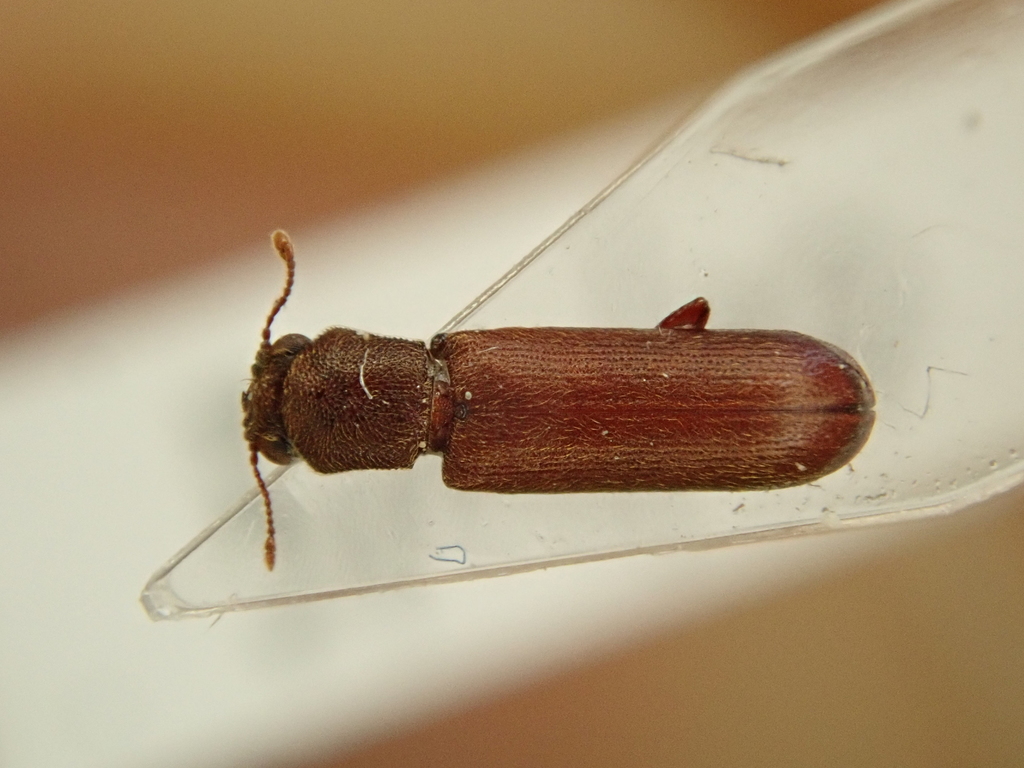
The brown powderpost beetle lives in wood and can be a household pest. It is a wood-eating insect originally from the Neotropical region.
Source: Wikipedia
Is it a pest in the house?
Like other powderpost beetles, it can be a problem in homes.
Source: Wikipedia
Where it lives
This species lives inside wood.
Source: Wikipedia
What it eats
It feeds on wood.
Source: Wikipedia
Where it comes from
It probably originated in the Neotropical realm.
Source: Wikipedia
Lookalikes
It belongs to the Lyctinae subfamily, the powderpost beetles.
Source: Wikipedia
Where it is found in the US
Recorded in 2 of 51 states and DC. Most records: Oregon, California.
Darker = more records. Counts are museum and citizen-science records, not population size.
Source: GBIF
Status: introduced in Canada. Source: iNaturalist
Months it is reported in the US
Source: GBIF
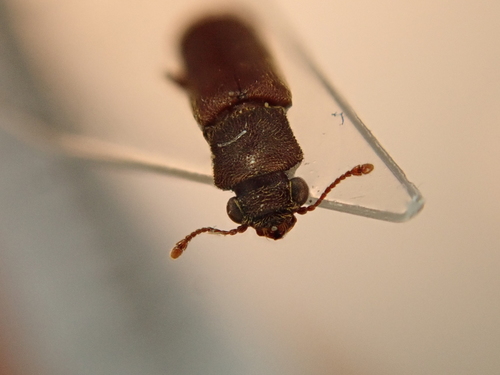
More photos

Questions people ask
How can I tell if I have a powderpost beetle infestation?
Look for small holes and fine powdery frass in wood, which are signs of beetles that live inside wood.
Source: Wikipedia
Same family (Bostrichidae)
Sources
- Wikipedia: https://en.wikipedia.org/wiki/Lyctus_brunneus
Look it up elsewhere: GBIF · iNaturalist · BugGuide · ITIS · Wikipedia
Text written 2026-10-22 from the sources above and checked sentence by sentence against them. Data fetched 2026-10-22.