 Bug FAQ
Apple Maggot
Rhagoletis pomonella · Order: Diptera · Family: Tephritidae
Also called: Apple Maggot Fly, Railroad Worm
Source: Wikipedia
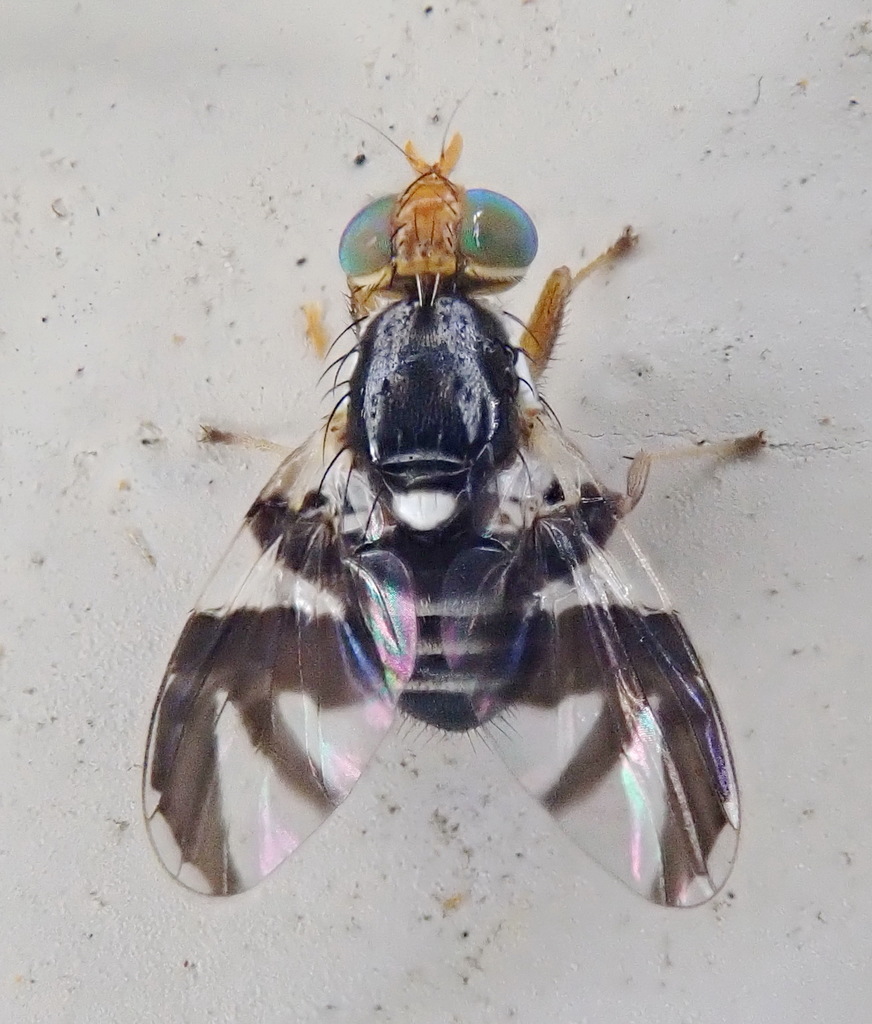
Adult apple maggots are about 5 mm long, a bit smaller than a housefly, while the larvae grow to 7 to 8.5 mm. They overwinter as soil pupae and the adults appear from late June through September, peaking in August.
Source: Wikipedia
How to recognize it
Larvae are pale cream and tiny, making them hard to spot inside fruit.
Source: Wikipedia
Size
Adults measure roughly 5 mm (0.20 in) in length. Larvae are 7 to 8.5 mm long and about 1.75 to 2 mm wide.
Source: Wikipedia
Is it a pest in the house?
The apple maggot is a fruit-fly pest that harms apples and other fruits. Larval feeding bruises, decays, and can cause fruit to drop before it ripens.
Source: Wikipedia
Where it lives
The species spends the winter as a pupa buried in soil.
Source: Wikipedia
What it eats
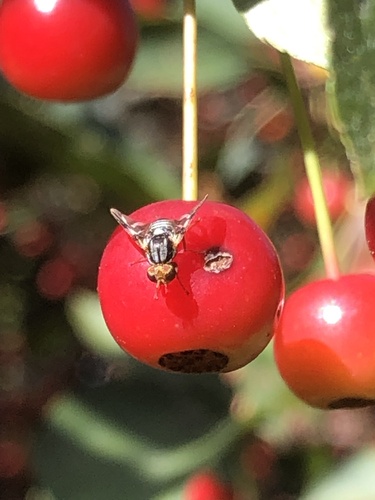
Females lay eggs inside apples; the hatching larvae eat the fruit flesh, causing damage. Originally the fly used wild hawthorn as its host before shifting to cultivated apples in the 1800s.
Source: Wikipedia
Life cycle
After feeding as larvae, they drop to the ground, pupate in the soil, and emerge as adults the next season.
Source: Wikipedia
When you see it
Adult flies are active from late June through September, with the highest numbers in August.
Source: Wikipedia
Where it comes from
It is native to the eastern United States and also occurs in eastern Canada.
Source: Wikipedia
Lookalikes
Apple maggot larvae can be confused with codling moth caterpillars, but the latter feed mainly in the apple core while maggots eat the flesh.
Source: Wikipedia
Where it is found in the US
Recorded in 27 of 51 states and DC. Most records: Maine, Washington, Minnesota, New York, Illinois, Oregon, Pennsylvania, Florida.
Darker = more records. Counts are museum and citizen-science records, not population size.
Source: GBIF
Status: native in North America; native in Canada. Source: iNaturalist
Months it is reported in the US
Source: GBIF
More photos
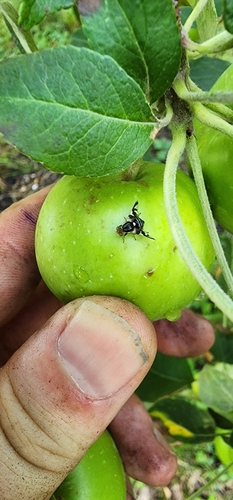
Questions people ask
How can I tell apple maggot larvae from codling moth caterpillars?
Apple maggot larvae are pale cream and feed in the fruit flesh, whereas codling moth caterpillars are usually darker and feed inside the core.
Source: Wikipedia
When are adult apple maggots active?
Adults emerge from late June and are most common in August, staying active through September.
Source: Wikipedia
What damage do apple maggots cause?
Their larvae eat the fruit interior, causing bruising, decay and premature fruit drop.
Source: Wikipedia
Same family (Tephritidae)
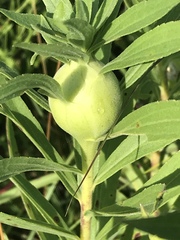 Goldenrod Gall FlyEurosta solidaginis
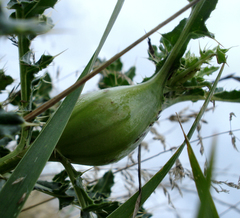 Thistle Stem Gall FlyUrophora cardui
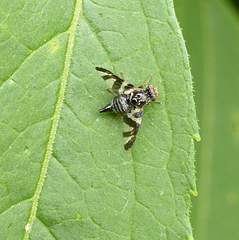 Goldenrod Brussels Sprout Gall FlyProcecidochares atra
 Mediterranean Fruit FlyCeratitis capitataDamages trees, gardens or crops
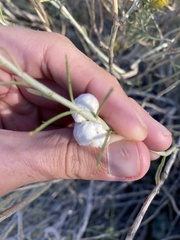 Cotton-gall TephritidAciurina bigeloviae
 Oriental Fruit FlyBactrocera dorsalisDamages trees, gardens or crops
Sources
- Wikipedia: https://en.wikipedia.org/wiki/Apple_maggot
Look it up elsewhere: GBIF · iNaturalist · BugGuide · ITIS · Wikipedia
Text written 2026-10-27 from the sources above and checked sentence by sentence against them. Data fetched 2026-10-27.