 Bug FAQ
Anise Swallowtail
Papilio zelicaon · Order: Lepidoptera · Family: Papilionidae
Also called: Western Swallowtail
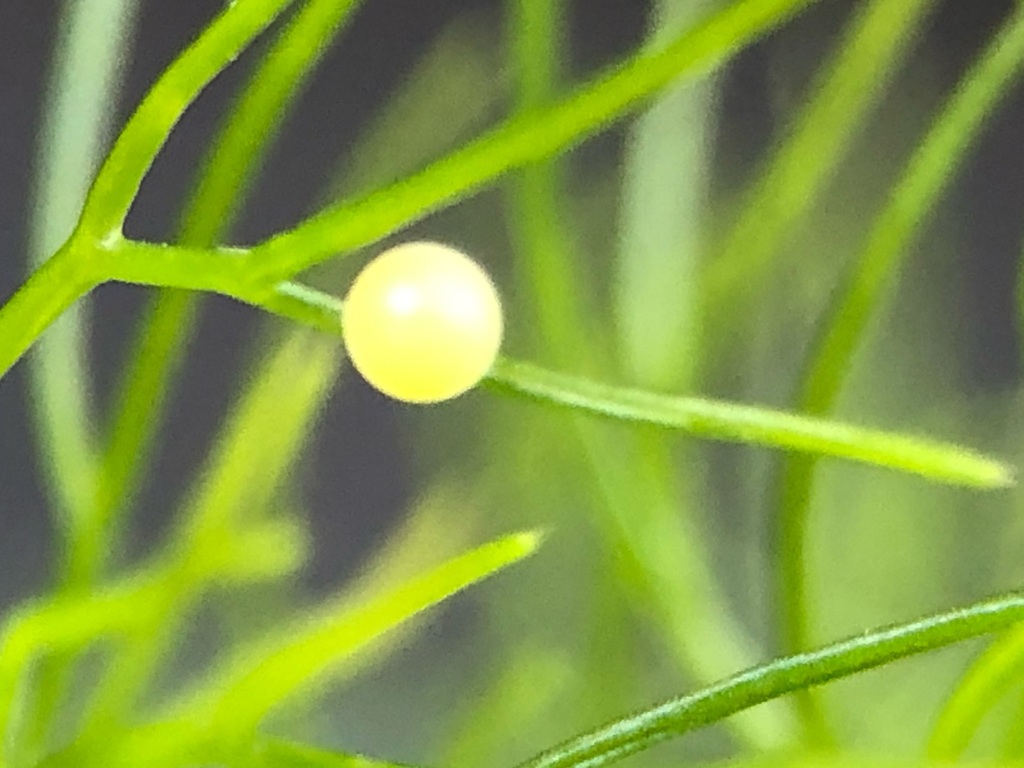
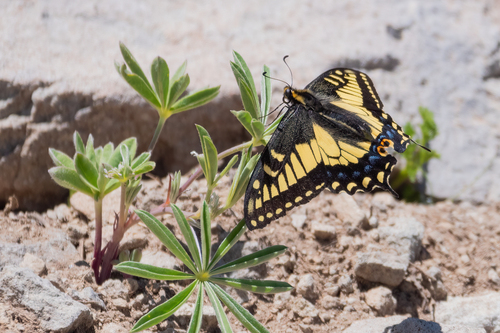
The anise swallowtail has a wingspan of about 5 to 8 cm (2.0 to 3.1 in) and shows black wings with a broad yellow stripe on the upper side, plus blue spots on the rear wing edges and characteristic tails. It lives in open country, hills, fields, roadsides, towns, gardens and vacant lots, ranging from British Columbia and North Dakota down to Baja California, rarely seen east of New Mexico. Adults lay single eggs on host-plant leaves; the caterpillar grows to about 5 cm before forming a brown or green chrysalis roughly 3 cm long.
Source: Wikipedia
How to recognize it
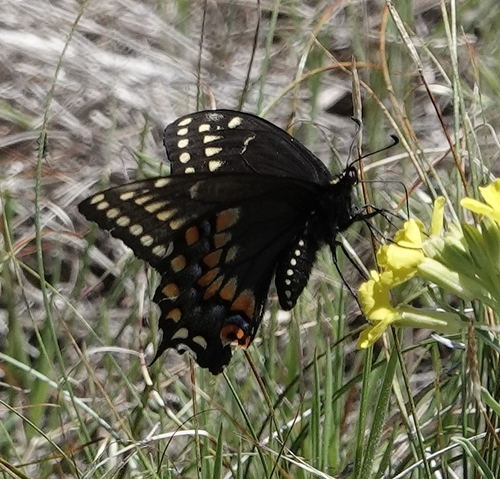
The upper side of the wings is black with a wide yellow stripe, giving the butterfly an overall yellow look. Blue spots appear on the rear edge of the hindwing and the wings have the typical swallowtail tails.
Source: Wikipedia
Size
Its wingspan ranges from 52 to 80 mm, about 2.0 to 3.1 inches.
Source: Wikipedia
Where it lives
It prefers fairly open country such as bare hills, mountains, fields and roadsides. It is also commonly seen in towns, gardens and vacant lots.
Source: Wikipedia
Life cycle
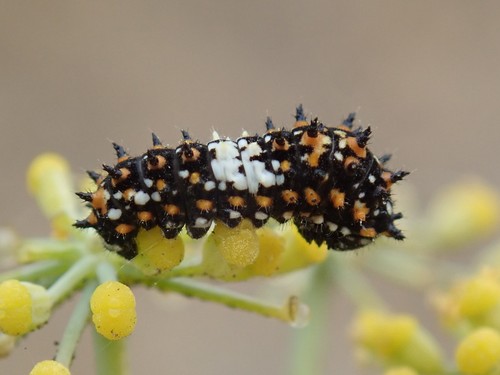
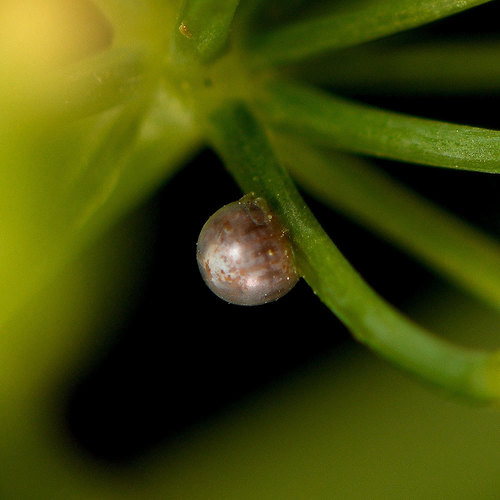
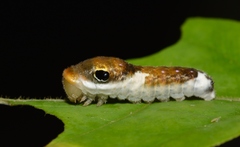
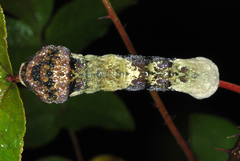
Adult females lay single eggs on the undersides of host-plant leaves. The caterpillar grows to about 5 cm before forming a brown or green chrysalis roughly 3 cm long.
Source: Wikipedia
Where it comes from
Occasional reports come from the southeastern United States, but it does not normally occur east of New Mexico.
Source: Wikipedia
Lookalikes
It is shorter than the similar western tiger swallowtail and lacks the black stripes that converge toward the tail on that species.
Source: Wikipedia
Where it is found in the US
Recorded in 18 of 51 states and DC. Most records: California, Oregon, Washington, Colorado, Utah, Idaho, Wyoming, Montana.
Darker = more records. Counts are museum and citizen-science records, not population size.
Source: GBIF
Status: native in North America; native in Canada; native in United States. Source: iNaturalist
Months it is reported in the US
Source: GBIF
More photos
Questions people ask
Where might I see an anise swallowtail?
They are found in open country, hills, fields, roadsides, towns, gardens and vacant lots within their range from British Columbia and North Dakota down to Baja California.
Source: Wikipedia
How can I identify an anise swallowtail?
Look for black wings with a broad yellow stripe on the upper side, blue spots on the hindwing edge, and the characteristic swallowtail tails.
Source: Wikipedia
Same family (Papilionidae)

Sources
- Wikipedia: https://en.wikipedia.org/wiki/Papilio_zelicaon
Look it up elsewhere: GBIF · iNaturalist · BugGuide · ITIS · Wikipedia
Text written 2026-10-22 from the sources above and checked sentence by sentence against them. Data fetched 2026-10-22.