 Bug FAQ
Andricus quercustozae
Andricus quercustozae · Order: Hymenoptera · Family: Cynipidae
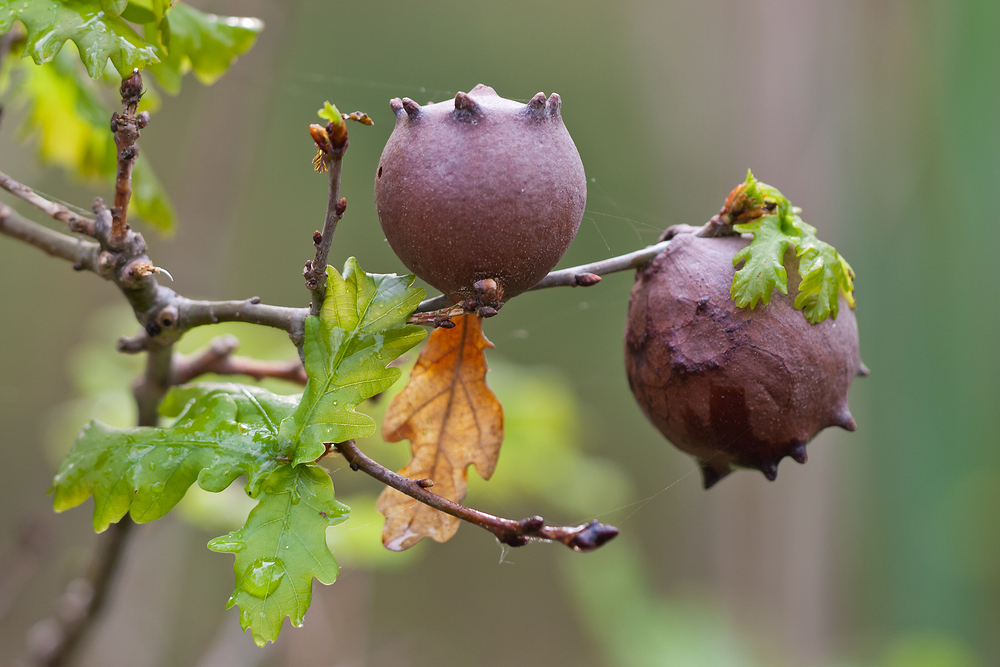
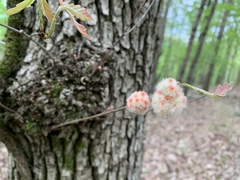
Andricus quercustozae makes large, round, sticky galls on oak trees that can stay on the tree for many years after the wasp emerges. The galls start as flat, reddish-to-yellowish disks with marginal projections and a sticky surface, growing to 17 to 40 mm in diameter. This wasp lives in the Western Palaearctic, has a heterogonic life cycle with sexual and asexual generations, and the asexual generation overwinters inside the galls.
Source: Wikipedia
How to recognize it
Young galls appear as flat disks with marginal projections, are reddish to yellowish, and feel sticky.
Source: Wikipedia
Size
Mature galls range from 17 to 40 mm in diameter.
Source: Wikipedia
Where it lives
The wasp induces large, round, sticky galls on oak trees. These galls can remain attached to the tree for many years after the adult wasp has emerged.
Source: Wikipedia
What it eats
The galls host many parasitoids, inquilines, and other organisms that use them after the wasp emerges. By providing these galls, the wasp supports numerous natural enemies.
Source: Wikipedia
Life cycle
It has a heterogonic life cycle with separate sexual and asexual generations that produce different gall types on oaks. The asexual generation spends the winter inside the galls.
Source: Wikipedia
Where it comes from
Andricus quercustozae is found in the Western Palaearctic region.
Source: Wikipedia
Lookalikes
The galls are used by many parasitoid wasps, especially Chalcidoidea, after the host emerges.
Source: Wikipedia
Where it is found in the US
Recorded in 1 of 51 states and DC. Most records: California.
Darker = more records. Counts are museum and citizen-science records, not population size.
Source: GBIF
Months it is reported in the US
Source: GBIF
More photos

Questions people ask
How can I recognize the galls of Andricus quercustozae?
Look for large, round, sticky galls on oak trees that start as flat, reddish-to-yellowish disks with marginal projections.
Source: Wikipedia
Same family (Cynipidae)


Sources
- Wikipedia: https://en.wikipedia.org/wiki/Andricus_quercustozae
Look it up elsewhere: GBIF · iNaturalist · BugGuide · Wikipedia
Text written 2026-10-22 from the sources above and checked sentence by sentence against them. Data fetched 2026-10-22.