 Bug FAQ
Andricus grossulariae
Andricus grossulariae · Order: Hymenoptera · Family: Cynipidae
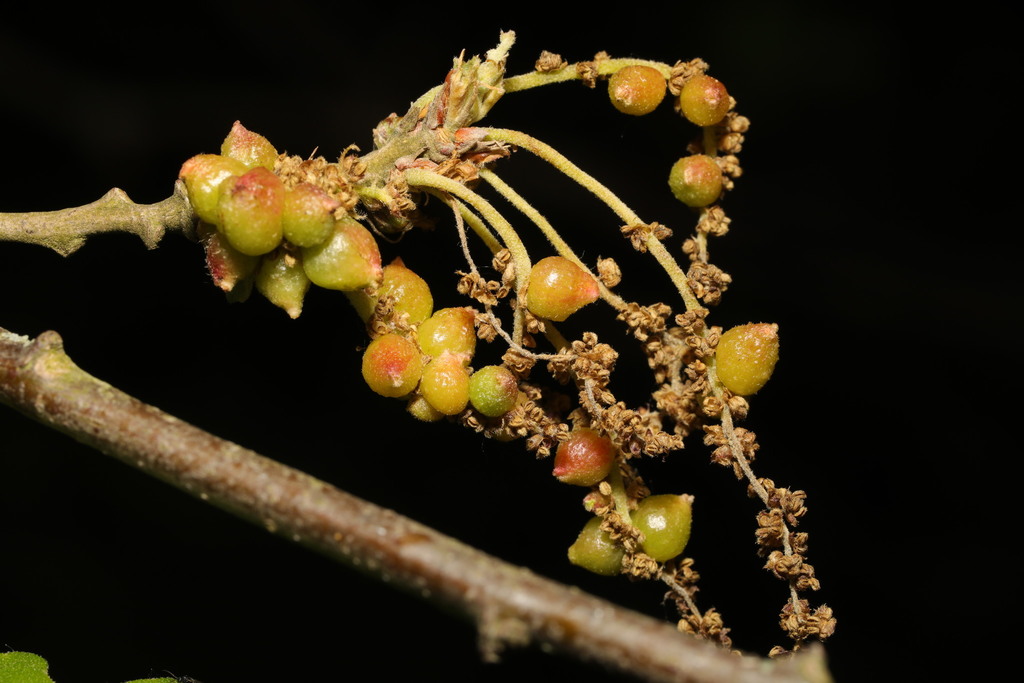
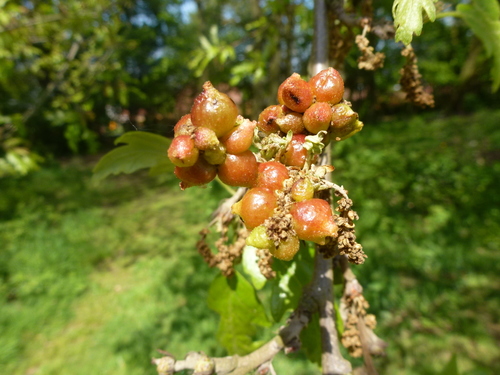
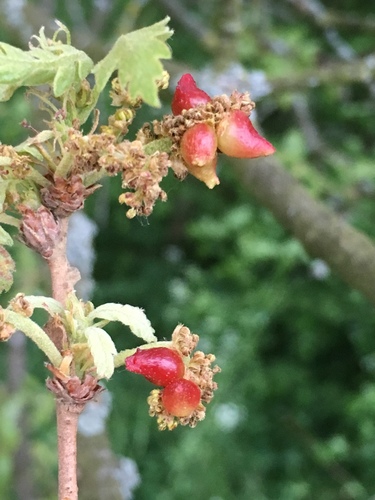
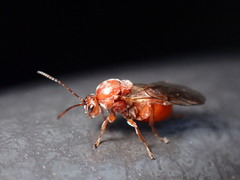
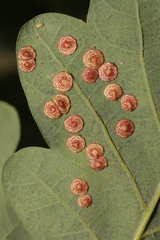
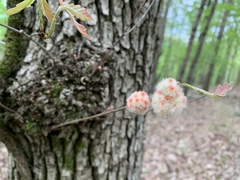
Andricus grossulariae makes hard, shiny galls that change from pink to red, then green and finally brown as they mature. The wasp lives across Europe from Ireland to Turkey and into the Near East, including northern Iraq. It has two generations: a sexual one that forms rounded catkin galls in spring, and an asexual one that creates about 10 mm acorn-cup galls in late summer.
Source: Wikipedia
How to recognize it
The galls are shiny and hard, turning red, then black or dark purple as they age. They start pink, become red, then green, and finally brown during development.
Source: Wikipedia
Size
Sexual-phase galls on catkins are about 6 mm long and 3 to 4 mm wide. Asexual-phase acorn-cup galls are roughly 10 mm across.
Source: Wikipedia
What it eats
The wasp induces galls by laying eggs in the growing acorn cups of English oak (Quercus robur) and sessile oak (Q. petraea). It can also be found on oak buds.
Source: Wikipedia
Life cycle
Two gall types exist: the asexual phase creates acorn-cup galls in late summer, while the sexual phase makes rounded catkin galls in spring. The asexual gall is about 10 mm across and develops on acorn cups of English and sessile oak.
Source: Wikipedia
When you see it
Asexual acorn-cup galls appear in late summer, and sexual catkin galls appear in spring.
Source: Wikipedia
Lookalikes
The acorn-cup gall can sometimes be confused with the knopper gall of Andricus quercuscalicis under certain growth conditions.
Source: Wikipedia
More photos

Questions people ask
What trees does Andricus grossulariae affect?
It forms galls on the acorn cups of English oak (Quercus robur) and sessile oak (Q. petraea), and can also appear on oak buds.
Source: Wikipedia
When do the different galls appear?
The asexual acorn-cup galls develop in late summer, while the sexual rounded galls on catkins appear in spring.
Source: Wikipedia
How can I tell the acorn-cup gall apart from a knopper gall?
Although both are on oak acorn cups, the Andricus grossulariae gall is shiny, hard and changes from pink to red, then green and brown, whereas knopper galls have a different shape; misidentification can occur under certain growth conditions.
Source: Wikipedia
Same family (Cynipidae)


Sources
- Wikipedia: https://en.wikipedia.org/wiki/Andricus_grossulariae
Look it up elsewhere: GBIF · iNaturalist · BugGuide · ITIS · Wikipedia
Text written 2026-10-23 from the sources above and checked sentence by sentence against them. Data fetched 2026-10-23.