 Bug FAQ
Ammophila azteca
Ammophila azteca · Order: Hymenoptera · Family: Sphecidae
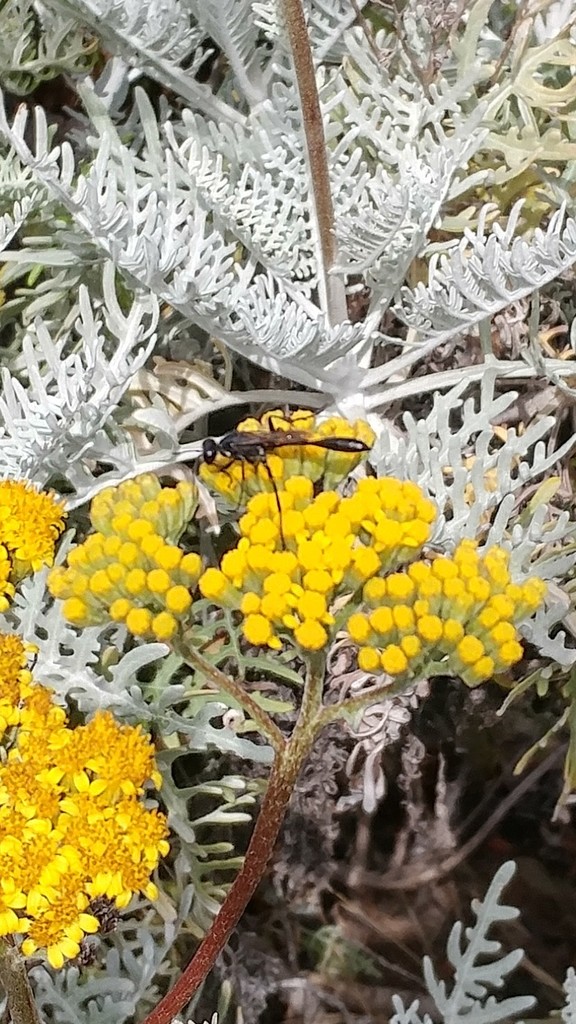
Ammophila azteca is a thread-waisted wasp in the family Sphecidae that lives from near sea level up to over 6,000 ft altitude. It is native to Canada, the United States, and Mexico, and the female builds nests, provisions them with other insects' larvae, lays an egg, and seals the cell with earth. The egg hatches after about two days, the larva feeds for five days, then pupates in a cocoon.
Source: Wikipedia
How to recognize it
Ammophila azteca is a thread-waisted wasp in the family Sphecidae.
Source: Wikipedia
Where it lives
It occurs from near sea level up to more than 6,000 ft elevation.
Source: Wikipedia
Life cycle
The egg hatches after two days, the larva feeds for five days, then matures into a cocoon.
Source: Wikipedia
Where it comes from
It is native to Canada, the United States, and Mexico.
Source: Wikipedia
Where it is found in the US
Recorded in 11 of 51 states and DC. Most records: California, Colorado, Wyoming, Arizona, Alaska, Michigan, Washington, Montana.
Darker = more records. Counts are museum and citizen-science records, not population size.
Source: GBIF
Status: native in North America; native in Canada. Source: iNaturalist
Months it is reported in the US
Source: GBIF
More photos
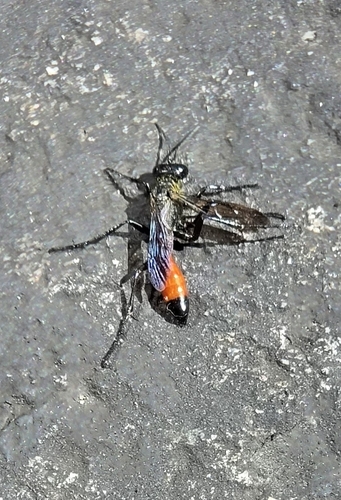
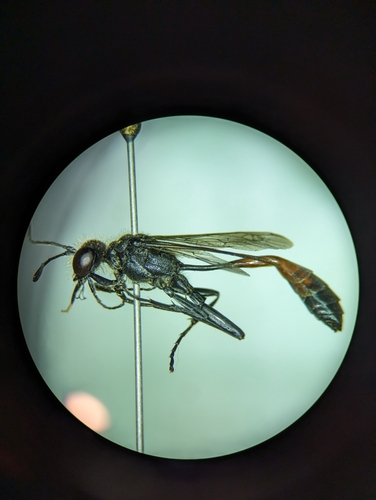
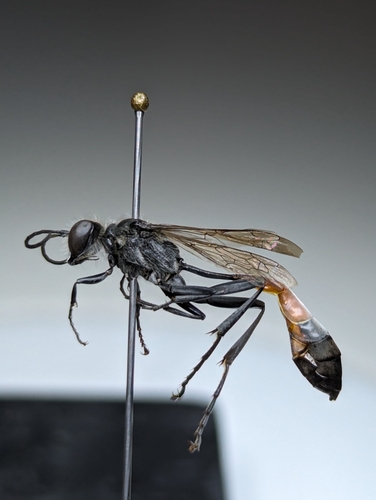
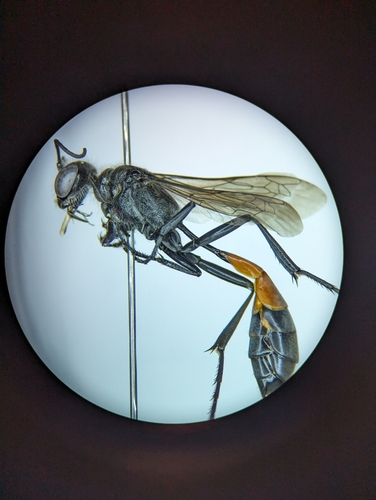
Same family (Sphecidae)
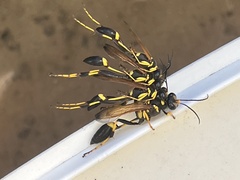 Yellow-legged Mud-dauber WaspSceliphron caementariumCan sting
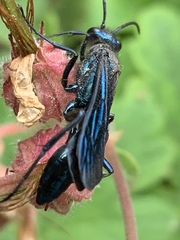 Common Blue Mud-dauber WaspChalybion californicumCan sting
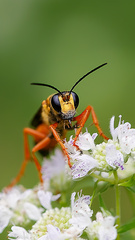 Great Golden Digger WaspSphex ichneumoneus
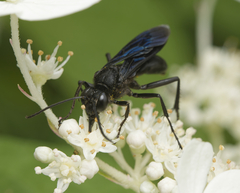 Great Black Digger WaspSphex pensylvanicusCan sting
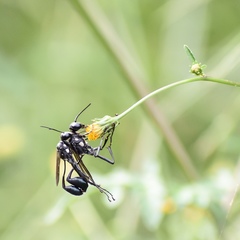 Gold-marked Thread-waisted WaspEremnophila aureonotata
 Mexican Grass-carrying WaspIsodontia mexicana
Sources
- Wikipedia: https://en.wikipedia.org/wiki/Ammophila_azteca
Look it up elsewhere: GBIF · iNaturalist · BugGuide · ITIS · Wikipedia
Text written 2026-10-25 from the sources above and checked sentence by sentence against them. Data fetched 2026-10-25.