 Bug FAQ
American Rose Chafer
Macrodactylus subspinosus · Order: Coleoptera · Family: Scarabaeidae
Also called: rose chafer
Source: Wikipedia
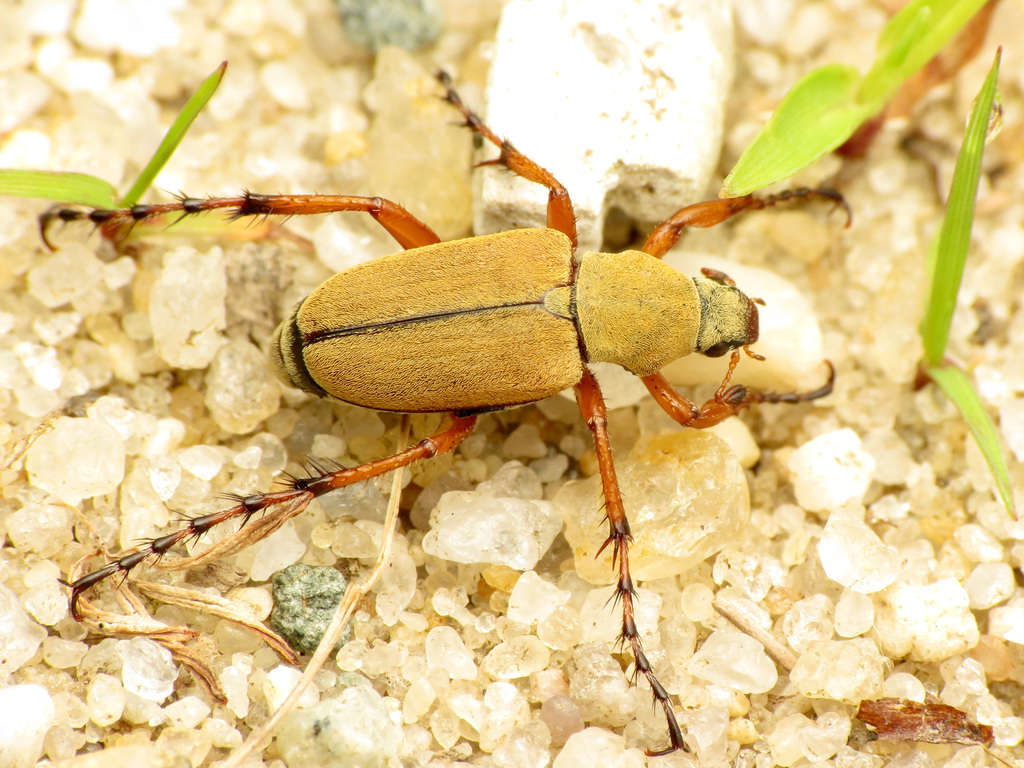
Adults eat leaves, flowers, and fruit of many ornamental and fruit plants, while larvae feed on plant roots, hurting growth. They appear in late May to mid-June, live a few weeks, and can be removed by hand or treated with insecticides if numbers are high.
Source: Wikipedia
How to recognize it
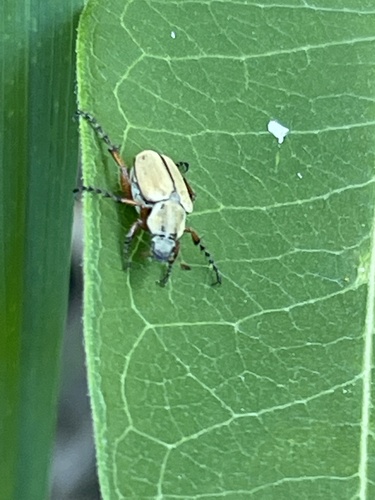
Its body is covered in dull yellow hairs that wear off with age, revealing a black head and thorax.
Source: Wikipedia
Size
Adults are 8 to 13 mm long with a yellow-tan body. Pupae are about 15 mm long and yellowish-brown.
Source: Wikipedia
Is it a pest in the house?
They are called rose chafers because they eat rose leaves, but they also feed on many other plants. In vineyards they eat grapes at bloom and skeletonize leaves.
Source: Wikipedia
How to get rid of it
A few beetles per plant can be hand-picked or vacuumed. In larger infestations, effective insecticides are available.
Source: Wikipedia
Where it lives
Eggs are about 1 mm, white and shiny; larvae are white C-shaped grubs with a brown head capsule and three pairs of legs.
Source: Wikipedia
What it eats
Larvae feed on plant roots, limiting growth.
Source: Wikipedia
Life cycle
Like all beetles, it undergoes complete metamorphosis. In late May, white larvae about 18 mm long pupate after overwintering deep in the soil.
Source: Wikipedia
When you see it
Adults emerge in late May to mid-June, gather on leaves, buds, flowers, and fruit to feed and mate. After emerging, adults live 3 to 6 weeks during which they feed and reproduce.
Source: Wikipedia
Where it comes from
The American rose chafer is a North American scarab beetle found from eastern Canada to Colorado.
Source: Wikipedia
Where it is found in the US
Recorded in 38 of 51 states and DC. Most records: Virginia, Pennsylvania, Vermont, Ohio, Texas, Michigan, Maryland, Wisconsin.
Darker = more records. Counts are museum and citizen-science records, not population size.
Source: GBIF
Status: native in North America; native in Canada. Source: iNaturalist
Months it is reported in the US
Source: GBIF
More photos
Questions people ask
How can I get rid of them in my garden?
Remove a few beetles by hand or use a handheld vacuum, and apply insecticides if the population is large.
Source: Wikipedia
What plants are most at risk?
Roses, grapes, apples, peaches, chestnuts, and many other garden flowers and fruit trees can be damaged.
Source: Wikipedia
When are they most active?
Adults are active from late May through mid-June and live for about three to six weeks.
Source: Wikipedia
Same family (Scarabaeidae)
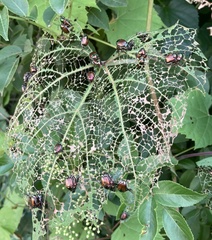 Japanese BeetlePopillia japonicaDamages trees, gardens or crops
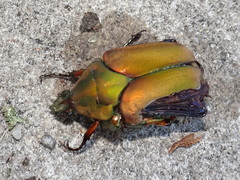 Common Green June BeetleCotinis nitidaDamages trees, gardens or crops
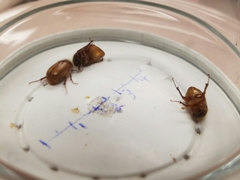 Phyllophaga crinitaPhyllophaga crinitaDamages trees, gardens or crops
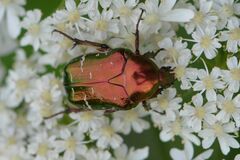 European Rose ChaferCetonia aurata
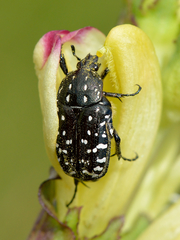 Mediterranean Spotted ChaferOxythyrea funestaDamages trees, gardens or crops
 Oriental BeetleExomala orientalisDamages trees, gardens or crops
Sources
- Wikipedia: https://en.wikipedia.org/wiki/Macrodactylus_subspinosus
Look it up elsewhere: GBIF · iNaturalist · BugGuide · ITIS · Wikipedia
Text written 2026-10-22 from the sources above and checked sentence by sentence against them. Data fetched 2026-10-22.