 Bug FAQ
Amegilla chlorocyanea
Amegilla chlorocyanea · Order: Hymenoptera · Family: Apidae
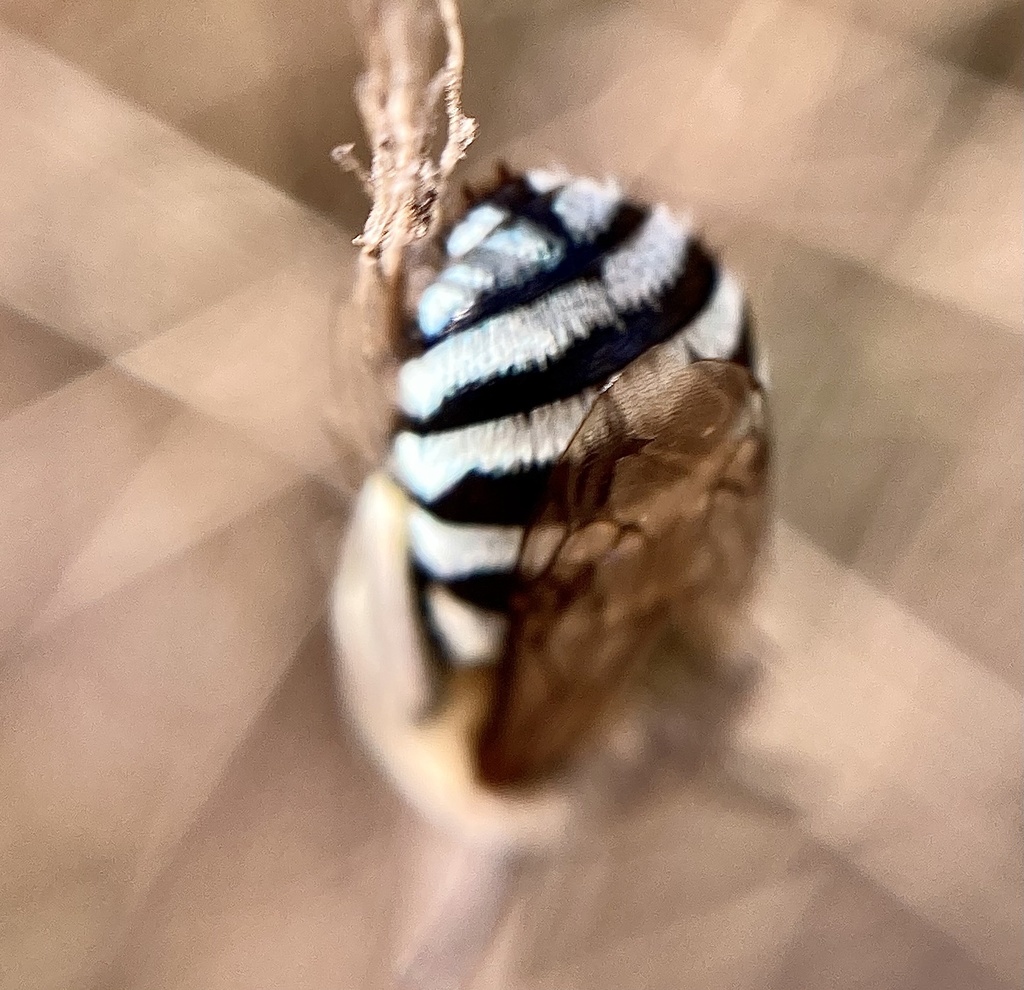
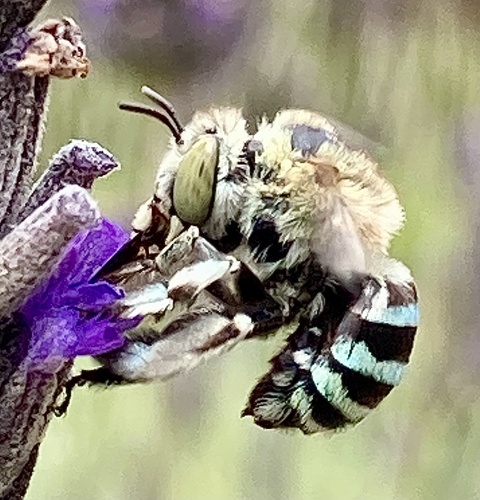
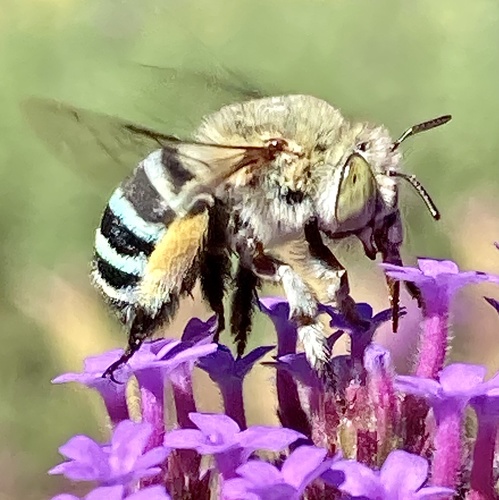
Males are about 11 mm long and females a bit larger at around 13 mm. They have white abdominal hair bands with a blue-green iridescent sheen, though about 10 % show orange bands, and their outer leg hairs also shine with blue-green iridescence. These bees nest in ground tunnels up to 100 mm long on creek banks, under houses, dry mudbanks, or in old mortar and sandstone, and each cell holds a single egg on a pollen-nectar mix.
Source: Wikipedia
How to recognize it
Outer leg hairs also display blue-green iridescence.
Source: Wikipedia
Size
Males measure roughly 11 mm, while females are slightly larger at about 13 mm.
Source: Wikipedia
Does it bite or sting?
Females can deliver a painful sting if they are handled, though they are not aggressive.
Source: Wikipedia
What it eats
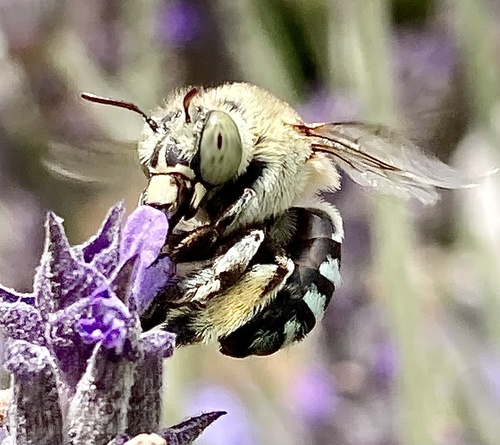
It visits flowers of many native and introduced plants and pollinates by buzz-pollination. A. chlorocyanea can serve as a host for the kleptoparasitic Waroona cuckoo bee.
Source: Wikipedia
Life cycle
Nests are up to 100 mm long and consist of a tunnel with a series of cells, each holding a single egg laid on a pollen-nectar mixture.
Source: Wikipedia
When you see it
In southern Australia the bee is active in the warm months, peaking around January.
Source: Wikipedia
Where it comes from
The species is endemic to Australia and occurs across most of the mainland.
Source: Wikipedia
Lookalikes
It belongs to the subgenus Notomegilla, which contains only two species.
Source: Wikipedia
More photos
Questions people ask
Where does Amegilla chlorocyanea build its nest?
It nests in ground tunnels up to 100 mm long on creek banks, under houses, dry mudbanks, or in old mortar and sandstone.
Source: Wikipedia
When is this bee active in Australia?
In the south it is most active in the warm months, peaking around January; in the north it can be seen year-round with peaks in May and October.
Source: Wikipedia
How can I identify this bee?
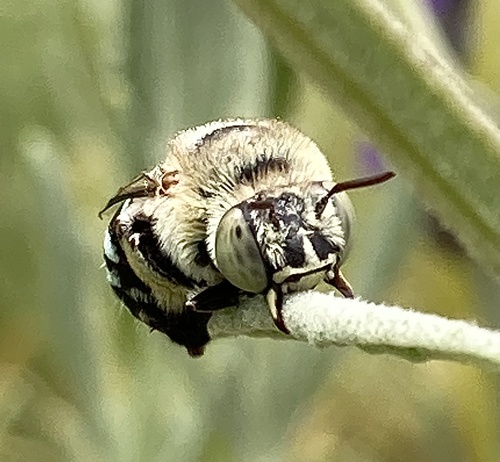
Look for white abdominal hair bands with blue-green iridescence (orange in about 10 % of individuals) and outer leg hairs that also show blue-green iridescence.
Source: Wikipedia
Same family (Apidae)





Sources
- Wikipedia: https://en.wikipedia.org/wiki/Amegilla_chlorocyanea
Look it up elsewhere: GBIF · iNaturalist · BugGuide · ITIS · Wikipedia
Text written 2026-10-23 from the sources above and checked sentence by sentence against them. Data fetched 2026-10-23.