 Bug FAQ
Ambrosia beetle
Xyleborus ferrugineus · Order: Coleoptera · Family: Curculionidae
Source: Wikipedia
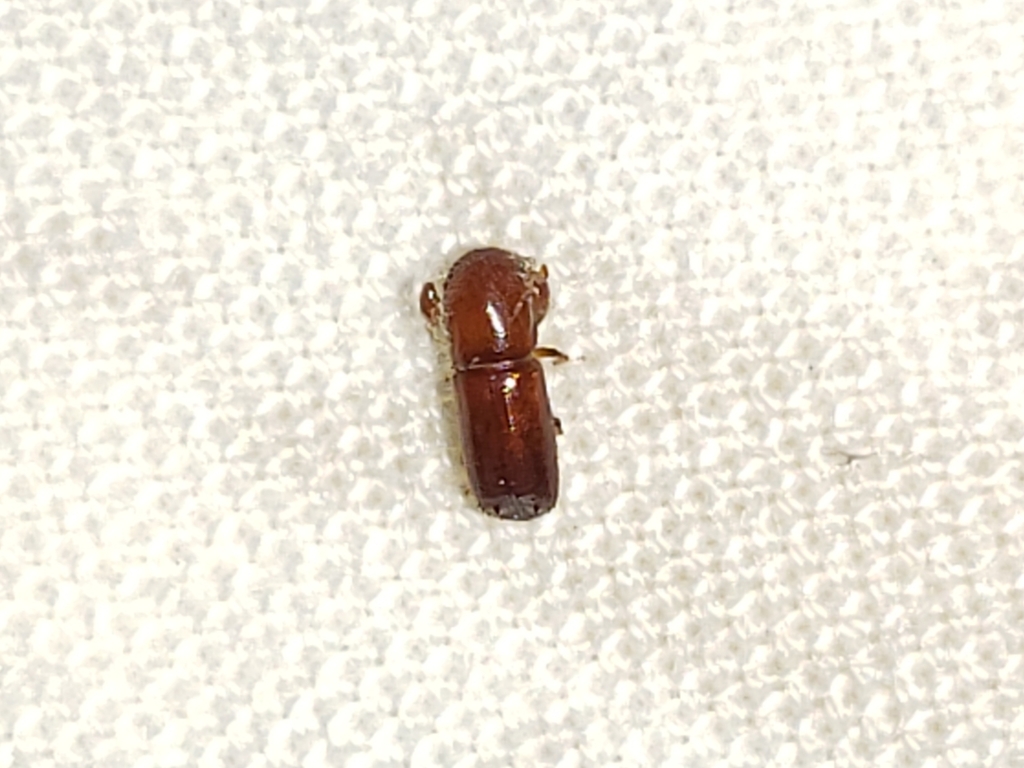
Adult Xyleborus ferrugineus are small, cylindrical beetles with a reddish-brown color. They infest weakened or dead trees, especially hardwoods in tropical forests, and are a known pest in the timber industry. Females bore galleries in wood and cultivate ambrosia fungi, which feed both adults and larvae.
Source: Wikipedia
How to recognize it
Adults are small, cylindrical, and reddish-brown.
Source: Wikipedia
Size
The beetles are small and cylindrical in shape.
Source: Wikipedia
Is it a pest in the house?
The beetle is considered a pest in timber and forestry because it can infest wood products. Infestations can cause structural damage and aesthetic defects, lowering lumber value.
Source: Wikipedia
Where it lives
They prefer weakened, stressed, or dead trees, though they can appear on apparently healthy hosts. Their preferred hosts are various hardwood species in tropical forests.
Source: Wikipedia
What it eats
Females create galleries in wood to grow ambrosia fungi, which serve as the main food for adults and larvae.
Source: Wikipedia
Life cycle
Females are more numerous and are responsible for making galleries inside host trees.
Source: Wikipedia
Where it comes from
They are widely distributed across tropical and subtropical regions.
Source: Wikipedia
Lookalikes
It is a typical bark beetle in the Curculionidae family.
Source: Wikipedia
Where it is found in the US
Recorded in 19 of 51 states and DC. Most records: Texas, Florida, Georgia, Kansas, Pennsylvania, Tennessee, Arizona, Hawaii.
Darker = more records. Counts are museum and citizen-science records, not population size.
Source: GBIF
Status: native in North America; native in Canada. Source: iNaturalist
Months it is reported in the US
Source: GBIF
More photos
Questions people ask
What does Xyleborus ferrugineus look like?
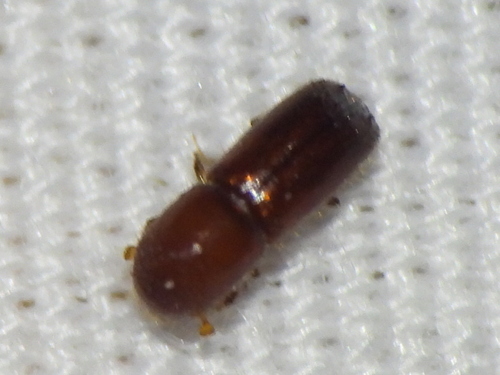
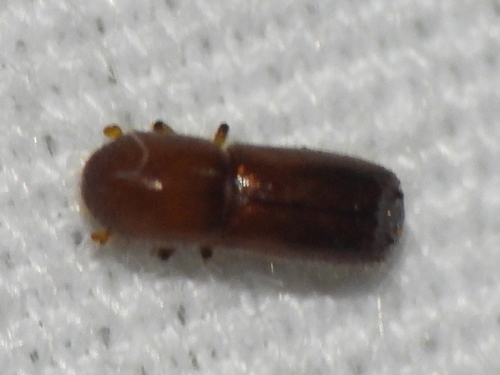
Adults are small, cylindrical beetles with a reddish-brown color.
Source: Wikipedia
Where is Xyleborus ferrugineus found?
It occurs throughout tropical and subtropical regions worldwide.
Source: Wikipedia
What damage does it cause?
It infests wood, causing structural damage and aesthetic defects that reduce the value of timber.
Source: Wikipedia
How does it feed?
Females bore into trees to grow ambrosia fungi, which feed both adults and larvae.
Source: Wikipedia
Same family (Curculionidae)
 Green Immigrant Leaf WeevilPolydrusus formosusDamages trees, gardens or crops
 Black Vine WeevilOtiorhynchus sulcatusDamages trees, gardens or crops
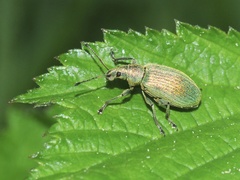 Nettle weevilPhyllobius pomaceusDamages trees, gardens or crops
 Asian Oak WeevilCyrtepistomus castaneusDamages trees, gardens or crops
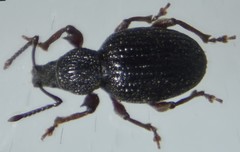 Strawberry Root WeevilOtiorhynchus ovatusDamages trees, gardens or crops
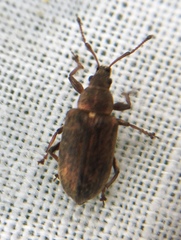 Common Leaf WeevilPhyllobius pyriDamages trees, gardens or crops
Sources
- Wikipedia: https://en.wikipedia.org/wiki/Xyleborus_ferrugineus
Look it up elsewhere: GBIF · iNaturalist · BugGuide · ITIS · Wikipedia
Text written 2026-10-24 from the sources above and checked sentence by sentence against them. Data fetched 2026-10-24.