 Bug FAQ
Amazon Darner
Anax amazili · Order: Odonata · Family: Aeshnidae
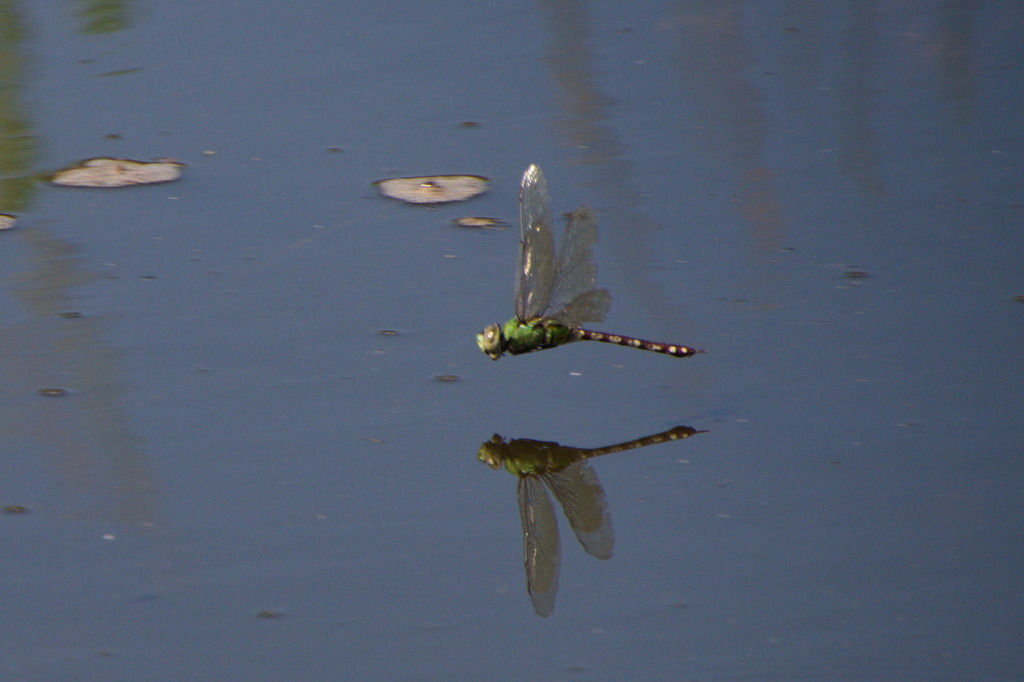
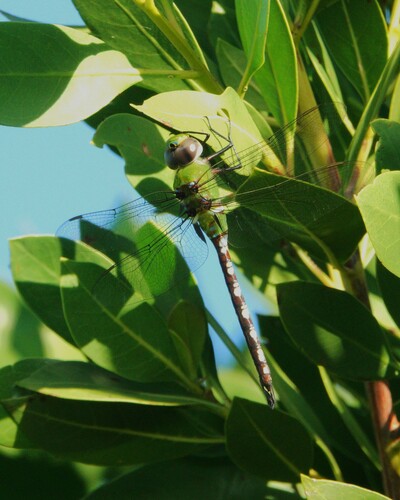
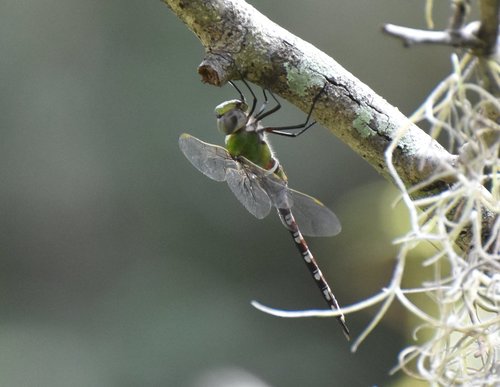
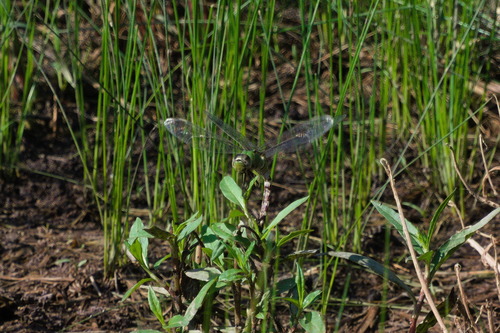
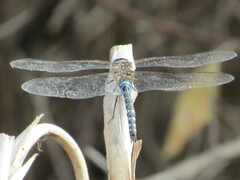
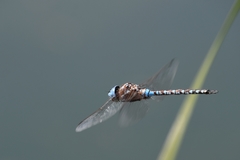
The Amazon darner is a large dragonfly about 7 to 7.4 cm long, with hindwings around 4.8 to 5.2 cm. It has a green face with a dark triangle on the frons, a mostly brown abdomen with green on the first two segments and colorful basal spots that give a ringed look.
Source: Wikipedia
Size
Length ranges from 70 to 74 mm; hindwings measure 48 to 52 mm.
Source: Wikipedia
Where it comes from
The species occurs from the southern United States down through Central and South America to Argentina.
Source: Wikipedia
Lookalikes
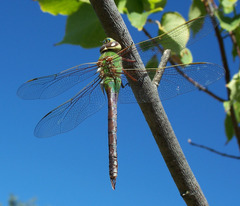
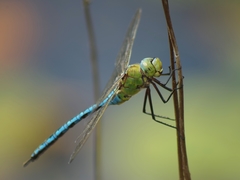
Anax amazili belongs to the dragonfly family Aeshnidae and is a tropical species.
Source: Wikipedia
Where it is found in the US
Recorded in 3 of 51 states and DC. Most records: Texas, Florida, Arizona.
Darker = more records. Counts are museum and citizen-science records, not population size.
Source: GBIF
Status: native in North America. Source: iNaturalist
Months it is reported in the US
Source: GBIF
More photos
Questions people ask
How big is an Amazon darner?
It measures about 70 to 74 mm in length with hindwings 48 to 52 mm long.
Source: Wikipedia
What does the Amazon darner look like?
It has a green face with a dark triangle on the frons, a mostly brown abdomen with green on the first two segments, and colorful basal spots that form rings.
Source: Wikipedia
Where does the Amazon darner live?
It is found near open ponds and marshes, especially in temporary wetlands, and its range extends from the southern United States to Argentina.
Source: Wikipedia
Same family (Aeshnidae)
Sources
- Wikipedia: https://en.wikipedia.org/wiki/Anax_amazili
Look it up elsewhere: GBIF · iNaturalist · BugGuide · ITIS · Wikipedia
Text written 2026-10-23 from the sources above and checked sentence by sentence against them. Data fetched 2026-10-23.