 Bug FAQ
Amanda's Pennant
Celithemis amanda · Order: Odonata · Family: Libellulidae
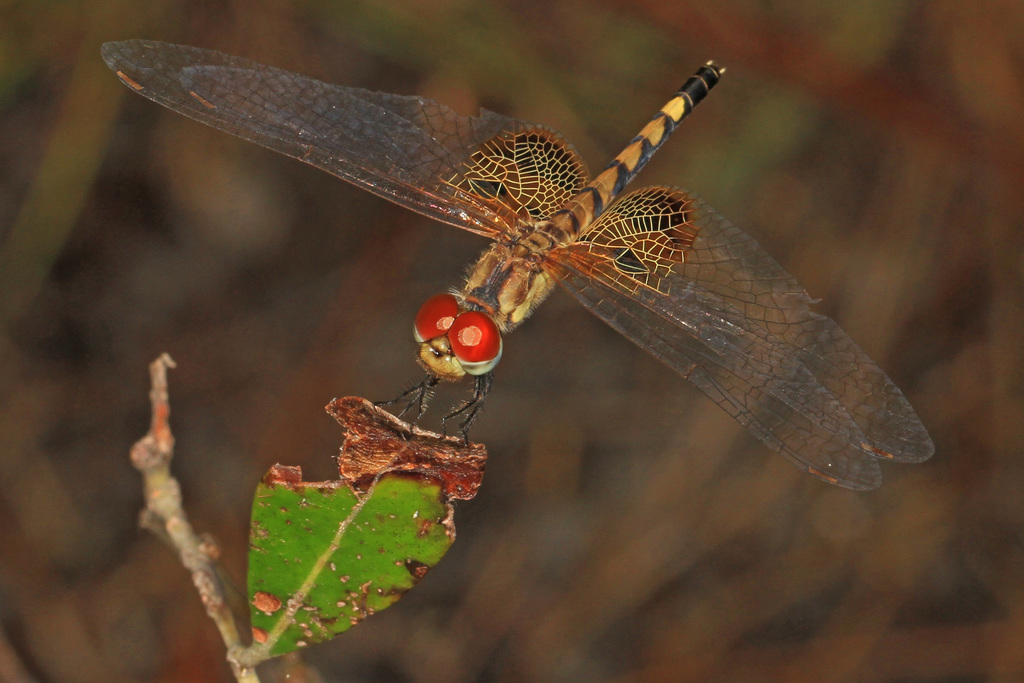
Amanda's Pennant is a small dragonfly about 2.4 to 3.1 cm long, with hindwings 2.1 to 2.7 cm long.
Source: Wikipedia
Size
Body length ranges from 24 to 31 mm and hindwing length from 21 to 27 mm.
Source: Wikipedia
Where it lives
It prefers marshes and other calm waters that have abundant partially submerged vegetation.
Source: Wikipedia
Where it is found in the US
Recorded in 11 of 51 states and DC. Most records: Florida, Georgia, North Carolina, Texas, South Carolina, Mississippi, Louisiana, Alabama.
Darker = more records. Counts are museum and citizen-science records, not population size.
Source: GBIF
Status: endemic in North America; endemic in United States. Source: iNaturalist
Months it is reported in the US
Source: GBIF
More photos


Questions people ask
How can I tell Amanda's Pennant apart from similar dragonflies?
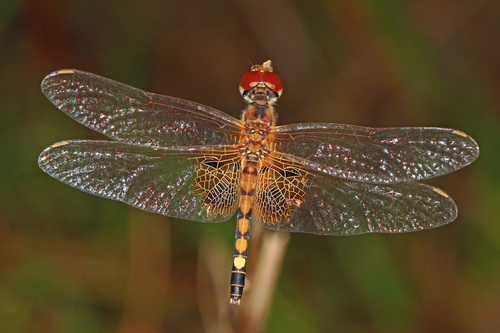
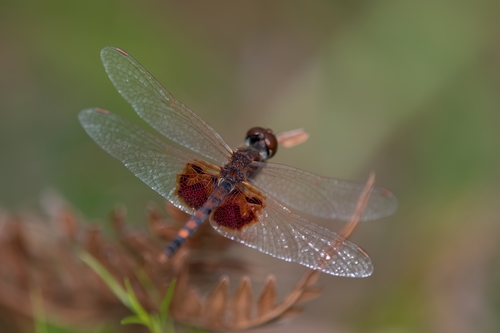
Look for the amber or brown base of the hindwings with a black stripe and the specific facial and abdominal coloration; the look-alike Celithemis ornata has a dark spot at each hindwing base and more stripes.
Source: Wikipedia
Where might I find Amanda's Pennant?
They are found in calm marshes and other still waters with plenty of partially submerged plants in the southeastern United States.
Source: Wikipedia
Same family (Libellulidae)

Sources
- Wikipedia: https://en.wikipedia.org/wiki/Amanda%27s_pennant
Look it up elsewhere: GBIF · iNaturalist · BugGuide · ITIS · Wikipedia
Text written 2026-10-23 from the sources above and checked sentence by sentence against them. Data fetched 2026-10-23.