 Bug FAQ
Aloeus Ox Beetle
Strategus aloeus · Order: Coleoptera · Family: Scarabaeidae
Also called: Rhinoceros Beetle
Source: Wikipedia

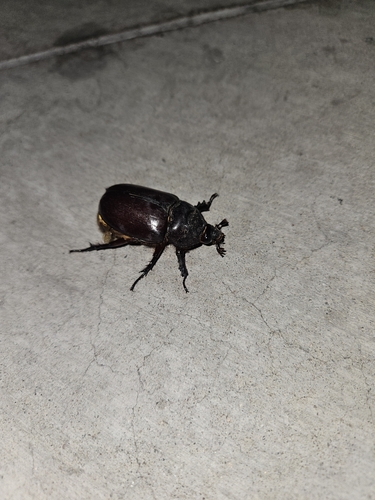
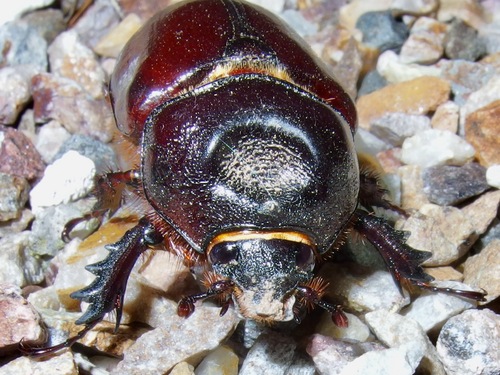
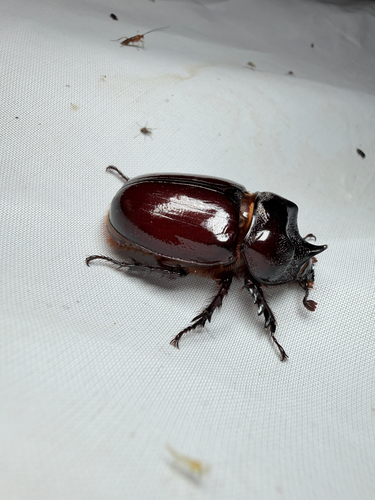
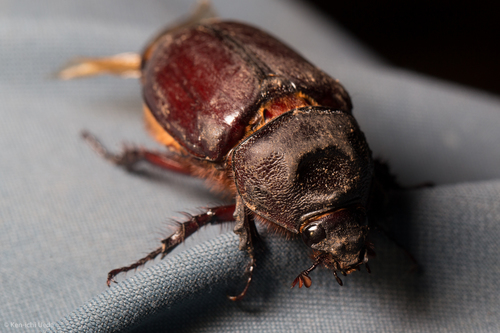
Adult ox beetles are 2.5 to 3.8 cm long, with males showing three prominent horns on the thorax. Adults are active from May to November, are attracted to lights in summer, and feed on flowers and fruit, while the larvae live underground feeding on plant roots.
Source: Wikipedia
How to recognize it
Major males have three large horns like a triceratops; minor males have smaller rear horns and a shorter front horn.
Source: Wikipedia
Size
Adults measure about 2.5 to 3.8 cm in length, not counting the male horns.
Source: Wikipedia
Is it a pest in the house?
Larvae can become a garden pest by damaging lawns and garden plants through root feeding.
Source: Wikipedia
Where it lives
Larvae live in the soil feeding on roots; adults feed on flowers and various fruits.
Source: Wikipedia
What it eats
Larvae eat plant roots underground; adults eat nectar, pollen, and fruit.
Source: Wikipedia
Life cycle
Larvae develop for four to six months before pupating. Adults are active from May through November, during which they mate.
Source: Wikipedia
When you see it
Adults are most visible in summer, often gathered around lights.
Source: Wikipedia
Where it is found in the US
Recorded in 15 of 51 states and DC. Most records: Texas, Arizona, Louisiana, Alabama, Georgia, Mississippi, Florida, Kansas.
Darker = more records. Counts are museum and citizen-science records, not population size.
Source: GBIF
Months it is reported in the US
Source: GBIF
More photos
Questions people ask
Do ox beetle larvae damage lawns?
Yes, the larvae feed on plant roots and can harm lawns and garden plants.
Source: Wikipedia
Same family (Scarabaeidae)
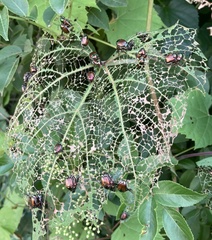 Japanese BeetlePopillia japonicaDamages trees, gardens or crops
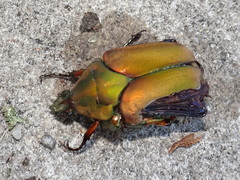 Common Green June BeetleCotinis nitidaDamages trees, gardens or crops
 Phyllophaga crinitaPhyllophaga crinitaDamages trees, gardens or crops
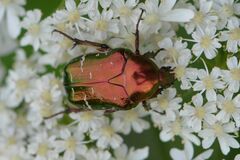 European Rose ChaferCetonia aurata
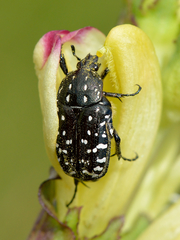 Mediterranean Spotted ChaferOxythyrea funestaDamages trees, gardens or crops
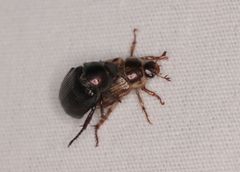 Oriental BeetleExomala orientalisDamages trees, gardens or crops
Sources
- Wikipedia: https://en.wikipedia.org/wiki/Strategus_aloeus
Look it up elsewhere: GBIF · iNaturalist · BugGuide · ITIS · Wikipedia
Text written 2026-10-22 from the sources above and checked sentence by sentence against them. Data fetched 2026-10-22.