 Bug FAQ
Alfalfa Weevil
Hypera postica · Order: Coleoptera · Family: Curculionidae
Also called: Clover Leaf Weevil, Weevil, Lucerne Weevil
Source: Wikipedia
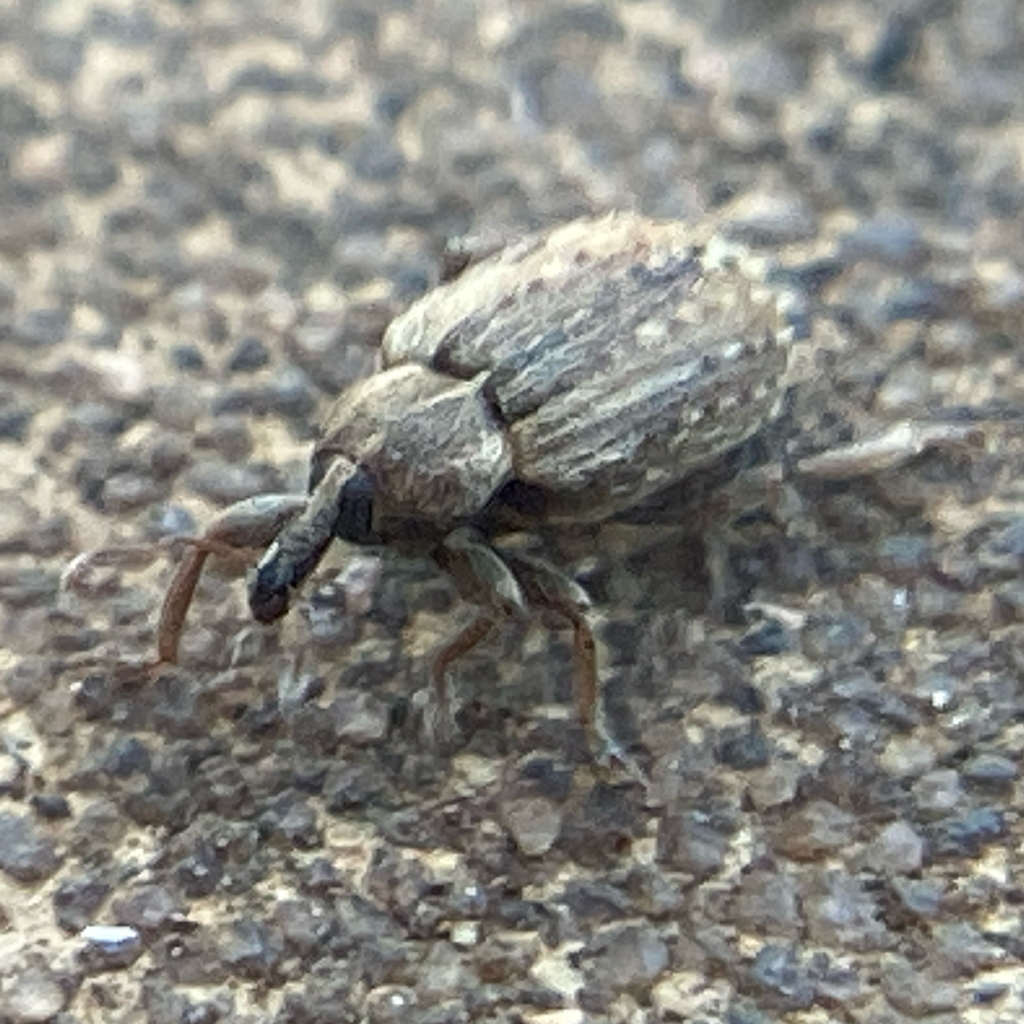
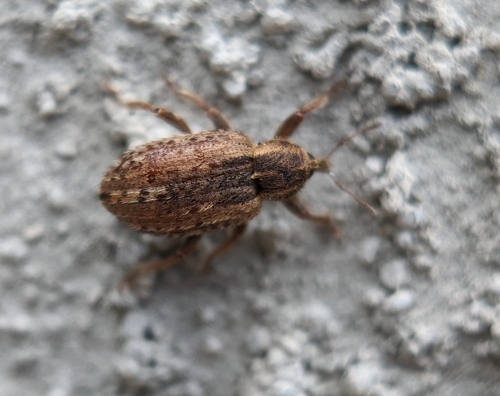
The alfalfa weevil is a small brown beetle with a dark stripe on its back; its larvae are yellow-green with a black head and white stripes. Both adults and larvae feed on alfalfa leaves, the larvae causing the most harm and can cut yields by as much as 15%. They live in alfalfa fields across Europe, hide in plant crowns or nearby vegetation, and overwinter as adults before becoming active in early spring.
Source: Wikipedia
How to recognize it
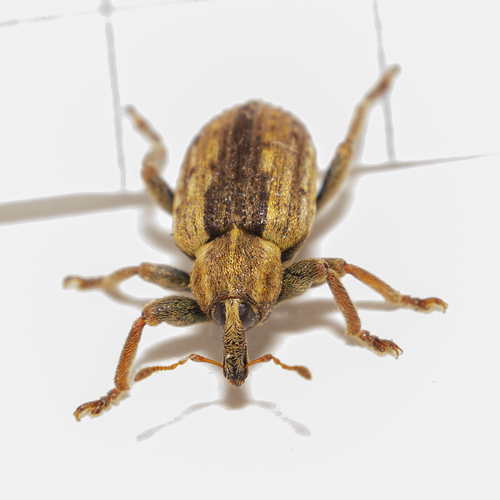
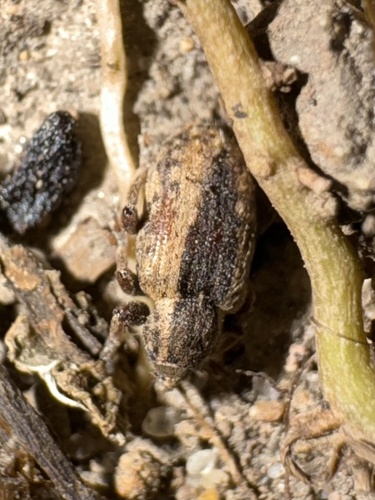
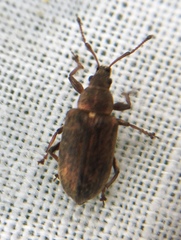
Adults are brown with a dark stripe along the middle of the back.
Source: Wikipedia
Size
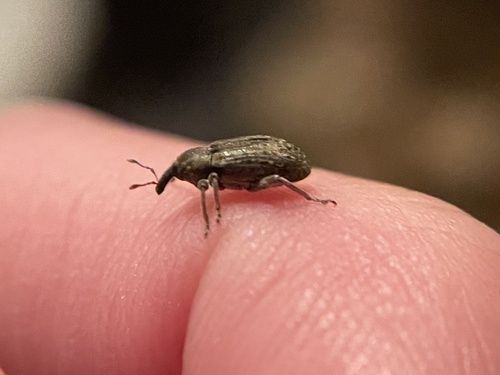
Adults grow to about 4 to 5.5 mm long. Just before pupating they reach roughly 1 cm in length.
Source: Wikipedia
How to get rid of it
Two species of wasp have been studied for biological control; B. anurus is generally considered superior because it reproduces faster.
Source: Wikipedia
Where it lives
They are found in alfalfa fields throughout Europe.
Source: Wikipedia
What it eats
Both larvae and adults feed on alfalfa foliage, with larvae causing the most damage. Adults eat the leaf edges, giving them a feathery appearance.
Source: Wikipedia
Life cycle
In Illinois some eggs are laid in late fall or winter when conditions allow.
Source: Wikipedia
When you see it
After a week or two of feeding they may aestivate for the rest of the summer.
Source: Wikipedia
Lookalikes
It looks similar to the clover leaf weevil, which is about twice as large, has tan-headed larvae, and rarely damages alfalfa.
Source: Wikipedia
Where it is found in the US
Recorded in 40 of 51 states and DC. Most records: California, Texas, Arizona, Pennsylvania, Utah, Kentucky, Colorado, New Mexico.
Darker = more records. Counts are museum and citizen-science records, not population size.
Source: GBIF
Status: introduced in North America; introduced in United States; introduced in Canada. Source: iNaturalist
Months it is reported in the US
Source: GBIF
More photos
Questions people ask
How does the alfalfa weevil damage crops?
The larvae feed heavily on alfalfa leaves, which can cut yields by up to 15%.
Source: Wikipedia
How can I tell the larva apart from other weevils?
Alfalfa weevil larvae have a black head, no legs, and are yellow-green with a white stripe on the back and faint side stripes.
Source: Wikipedia
When are adult alfalfa weevils active?
Adults emerge from overwintering and become active in March and April.
Source: Wikipedia
What natural enemies are being studied for control?
Researchers are looking at two wasp species, with B. anurus considered the more effective biological control agent.
Source: Wikipedia
Same family (Curculionidae)
 Green Immigrant Leaf WeevilPolydrusus formosusDamages trees, gardens or crops
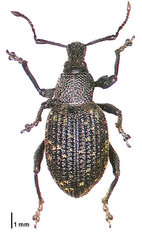 Black Vine WeevilOtiorhynchus sulcatusDamages trees, gardens or crops
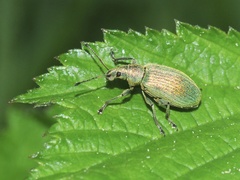 Nettle weevilPhyllobius pomaceusDamages trees, gardens or crops
 Asian Oak WeevilCyrtepistomus castaneusDamages trees, gardens or crops
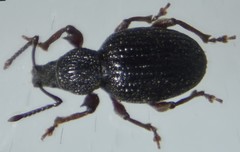 Strawberry Root WeevilOtiorhynchus ovatusDamages trees, gardens or crops
 Common Leaf WeevilPhyllobius pyriDamages trees, gardens or crops
Sources
- Wikipedia: https://en.wikipedia.org/wiki/Hypera_postica
Look it up elsewhere: GBIF · iNaturalist · BugGuide · ITIS · Wikipedia
Text written 2026-10-23 from the sources above and checked sentence by sentence against them. Data fetched 2026-10-23.