 Bug FAQ
Alexander Beetle
Megadromus antarcticus · Order: Coleoptera · Family: Carabidae
Also called: Metallic green ground beetle

The Alexander beetle is 22 to 34 mm long and shows a metallic green sheen on its back and pronotum edges. It lives throughout much of Canterbury in New Zealand and hunts a wide range of insects, larvae and slugs. Females guard their eggs and do not leave the chamber to feed while the eggs develop.
Source: Wikipedia
How to recognize it
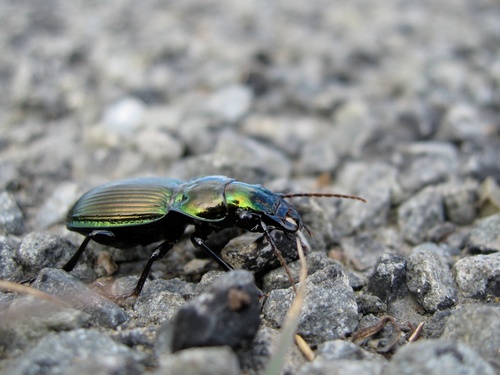
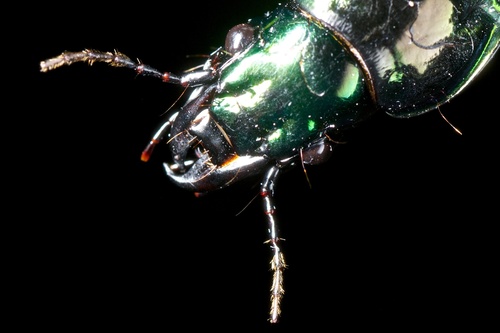
The beetle is easily recognized by its iridescent green colouration. Its body is black-green with metallic green rims on the pronotum and elytra.
Source: Wikipedia
Size
Adults range from 22 mm to 34 mm in length.
Source: Wikipedia
Where it lives
It is a generalist predator that feeds on many insects and larvae found in similar habitats.
Source: Wikipedia
What it eats
It preys on slugs that are pests to New Zealand agriculture. As a generalist predator it also eats a variety of other insects and larvae.
Source: Wikipedia
Life cycle
The incubation period of the eggs varies with the time of year. Females stay with the egg chamber and do not feed while the eggs develop.
Source: Wikipedia
Where it comes from
The species is endemic to New Zealand.
Source: Wikipedia
Lookalikes
Beetles like this are among the most common insects preyed upon by the morepork owl. The Australasian harrier, common in Canterbury, includes insects such as this beetle in about 8 % of its diet.
Source: Wikipedia
More photos


Questions people ask
What does the Alexander beetle look like?
It has a black-green body with metallic green edges on the pronotum and elytra and shows an iridescent green colour overall.
Source: Wikipedia
What does it eat?
It feeds on slugs that damage crops and also hunts a wide range of insects and larvae.
Source: Wikipedia
Same family (Carabidae)


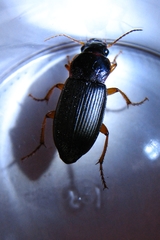
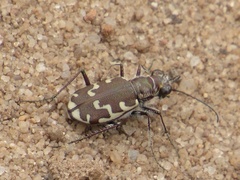
Sources
- Wikipedia: https://en.wikipedia.org/wiki/Megadromus_antarcticus
Look it up elsewhere: GBIF · iNaturalist · BugGuide · Wikipedia
Text written 2026-10-23 from the sources above and checked sentence by sentence against them. Data fetched 2026-10-23.