 Bug FAQ
Alabagrus texanus
Alabagrus texanus · Order: Hymenoptera · Family: Braconidae
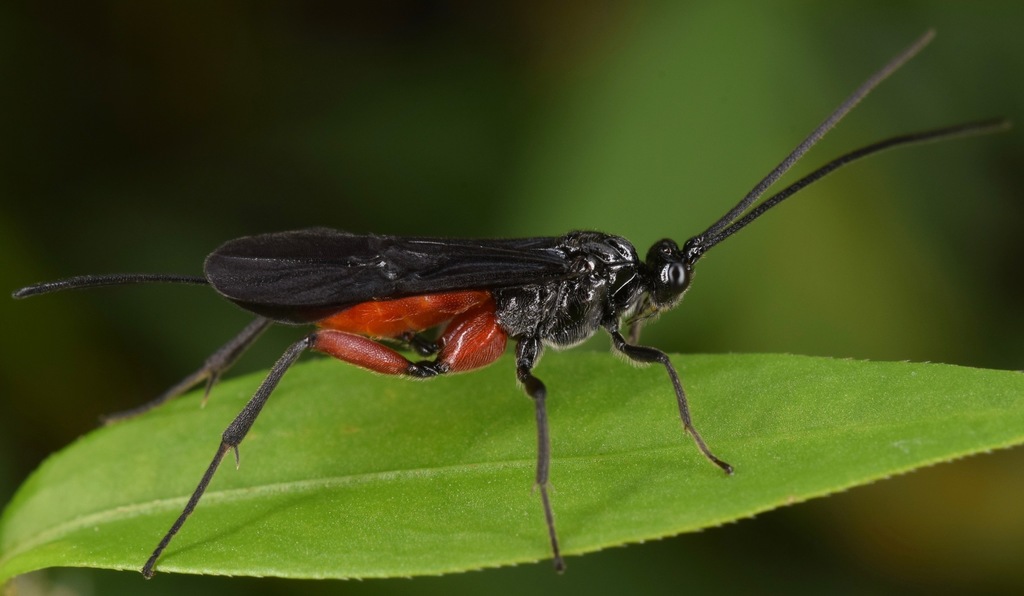
Alabagrus texanus develops inside the larvae of the moth Herpetogramma theseusalis. Male Alabagrus texanus emerge from their pupae before the females do. Female Alabagrus texanus usually mate only once, while males may mate several times.
Source: Wikipedia
What it eats
It grows within the larvae of Herpetogramma theseusalis.
Source: Wikipedia
Life cycle
Males finish pupation and emerge earlier than females. Females typically mate only once, whereas males can mate multiple times.
Source: Wikipedia
Where it is found in the US
Recorded in 20 of 51 states and DC. Most records: Florida, Kentucky, Texas, Virginia, Tennessee, Louisiana, Arkansas, Georgia.
Darker = more records. Counts are museum and citizen-science records, not population size.
Source: GBIF
Months it is reported in the US
Source: GBIF
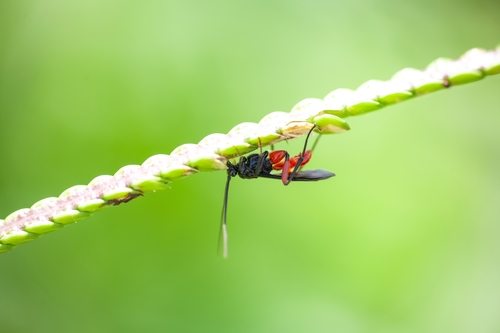
More photos
Questions people ask
What does Alabagrus texanus feed on?
It develops inside the larvae of the moth Herpetogramma theseusalis.
Source: Wikipedia
Do male Alabagrus texanus emerge before females?
Yes, males emerge from pupation earlier than females.
Source: Wikipedia
How many times do female Alabagrus texanus mate?
Females usually mate only once, while males may mate more than once.
Source: Wikipedia
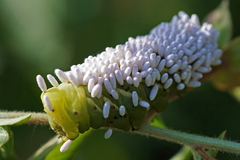
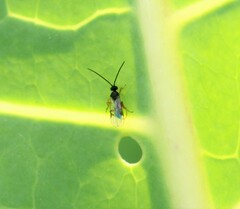
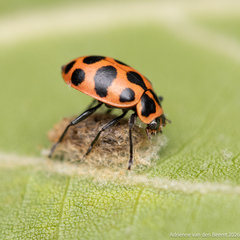
Same family (Braconidae)
Sources
- Wikipedia: https://en.wikipedia.org/wiki/Alabagrus_texanus
Look it up elsewhere: GBIF · iNaturalist · BugGuide · Wikipedia
Text written 2026-10-27 from the sources above and checked sentence by sentence against them. Data fetched 2026-10-26.