 Bug FAQ
Cabbage White Parasitoid Wasp
Cotesia glomerata · Order: Hymenoptera · Family: Braconidae
Also called: Parasitoid wasp, White Butterfly Parasite Wasp, White Butterfly Parasitoid Wasp
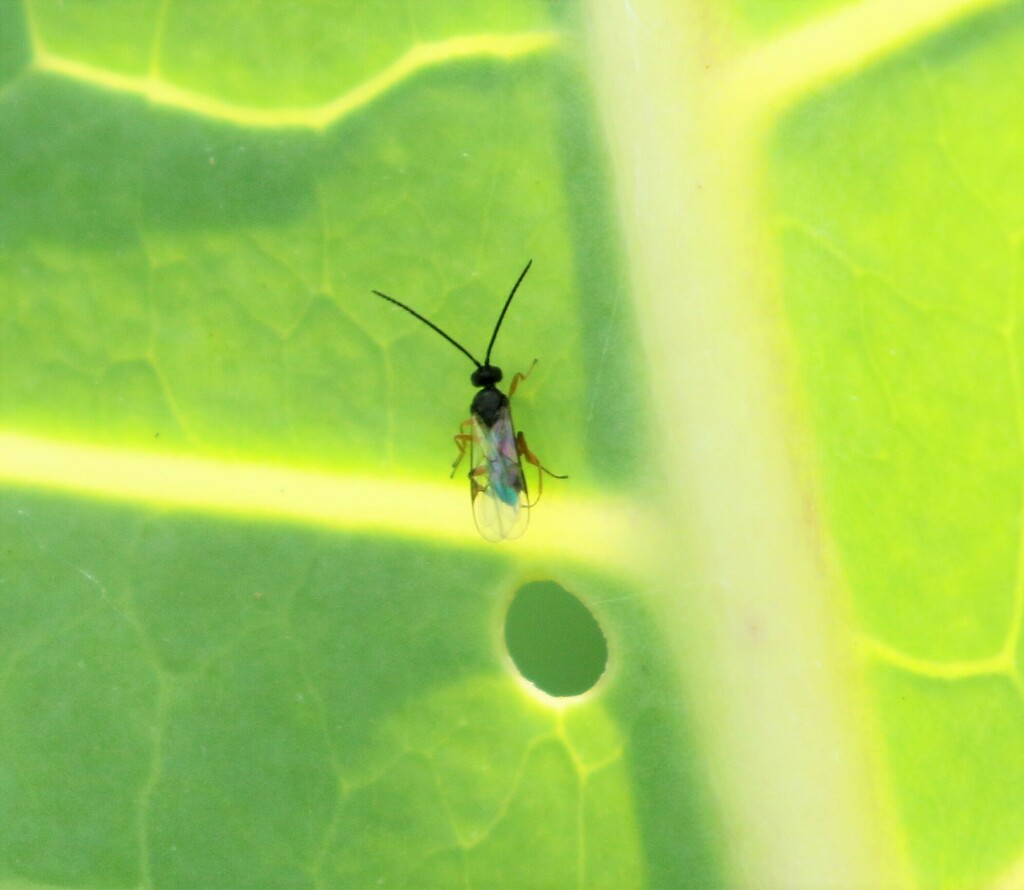
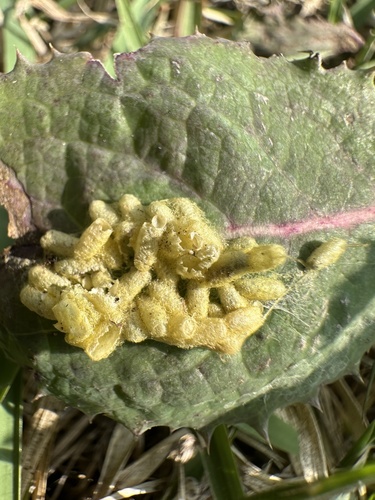
Cotesia glomerata is a tiny black braconid wasp about 3 to 7 mm long that has two pairs of wings. Adults sip nectar while the females lay eggs in caterpillars of white butterflies such as the large white and small white. The whole development from egg to adult takes roughly three weeks, and the species is found across Europe, Africa, Australia, North and South America.
Source: Wikipedia
How to recognize it
The wasp is black and has two pairs of wings.
Source: Wikipedia
Size
Adults measure between 3 and 7 mm in length.
Source: Wikipedia
What it eats
Adult wasps feed on nectar. Females lay eggs inside caterpillars of Pieris butterflies, especially the large white and small white species.
Source: Wikipedia
Life cycle
After emerging, females mate almost immediately and start laying eggs. Development from egg to adult takes about 22 to 30 days.
Source: Wikipedia
Where it comes from
It occurs in most of Europe and also in North America. Its range extends into the Afrotropical, Australasian, Nearctic and Neotropical realms.
Source: Wikipedia
Where it is found in the US
Recorded in 26 of 51 states and DC. Most records: Illinois, Pennsylvania, California, Ohio, Virginia, New Jersey, North Carolina, Texas.
Darker = more records. Counts are museum and citizen-science records, not population size.
Source: GBIF
Months it is reported in the US
Source: GBIF
More photos
Questions people ask
How long does it take for them to develop?
From egg to adult takes roughly 22 to 30 days.
Source: Wikipedia
Where are they found?
They are present across most of Europe and also in North America, as well as in Africa, Australia, and the tropical regions of the Americas.
Source: Wikipedia
Same family (Braconidae)
Sources
- Wikipedia: https://en.wikipedia.org/wiki/Cotesia_glomerata
Look it up elsewhere: GBIF · iNaturalist · BugGuide · ITIS · Wikipedia
Text written 2026-10-26 from the sources above and checked sentence by sentence against them. Data fetched 2026-10-26.