 Bug FAQ
Ladybird Parasitoid Wasp
Dinocampus coccinellae · Order: Hymenoptera · Family: Braconidae
Also called: Braconid wasp, Lady Beetle Parasitoid Wasp, Parasitoid wasp
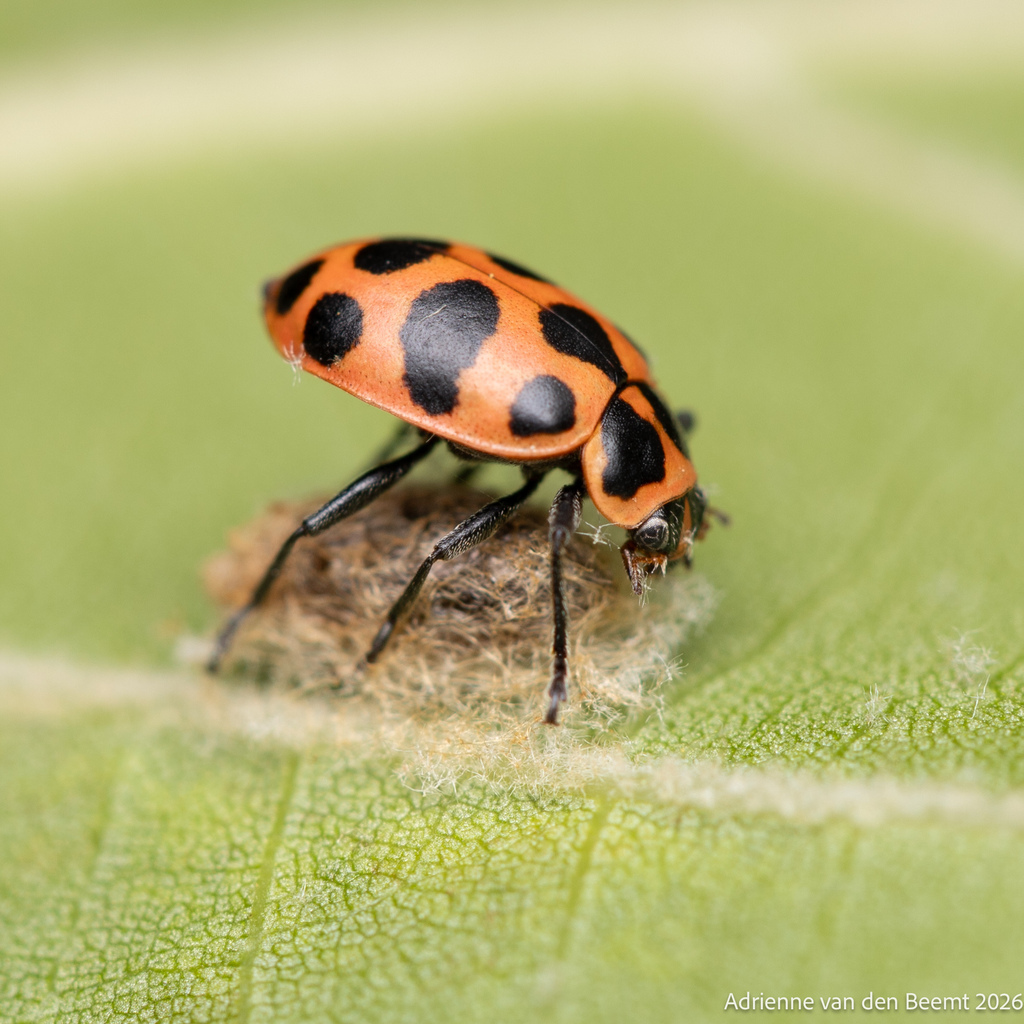
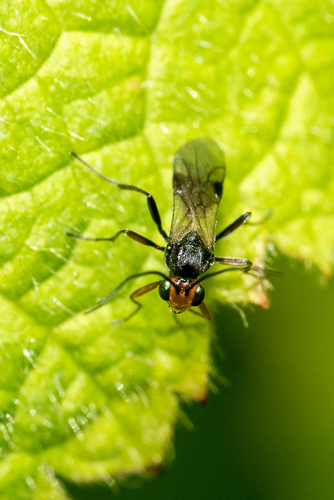
The ladybird parasitoid wasp is deep black with green eyes and brown markings on its head, front legs and abdomen tip. Its larva develops inside a ladybird, feeding on the host’s body and later emerging to pupate, with the host temporarily acting as a guard for the cocoon.
Source: Wikipedia
How to recognize it
The adult wasp is deep black, has green eyes, and shows brown coloration on the head, front legs and the tip of its abdomen.
Source: Wikipedia
Size
The original description noted the female as a “lady-bird killer” of moderate size.
Source: Wikipedia
Where it lives
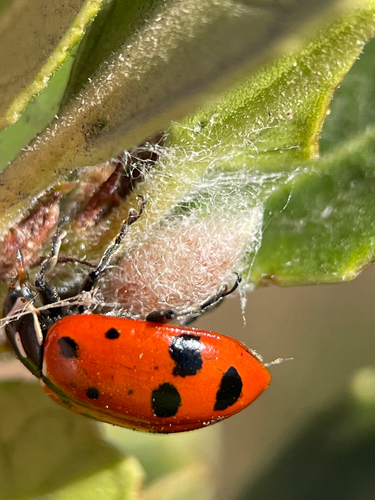
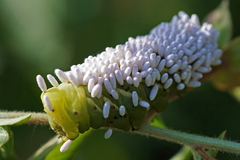
The wasp turns its ladybird host into a temporary “zombie” that guards the wasp’s cocoon.
Source: Wikipedia
Life cycle
The wasp larva passes through four instars inside the ladybird over 18 to 27 days. After 6 to 9 days the adult emerges from its cocoon.
Source: Wikipedia
Where it comes from
It parasitizes coccinellid beetles such as the spotted lady beetle, Coleomegilla maculata.
Source: Wikipedia
Where it is found in the US
Recorded in 37 of 51 states and DC. Most records: California, Oregon, Colorado, New York, Ohio, Hawaii, North Carolina, Washington.
Darker = more records. Counts are museum and citizen-science records, not population size.
Source: GBIF
Months it is reported in the US
Source: GBIF
More photos
Same family (Braconidae)
Sources
- Wikipedia: https://en.wikipedia.org/wiki/Dinocampus
Look it up elsewhere: GBIF · iNaturalist · BugGuide · Wikipedia
Text written 2026-10-23 from the sources above and checked sentence by sentence against them. Data fetched 2026-10-23.