 Bug FAQ
Cabbage Aphid Parasite
Diaeretiella rapae · Order: Hymenoptera · Family: Braconidae
Also called: Parasitoid wasp
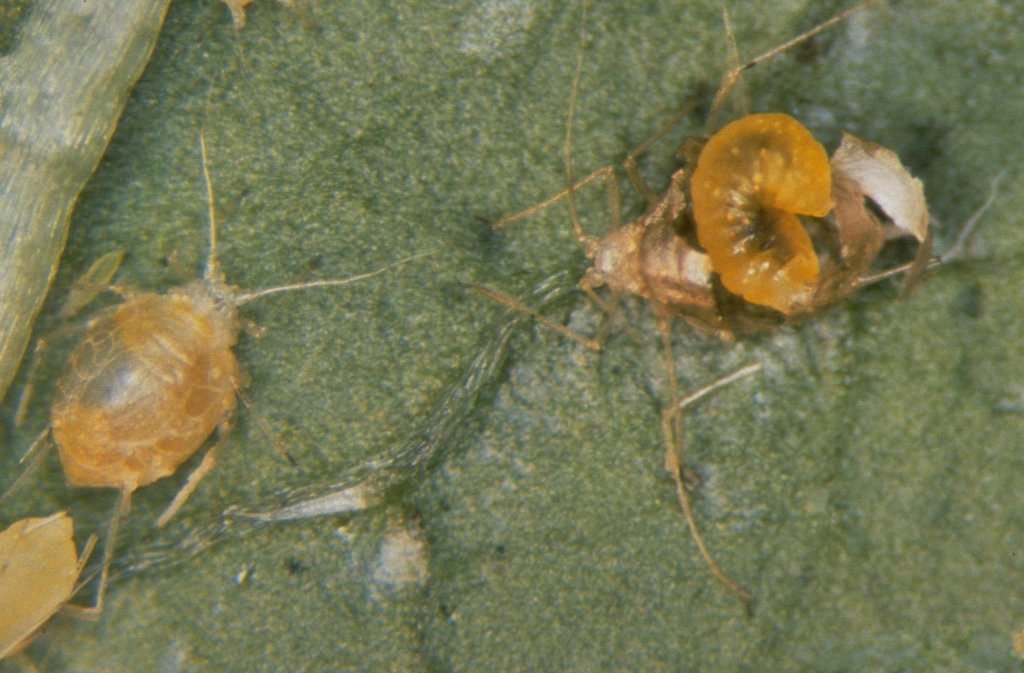
Diaeretiella rapae is a parasitoid wasp that attacks many aphid species, with a strong preference for the cabbage aphid (Brevicoryne brassicae). It is the sole member of its genus, making it unique among related insects.
Source: Wikipedia
What it eats
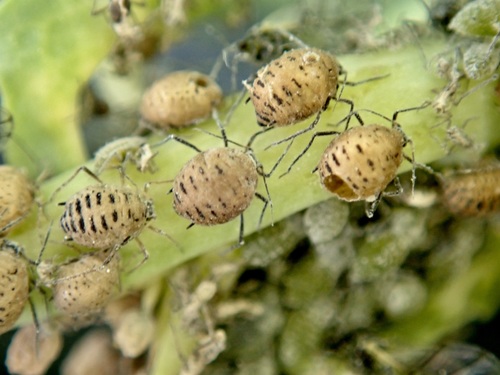
It parasitizes a variety of aphids, especially the cabbage aphid.
Source: Wikipedia
Lookalikes
No other species share its genus, so there are no close look-alikes within Diaeretiella.
Source: Wikipedia
Where it is found in the US
Recorded in 9 of 51 states and DC. Most records: California, Illinois, Hawaii, Maryland, Colorado, Florida, Indiana, Arizona.
Darker = more records. Counts are museum and citizen-science records, not population size.
Source: GBIF
Months it is reported in the US
Source: GBIF
More photos
Questions people ask
What insects does Diaeretiella rapae target?
It attacks many aphid species, most notably the cabbage aphid.
Source: Wikipedia
Are there other insects that look like Diaeretiella rapae?
It is the only species in its genus, so there are no direct look-alikes.
Source: Wikipedia
Same family (Braconidae)
Sources
- Wikipedia: https://en.wikipedia.org/wiki/Diaeretiella
Look it up elsewhere: GBIF · iNaturalist · BugGuide · Wikipedia
Text written 2026-10-26 from the sources above and checked sentence by sentence against them. Data fetched 2026-10-26.