 Bug FAQ
Agoliinus congregatus
Agoliinus congregatus · Order: Coleoptera · Family: Scarabaeidae
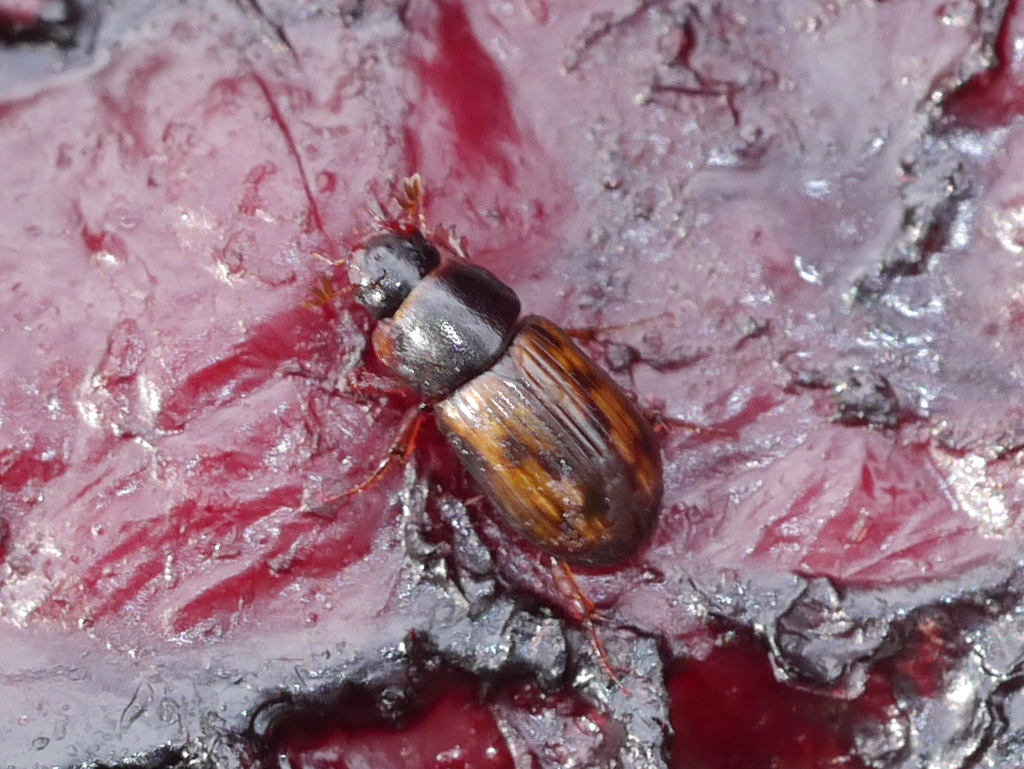
Adults are tiny, measuring about 4 to 6 mm long. They have a smooth, shiny oval body that is blackish or brownish, sometimes showing reddish or darker spots on the wing covers. The species occurs in parts of the United States and Canada, including Alaska, California, Colorado, Montana, Washington, Alberta and British Columbia.
Source: Wikipedia
How to recognize it
The beetle’s body is smooth, shiny, and oval-shaped. Its color ranges from blackish to brownish, often with reddish or darker spots on the elytra.
Source: Wikipedia
Size
Adults reach a length of roughly 4 to 6 mm.
Source: Wikipedia
Where it lives
It belongs to the scarab beetle family Scarabaeidae.
Source: Wikipedia
Where it is found in the US
Recorded in 2 of 51 states and DC. Most records: Alaska, New Mexico.
Darker = more records. Counts are museum and citizen-science records, not population size.
Source: GBIF
Status: native in North America; native in Canada. Source: iNaturalist
Months it is reported in the US
Source: GBIF
Questions people ask
What does Agoliinus congregatus look like?
It has a smooth, shiny, oval body that is blackish or brownish, sometimes with reddish or darker spots on the wing covers.
Source: Wikipedia
Where is Agoliinus congregatus found?
It occurs in parts of the United States and Canada, including Alaska, California, Colorado, Montana, Washington, Alberta and British Columbia.
Source: Wikipedia
Same family (Scarabaeidae)
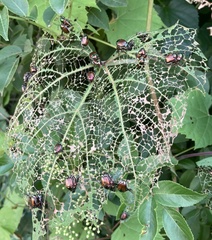 Japanese BeetlePopillia japonicaDamages trees, gardens or crops
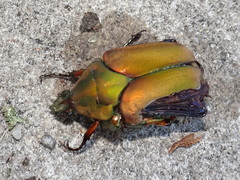 Common Green June BeetleCotinis nitidaDamages trees, gardens or crops
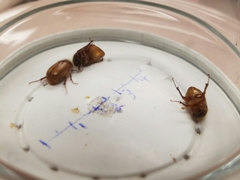 Phyllophaga crinitaDamages trees, gardens or crops
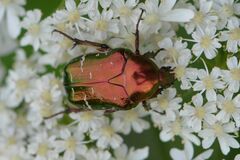 European Rose ChaferCetonia aurata
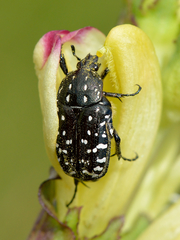 Mediterranean Spotted ChaferOxythyrea funestaDamages trees, gardens or crops
 Oriental BeetleExomala orientalisDamages trees, gardens or crops
Sources
- Wikipedia: https://en.wikipedia.org/wiki/Agoliinus_congregatus
Look it up elsewhere: GBIF · iNaturalist · BugGuide · ITIS · Wikipedia
Text written 2026-10-26 from the sources above and checked sentence by sentence against them. Data fetched 2026-10-26.