 Bug FAQ
African Gum Weevil
Gonipterus sp2 · Order: Coleoptera · Family: Curculionidae
Also called: Eucalyptus Weevils
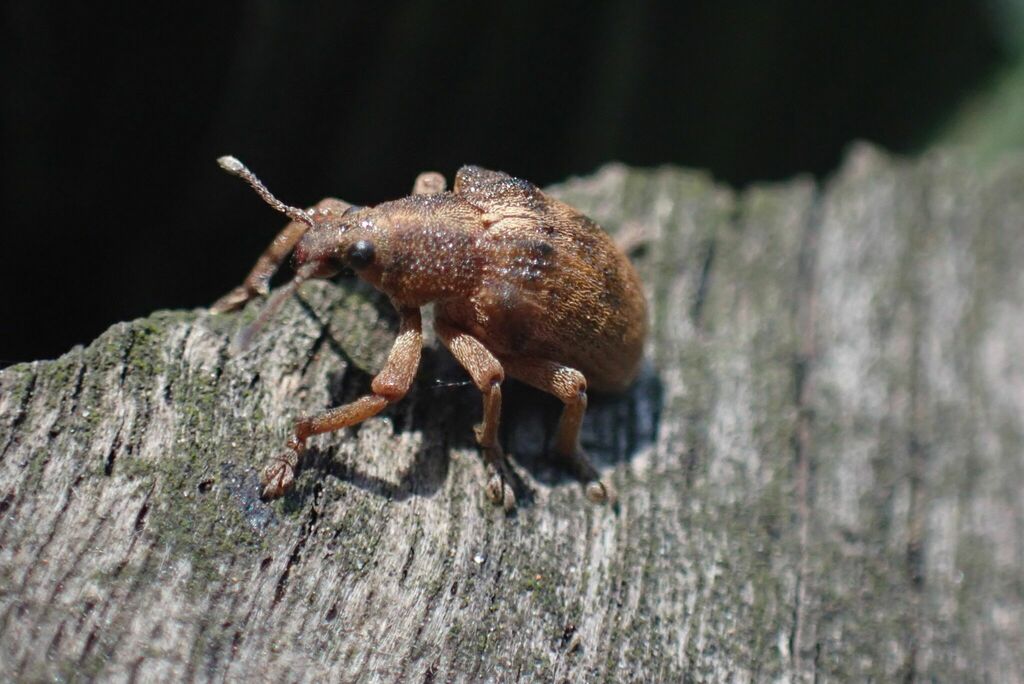
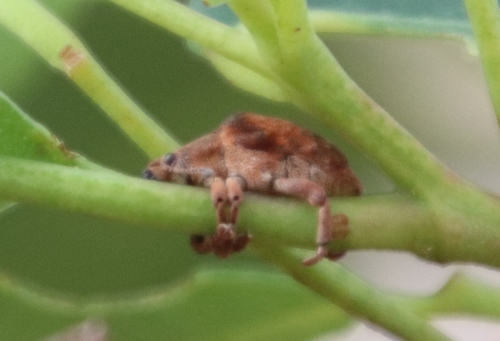
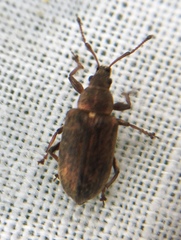
The African gum weevil is about 13 mm long and greyish-brown with a light transverse band. It lives on eucalyptus trees, which are its only food, and is native to Australia where it causes little economic damage.
Source: Wikipedia
Size
It measures about 13 mm in length.
Source: Wikipedia
Is it a pest in the house?
In Australia it has little economic significance and does not occur in other countries.
Source: Wikipedia
Where it lives
It feeds and breeds on eucalyptus trees.
Source: Wikipedia
What it eats
Eucalyptus trees are its only host.
Source: Wikipedia
Lookalikes
It is not readily distinguishable from the related weevils Gonipterus gibberus, G. platensis and G. pulverulentus, which share the same common names.
Source: Wikipedia
Where it is found in the US
Recorded in 2 of 51 states and DC. Most records: California, Hawaii.
Darker = more records. Counts are museum and citizen-science records, not population size.
Source: GBIF
Months it is reported in the US
Source: GBIF
More photos
Questions people ask
Same family (Curculionidae)
 Green Immigrant Leaf WeevilPolydrusus formosusDamages trees, gardens or crops
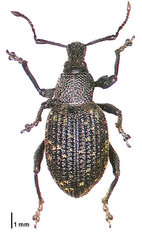 Black Vine WeevilOtiorhynchus sulcatusDamages trees, gardens or crops
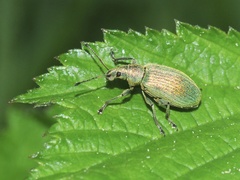 Nettle weevilPhyllobius pomaceusDamages trees, gardens or crops
 Asian Oak WeevilCyrtepistomus castaneusDamages trees, gardens or crops
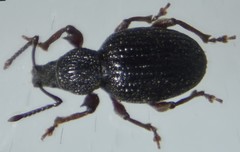 Strawberry Root WeevilOtiorhynchus ovatusDamages trees, gardens or crops
 Common Leaf WeevilPhyllobius pyriDamages trees, gardens or crops
Sources
- Wikipedia: https://en.wikipedia.org/wiki/Gonipterus_scutellatus
Look it up elsewhere: GBIF · iNaturalist · BugGuide · Wikipedia
Text written 2026-10-24 from the sources above and checked sentence by sentence against them. Data fetched 2026-10-24.