 Bug FAQ
Aethiessa floralis
Aethiessa floralis · Order: Coleoptera · Family: Scarabaeidae
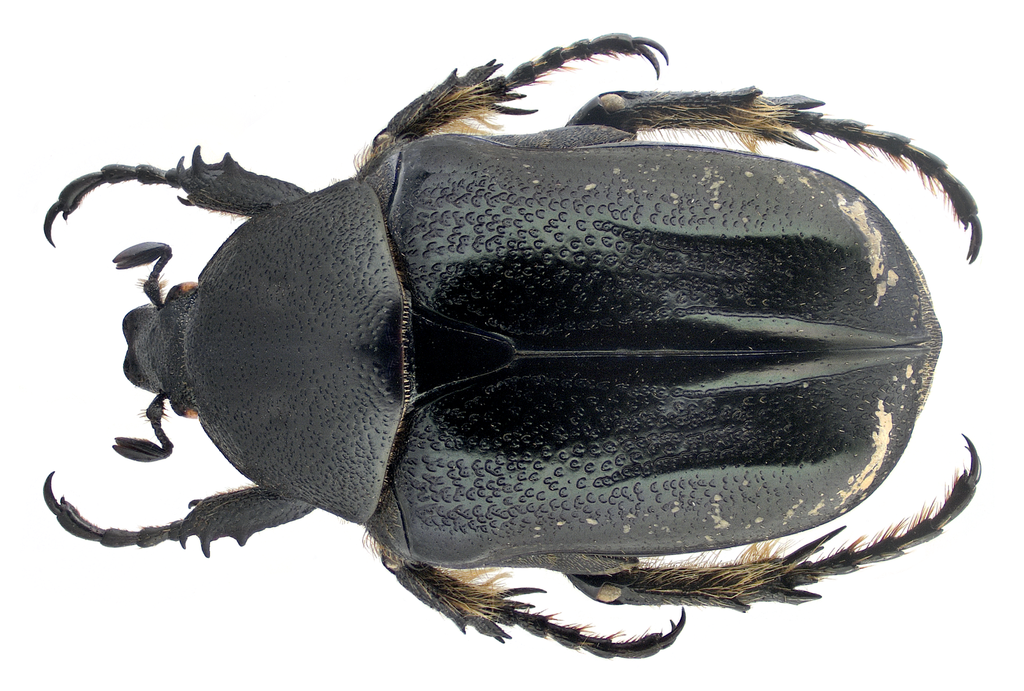
These beetles are 10 to 25 mm long and have a shiny black-brown base color with variable white marks along the sides. They live in sunny or dry places and are seen from May through September on thistle and Echium flowers. Their range includes Italy, Spain, Slovenia and North Africa from Morocco to Libya.
Source: Wikipedia
How to recognize it
The beetle’s basic colour is a glossy black-brown with often white markings on the lateral margins.
Source: Wikipedia
Size
Adults measure about 10 to 25 mm in length.
Source: Wikipedia
Where it lives
They prefer sunny or arid habitats.
Source: Wikipedia
What it eats
Adults feed mainly on thistle flowers (Silybum spp.) and also on Echium italicum.
Source: Wikipedia
When you see it
Adults are active from May to September.
Source: Wikipedia
Where it comes from
They are found in Italy, Spain, Slovenia and across North Africa from Morocco to Libya.
Source: Wikipedia
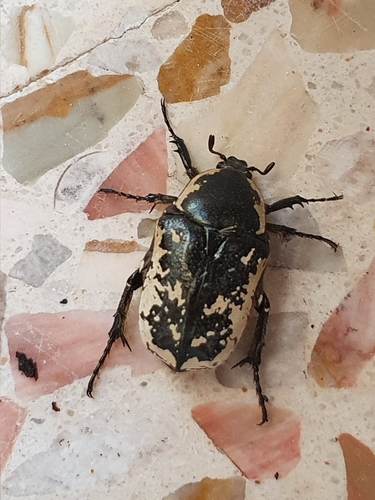
More photos
Questions people ask
What do Aethiessa floralis beetles look like?
They are 10 to 25 mm long, glossy black-brown with variable white spots on the sides.
Source: Wikipedia
Where are they found?
They occur in Italy, Spain, Slovenia and North Africa from Morocco to Libya.
Source: Wikipedia
Same family (Scarabaeidae)
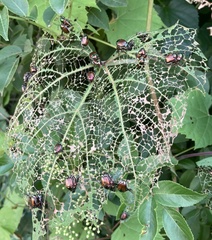 Japanese BeetlePopillia japonicaDamages trees, gardens or crops
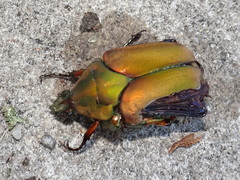 Common Green June BeetleCotinis nitidaDamages trees, gardens or crops
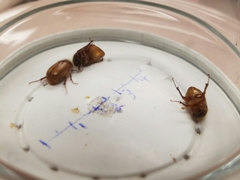 Phyllophaga crinitaPhyllophaga crinitaDamages trees, gardens or crops
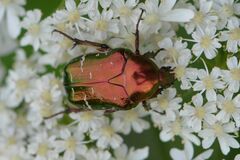 European Rose ChaferCetonia aurata
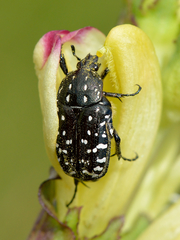 Mediterranean Spotted ChaferOxythyrea funestaDamages trees, gardens or crops
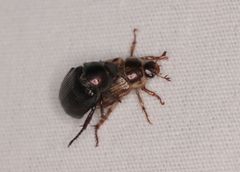 Oriental BeetleExomala orientalisDamages trees, gardens or crops
Sources
- Wikipedia: https://en.wikipedia.org/wiki/Aethiessa_floralis
Look it up elsewhere: GBIF · iNaturalist · BugGuide · Wikipedia
Text written 2026-10-23 from the sources above and checked sentence by sentence against them. Data fetched 2026-10-23.