 Bug FAQ
Adonis Blue
Polyommatus bellargus · Order: Lepidoptera · Family: Lycaenidae
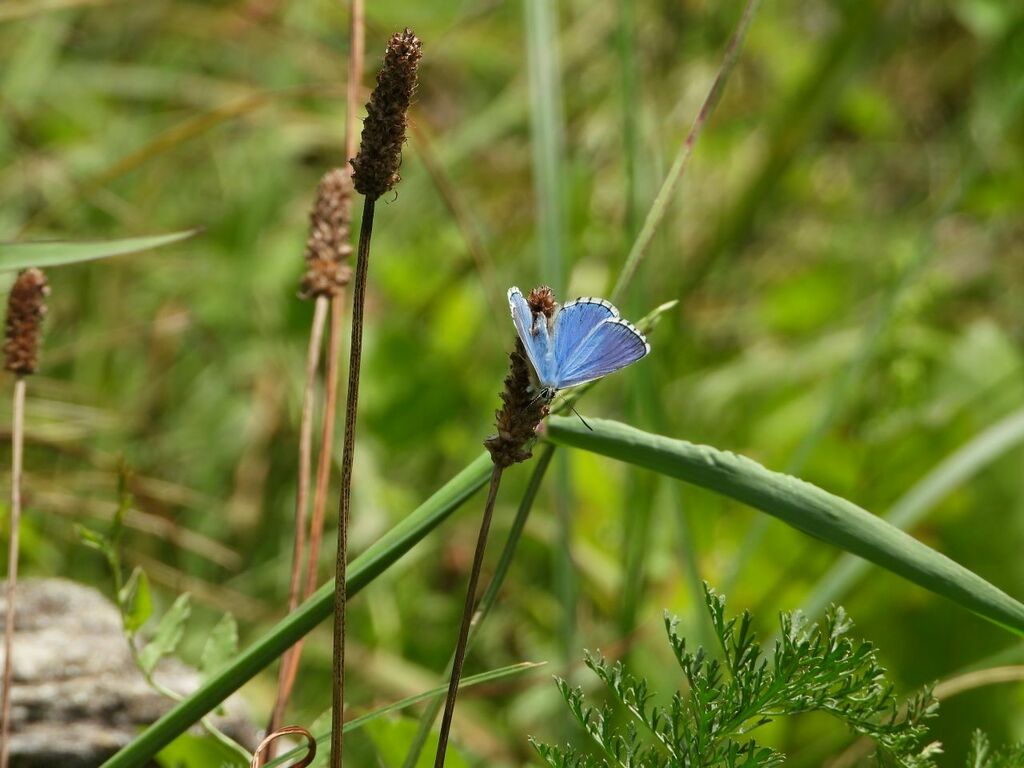
The Adonis blue has a wingspan of about 3 cm (1.2 in). It lives on warm, dry calcareous grasslands, especially chalk downland, and flies low over the vegetation in May-September, producing two broods.
Source: Wikipedia
How to recognize it
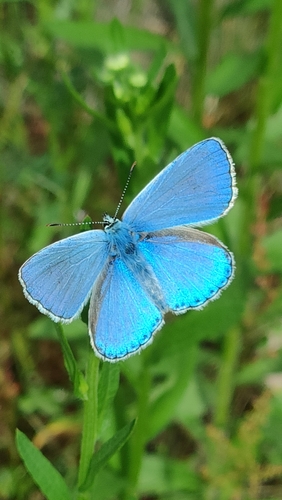
Males show a brilliant sky-blue upper wing surface with a fine black line around the edge and a white margin.
Source: Wikipedia
Size
The wingspan is roughly 3 cm (1.2 in).
Source: Wikipedia
Where it lives
It prefers calcareous grasslands with hot, dry conditions. Typical sites are chalk downland in warm, sheltered spots where it flies low over vegetation.
Source: Wikipedia
What it eats
The caterpillars feed on horseshoe vetch (Hippocrepis comosa).
Source: Wikipedia
Life cycle
The species overwinters as a small caterpillar. Adults are on the wing from May to September in two broods.
Source: Wikipedia
Where it comes from
Its range covers the Palearctic realm, including western, central and southern Europe, southern Russia, Iraq, Iran, the Caucasus, Transcaucasus, and Turkey.
Source: Wikipedia
More photos
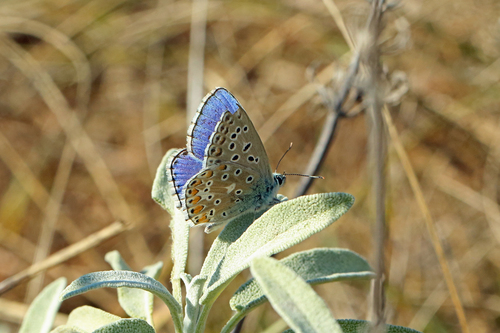
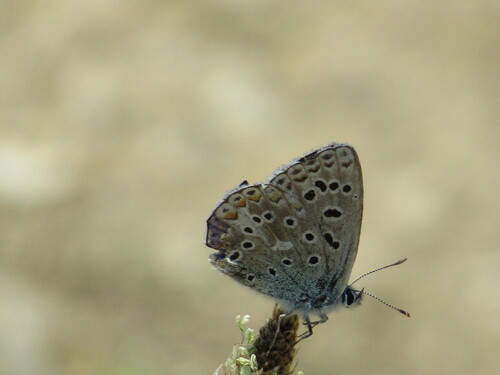
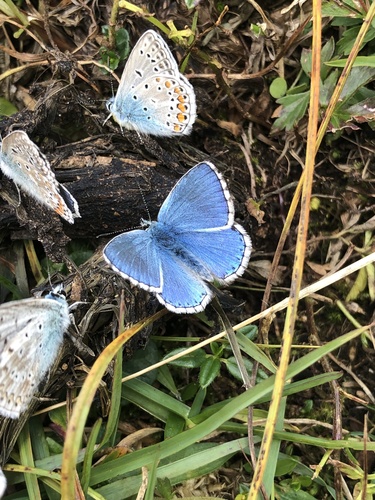
Questions people ask
When can I see adult Adonis blues?
Adults fly from May through September, with two main broods and a possible third in the south later in the year.
Source: Wikipedia
Same family (Lycaenidae)

Sources
- Wikipedia: https://en.wikipedia.org/wiki/Adonis_blue
Look it up elsewhere: GBIF · iNaturalist · BugGuide · Wikipedia
Text written 2026-10-22 from the sources above and checked sentence by sentence against them. Data fetched 2026-10-22.