 Bug FAQ
Acadian Hairstreak
Satyrium acadica (formerly Strymon acadica) · Order: Lepidoptera · Family: Lycaenidae

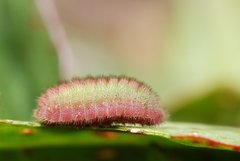
The Acadian hairstreak has a wingspan of about 29 to 38 mm and brown-grey upper wings with grey undersides on the hindwings. Adults fly from June to August, laying eggs that overwinter before hatching into larvae that eat willow leaves.
Source: Wikipedia
How to recognize it
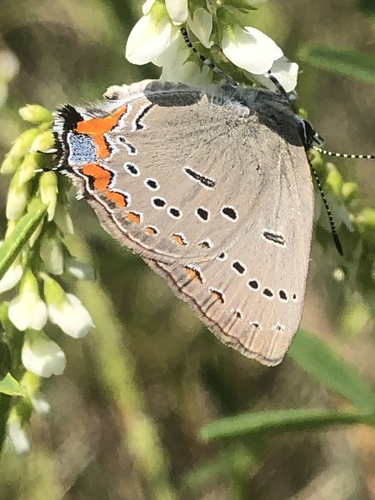
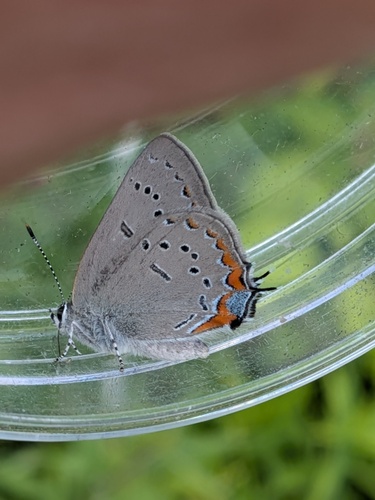
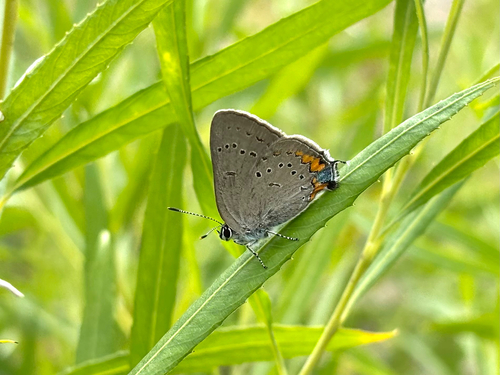
Each hindwing bears two tails near the tip, the upper one being very short and often hardly visible.
Source: Wikipedia
Size
The wingspan ranges from 29 to 38 mm.
Source: Wikipedia
What it eats
Adults sip nectar from flowers such as butterflyweed, milkweeds and thistles. Caterpillars feed on the leaves of willow species, especially black willow and silky willow.
Source: Wikipedia
Life cycle
Adults are on the wing from June through August, producing one generation each year. The species overwinters as an egg.
Source: Wikipedia
When you see it
You will see adults between June and August.
Source: Wikipedia
Where it comes from
Its native range covers much of Canada and the United States, from the west coast to the Atlantic provinces and into the northern interior states.
Source: Wikipedia
Lookalikes
It is a member of the Lycaenidae family and may be confused with other hairstreak butterflies, but its very short upper tail helps tell it apart.
Source: Wikipedia
Where it is found in the US
Recorded in 31 of 51 states and DC. Most records: California, Illinois, Michigan, Idaho, Colorado, Connecticut, Ohio, Vermont.
Darker = more records. Counts are museum and citizen-science records, not population size.
Source: GBIF
Months it is reported in the US
Source: GBIF
More photos
Questions people ask
What do the caterpillars eat?
The larvae feed on willow leaves, especially Salix nigra and Salix sericea.
Source: Wikipedia
Where does this butterfly live?
It is found across Canada and the northern United States, from British Columbia to Nova Scotia and south to states like Idaho and Colorado.
Source: Wikipedia
Same family (Lycaenidae)





Sources
- Wikipedia: https://en.wikipedia.org/wiki/Satyrium_acadica
Look it up elsewhere: GBIF · iNaturalist · BugGuide · ITIS · Wikipedia
Text written 2026-10-24 from the sources above and checked sentence by sentence against them. Data fetched 2026-10-23.