 Bug FAQ
Zephyr Sweat Bee
Lasioglossum zephyrum · Order: Hymenoptera · Family: Halictidae
Also called: Zephyr Metallic-Sweat Bee
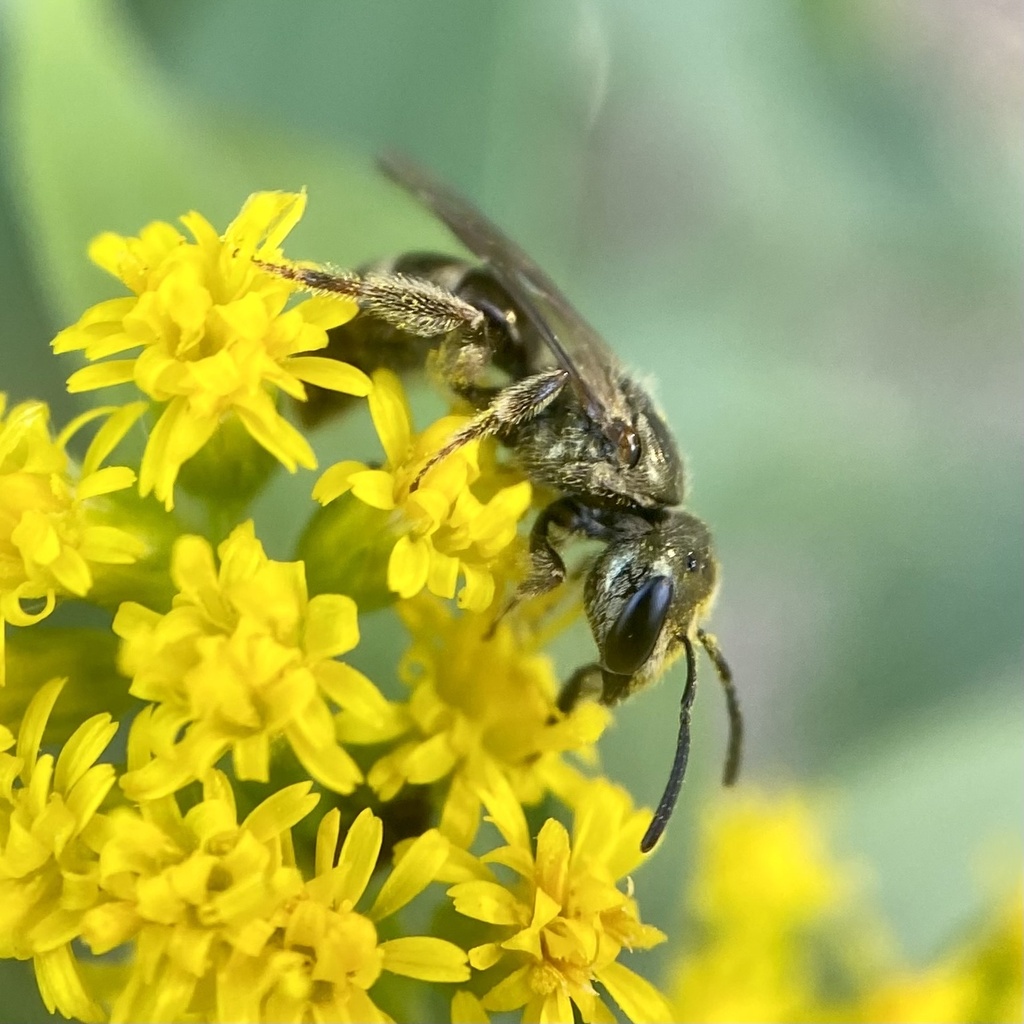
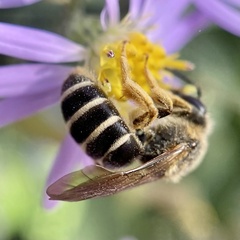
The Zephyr Sweat Bee is a small metallic green bee with a reddish abdomen and a relatively hairy face. It builds soil burrows in spring, often in large groups near south-facing stream edges, and is active from March through October across the United States and Canada.
Source: Wikipedia
How to recognize it
Males are slightly larger and show brighter green coloration and redder abdomens than females.
Source: Wikipedia
Size
Males measure about 6 to 7 mm, a bit longer than females.
Source: Wikipedia
Where it lives
Nests are made in soil burrows that are started in April along the sunny edges of streams. Nests can be clustered, sometimes reaching up to a thousand individual nests.
Source: Wikipedia
What it eats
Adults collect pollen from surrounding plants to feed their larvae.
Source: Wikipedia
Life cycle
A nest usually contains fewer than twenty bees. In spring, one or more females establish new nests.
Source: Wikipedia
When you see it
They have been observed from March through October across their range.
Source: Wikipedia
Where it comes from
It is a North-American sweat bee found throughout the United States and Canada.
Source: Wikipedia
Lookalikes
The kleptoparasite Lasioglossum cephalotes targets this species, and the mutillid Pseudomethoca frigida may fight females.
Source: Wikipedia
Where it is found in the US
Recorded in 46 of 51 states and DC. Most records: New York, Illinois, Massachusetts, Maryland, Washington, Kansas, Ohio, North Carolina.
Darker = more records. Counts are museum and citizen-science records, not population size.
Source: GBIF
Months it is reported in the US
Source: GBIF
More photos

Questions people ask
How can I identify a Zephyr Sweat Bee?
Look for a small metallic green bee with a reddish abdomen and a relatively hairy face; males are slightly larger and brighter green.
Source: Wikipedia
When are Zephyr Sweat Bees active?
They are active from early spring (March) through fall (October).
Source: Wikipedia
Where do they nest?
They dig soil burrows in April, often in large groups along south-facing stream edges.
Source: Wikipedia
Same family (Halictidae)


Sources
- Wikipedia: https://en.wikipedia.org/wiki/Lasioglossum_zephyrus
Look it up elsewhere: GBIF · iNaturalist · BugGuide · ITIS · Wikipedia
Text written 2026-10-23 from the sources above and checked sentence by sentence against them. Data fetched 2026-10-23.