 Bug FAQ
Orange-legged Furrow Bee
Halictus rubicundus · Order: Hymenoptera · Family: Halictidae
Also called: Polymorphic Sweat Bee, Yellow-legged Furrow Bee
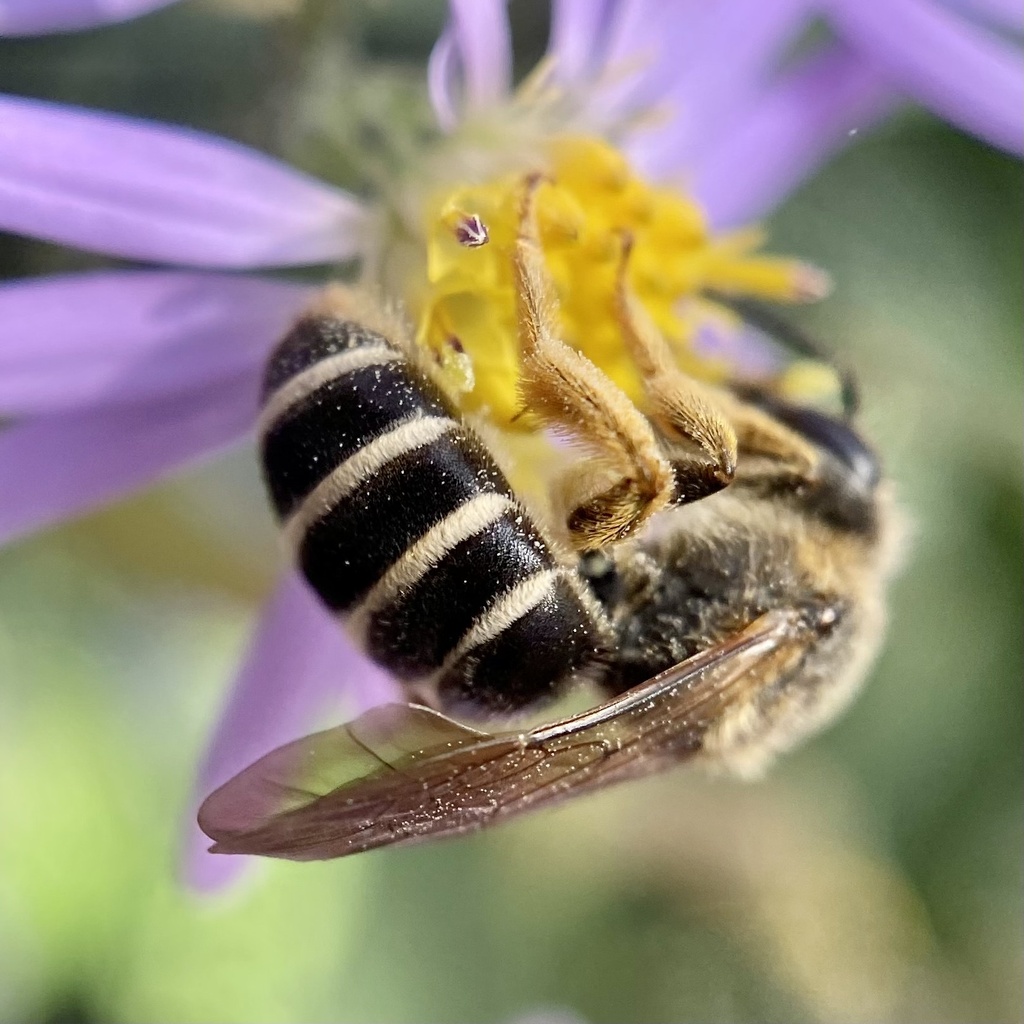
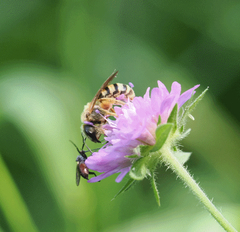
Females are about 1 cm long, brown with white bands on the abdomen and rusty-orange legs; males are slimmer, have longer antennae, yellow markings, and lack a hair band on the last abdominal segment. They nest in sand or soil on south-facing slopes, with each nest started by a single female, and can be solitary or eusocial depending on climate. The species is native to the Northern Hemisphere and arrived in North America from the Old World during historic Halictus invasions.
Source: Wikipedia
How to recognize it
Females are brown with fine white bands on the ends of abdominal segments and have rusty-orange legs.
Source: Wikipedia
Size
Female body length is about 1 cm.
Source: Wikipedia
Where it lives
Nests are founded by single females and are built in sand or soil on south-facing slopes, either solitary or eusocial.
Source: Wikipedia
What it eats
Females lay a single egg on a pollen mass, seal the brood cell, and repeat the process deeper in the soil, forming a tumulus at the entrance.
Source: Wikipedia
Life cycle
Colonies contain foundress queens and non-queen females that may become replacement queens or workers.
Source: Wikipedia
When you see it
In colder, northern or high-elevation areas the bees tend to be solitary, while in warmer southern or low-elevation sites they are more likely to be eusocial.
Source: Wikipedia
Lookalikes
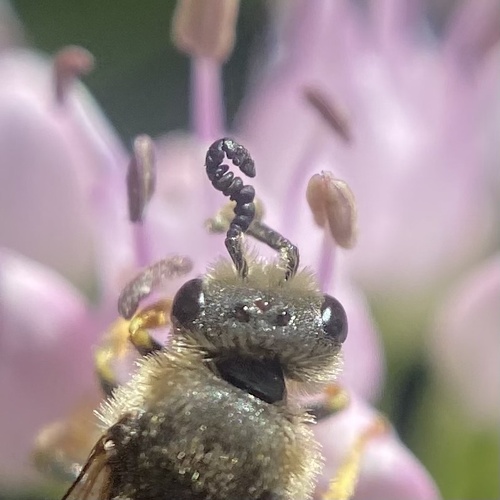
Males can be told apart from similar species by the missing hair band on the last abdominal segment.
Source: Wikipedia
Where it is found in the US
Recorded in 50 of 51 states and DC. Most records: Washington, Utah, Oregon, Colorado, New York, Wyoming, California, Minnesota.
Darker = more records. Counts are museum and citizen-science records, not population size.
Source: GBIF
Status: native in North America; native in United States; native in Canada. Source: iNaturalist
Months it is reported in the US
Source: GBIF
More photos
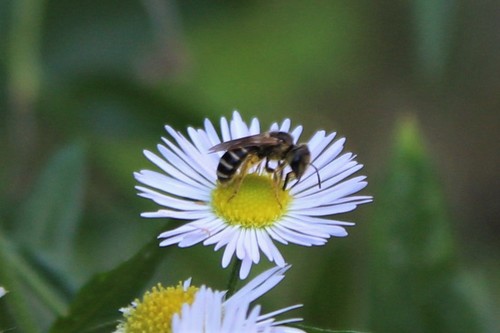
Same family (Halictidae)
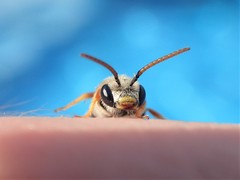
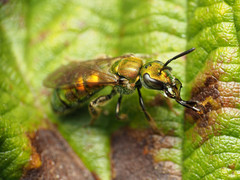
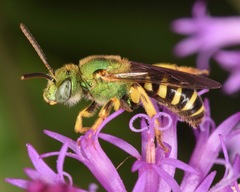


Sources
- Wikipedia: https://en.wikipedia.org/wiki/Halictus_rubicundus
Look it up elsewhere: GBIF · iNaturalist · BugGuide · ITIS · Wikipedia
Text written 2026-10-22 from the sources above and checked sentence by sentence against them. Data fetched 2026-10-22.