 Bug FAQ
Zebra Tick
Rhipicephalus pulchellus · Order: Ixodida · Family: Ixodidae
Also called: Yellow backed tick
Source: Wikipedia
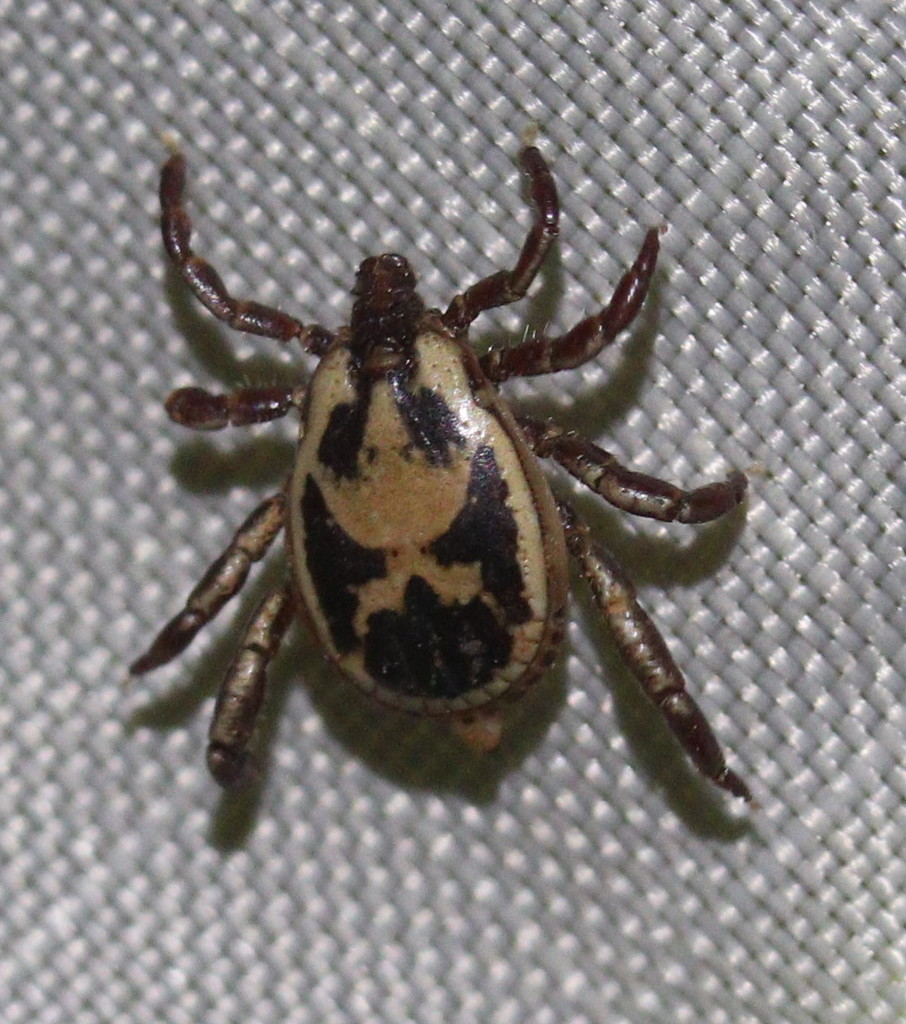
Adult males have a black and ivory patterned scutum and are about 3.5 to 4.6 mm long and 2.3 to 3.1 mm wide. They live in the Horn of Africa’s Rift Valley and surrounding scrub and long-grass areas, especially during the rainy season.
Source: Wikipedia
How to recognize it
Male adults show a distinctive black and ivory ornamentation on their scutum.
Source: Wikipedia
Size
The male gnathosoma measures roughly 0.84 to 1.07 mm long by 0.69 to 0.83 mm wide. The conscutum (shield) ranges from about 3.44 mm × 2.29 mm to 4.61 mm × 3.14 mm.
Source: Wikipedia
Is it a pest in the house?
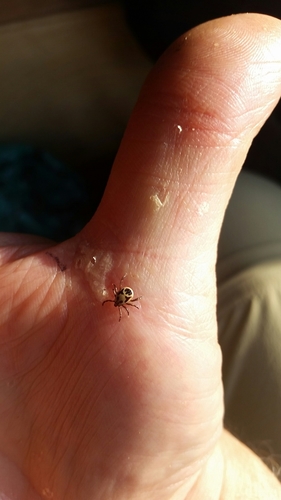
Immature ticks have been found on human legs, showing a strong affinity for people.
Source: Wikipedia
Does it bite or sting?
Adults and immature stages will bite humans, often leaving ulcers where they feed.
Source: Wikipedia
Where it lives
Adults looking for hosts are found in scrub and long-grass habitats.
Source: Wikipedia
What it eats
It feeds on many hosts, including livestock, wild mammals and humans. In parts of Ethiopia it makes up about 90 % of ticks collected from cattle and camels.
Source: Wikipedia
Life cycle
Immature stages can attach to human legs. A study in Kenya found an average of three adult ticks on a person walking 400 m.
Source: Wikipedia
When you see it
The tick is most active during the rainy season. It was the most common tick recorded in a survey at Haller Park, Kenya.
Source: Wikipedia
Where it comes from
Its range lies within the Afrotropical biogeographic realm.
Source: Wikipedia
More photos
Questions people ask
Do they bite people?
Yes, they bite humans and can cause ulcers at the feeding sites.
Source: Wikipedia
Where are they found?
They occur in the Horn of Africa, especially the Rift Valley and eastward, in scrub and long-grass areas.
Source: Wikipedia
Same family (Ixodidae)
 American Dog TickDermacentor variabilisCan spread germs or disease
 Eastern Black-legged TickIxodes scapularisCan spread germs or disease
 Lone Star TickAmblyomma americanumCan spread germs or disease
 Gulf Coast TickAmblyomma maculatumCan spread germs or disease
 Western Black-legged TickIxodes pacificusCan spread germs or disease
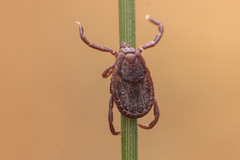 Brown Dog TickRhipicephalus sanguineusCan spread germs or disease
Sources
- Wikipedia: https://en.wikipedia.org/wiki/Rhipicephalus_pulchellus
Look it up elsewhere: GBIF · iNaturalist · BugGuide · ITIS · Wikipedia
Text written 2026-10-23 from the sources above and checked sentence by sentence against them. Data fetched 2026-10-23.