 Bug FAQ
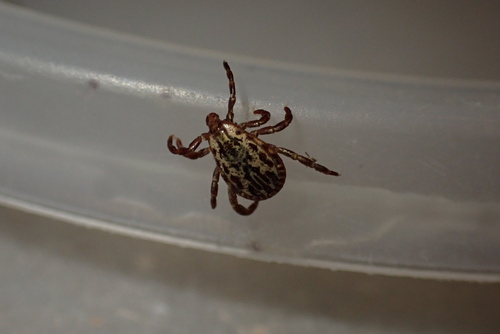
American Dog Tick
Dermacentor variabilis · Order: Ixodida · Family: Ixodidae
Also called: Common Wood Tick, Wood Tick
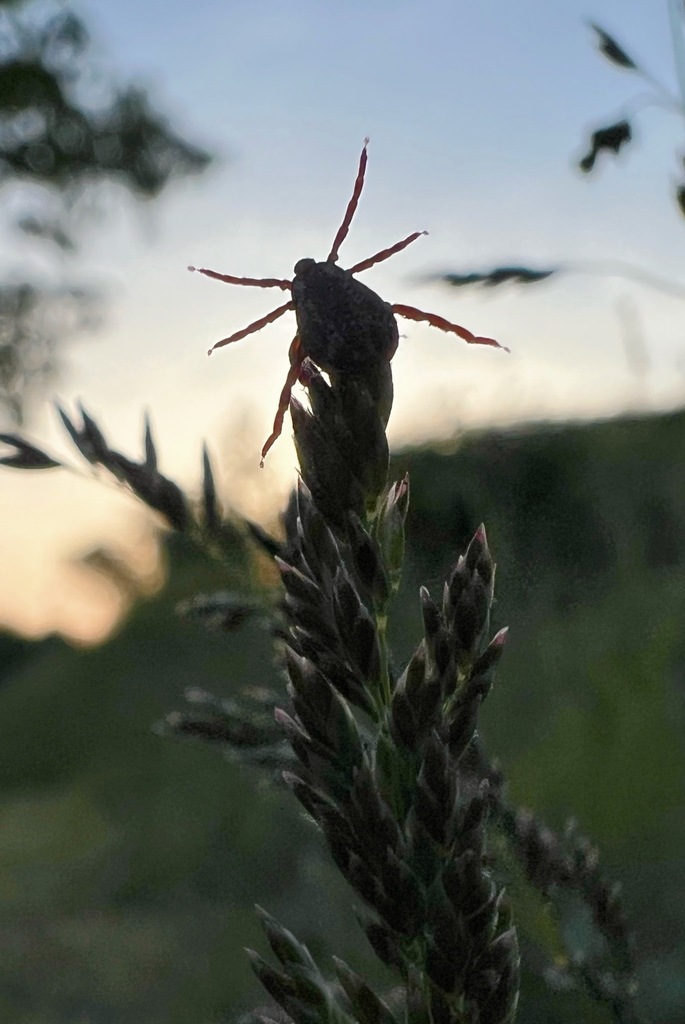
After a blood meal the tick drops off the host and develops into the next life stage. Dermacentor ticks can produce a neurotoxin that leads to rapid flaccid paralysis, resembling Guillain to Barré syndrome.
Source: Wikipedia
Does it bite or sting?
Dermacentor ticks can cause a neurotoxic paralysis that progresses quickly to flaccid quadriparesis. In the United States ticks can transmit bacteria, viruses and parasites that cause human disease.
How to get rid of it
Learn where ticks live, how to avoid bites, and what to do after a bite to reduce risk.
Source: CDC
What it eats
When the animal it feeds on is infected, the tick takes up the pathogens with the blood.
Source: Wikipedia
Life cycle
After feeding, most ticks detach and prepare for the next stage of their life cycle.
Source: Wikipedia
Lookalikes
The main vectors for Lyme disease are deer ticks of the Ixodes genus, not the American dog tick.
Source: Wikipedia
Where it is found in the US
Recorded in 51 of 51 states and DC. Most records: Michigan, Massachusetts, Ohio, Illinois, Virginia, Minnesota, Wisconsin, Pennsylvania.
Darker = more records. Counts are museum and citizen-science records, not population size.
Source: GBIF
Months it is reported in the US
Source: GBIF
More photos
Questions people ask
Same family (Ixodidae)
 Eastern Black-legged TickIxodes scapularisCan spread germs or disease
 Lone Star TickAmblyomma americanumCan spread germs or disease
 Gulf Coast TickAmblyomma maculatumCan spread germs or disease
 Western Black-legged TickIxodes pacificusCan spread germs or disease
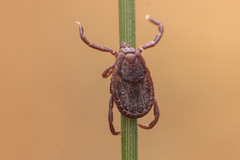 Brown Dog TickRhipicephalus sanguineusCan spread germs or disease
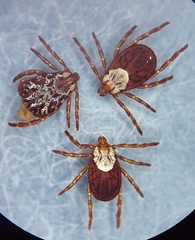 Rocky Mountain Wood TickDermacentor andersoniCan spread germs or disease
Sources
- Wikipedia: https://en.wikipedia.org/wiki/Dermacentor_variabilis
- CDC: https://www.cdc.gov/ticks/about/index.html
Look it up elsewhere: GBIF · iNaturalist · BugGuide · ITIS · Wikipedia
Text written 2026-10-22 from the sources above and checked sentence by sentence against them. Data fetched 2026-10-22.