 Bug FAQ
Gulf Coast Tick
Amblyomma maculatum · Order: Ixodida · Family: Ixodidae
Source: Wikipedia
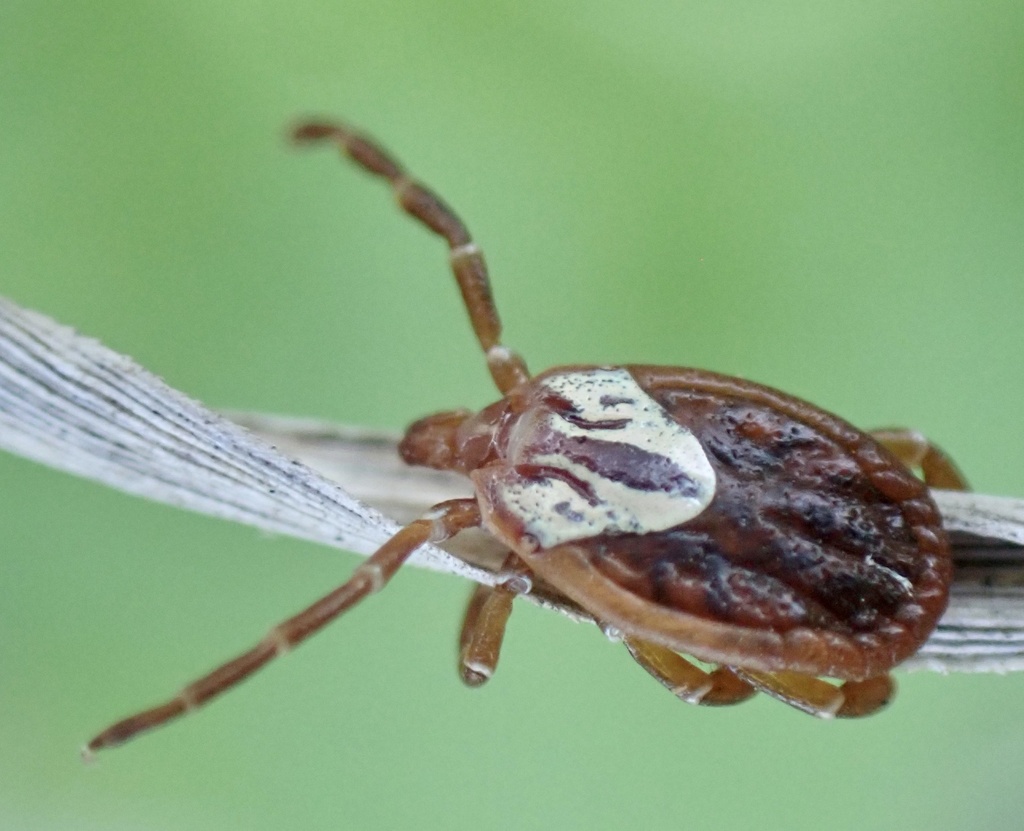
Immature Gulf Coast ticks usually feed on ground-dwelling small mammals and birds, with cotton rats being a common host. A female tick was found carrying Rickettsia parkeri, the agent of American tick bite fever, showing the species can transmit disease to humans.
Source: Wikipedia
Does it bite or sting?
A female Gulf Coast tick collected in Delaware was infected with Rickettsia parkeri, the first proof this tick can carry a human pathogen in that state.
Source: Wikipedia
Where it lives
Immature ticks are found where small mammals and birds live on the ground.
Source: Wikipedia
What it eats
Immature ticks feed on small mammals and birds that stay on the ground, especially cotton rats.
Source: Wikipedia
Where it is found in the US
Recorded in 36 of 51 states and DC. Most records: Texas, Florida, Alabama, North Carolina, Georgia, Oklahoma, Kansas, South Carolina.
Darker = more records. Counts are museum and citizen-science records, not population size.
Source: GBIF
Status: introduced in Canada; native in North America; native in United States. Source: iNaturalist
Months it is reported in the US
Source: GBIF
More photos


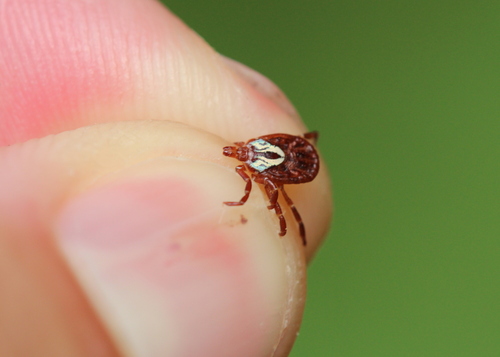
Questions people ask
Can Gulf Coast ticks bite humans?
Yes, they can bite and may transmit the bacterium Rickettsia parkeri to people.
Source: Wikipedia
What do immature Gulf Coast ticks feed on?
They usually feed on small ground-dwelling mammals and birds, with cotton rats being a favored host.
Source: Wikipedia
Same family (Ixodidae)
 American Dog TickDermacentor variabilisCan spread germs or disease
 Eastern Black-legged TickIxodes scapularisCan spread germs or disease
 Lone Star TickAmblyomma americanumCan spread germs or disease
 Western Black-legged TickIxodes pacificusCan spread germs or disease
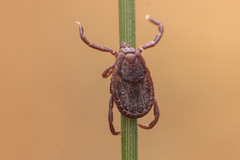 Brown Dog TickRhipicephalus sanguineusCan spread germs or disease
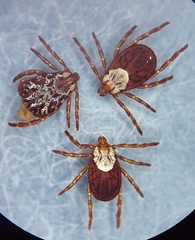 Rocky Mountain Wood TickDermacentor andersoniCan spread germs or disease
Sources
- Wikipedia: https://en.wikipedia.org/wiki/Amblyomma_maculatum
Look it up elsewhere: GBIF · iNaturalist · BugGuide · ITIS · Wikipedia
Text written 2026-10-22 from the sources above and checked sentence by sentence against them. Data fetched 2026-10-22.