 Bug FAQ
Yucca Giant-skipper
Megathymus yuccae · Order: Lepidoptera · Family: Hesperiidae
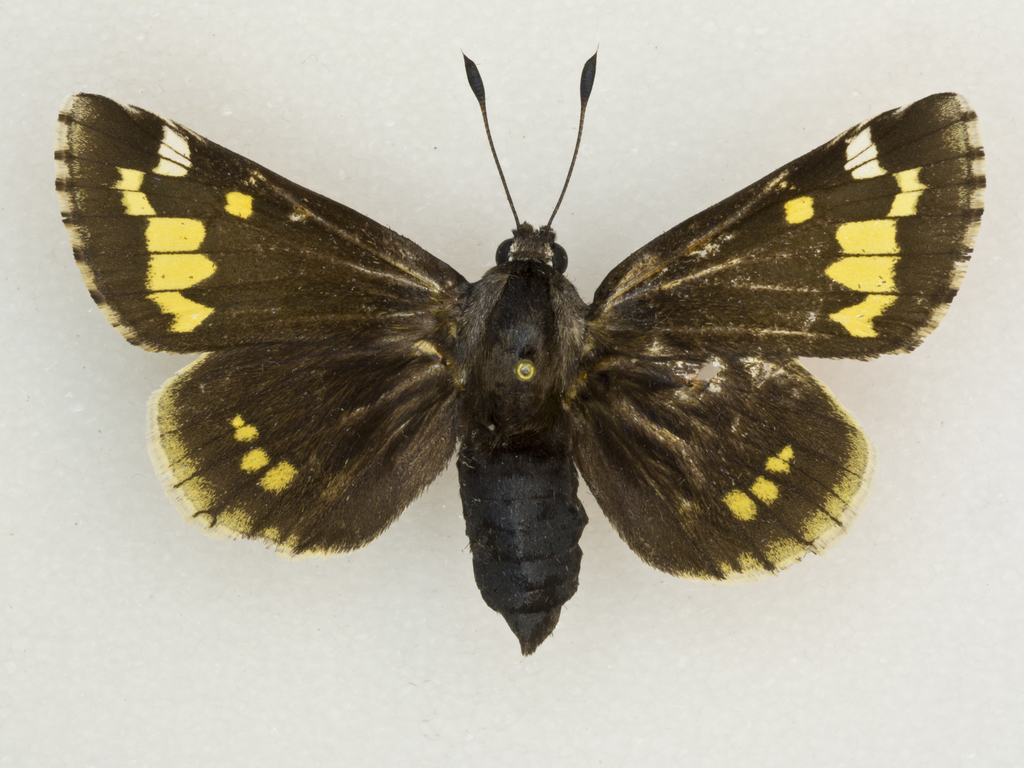
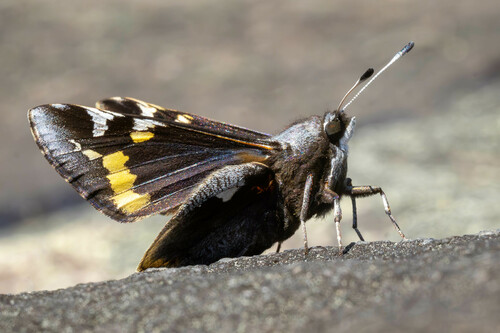
The yucca giant-skipper has a wingspan of about 48 to 79 mm and brown upper wings with yellow spots, while the underside is mottled black and gray.
Source: Wikipedia
How to recognize it
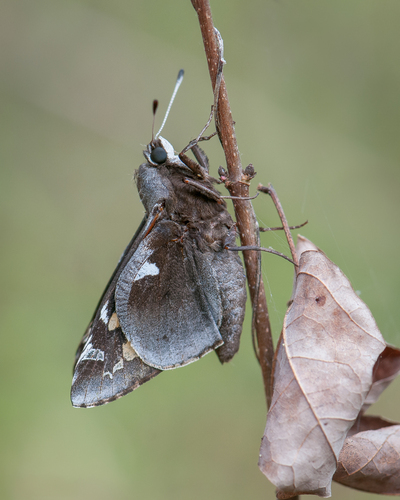
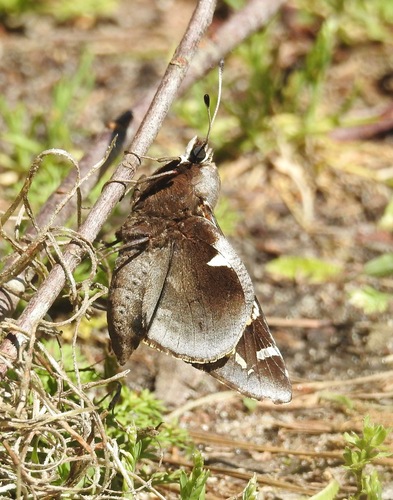
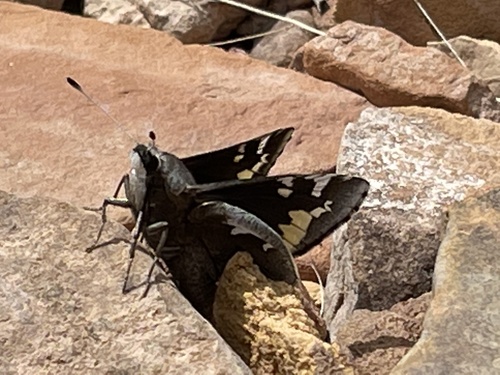
Upper wings are brown with yellow spots; the underside is mainly mottled black and gray.
Source: Wikipedia
Size
Wingspan ranges from 48 to 79 mm (1.9 to 3.1 in).
Source: Wikipedia
What it eats
Adults do not feed, but males sip moisture from mud.
Source: Wikipedia
Life cycle
Larvae develop on yucca plants, feeding on the leaves of the listed yucca species.
Source: Wikipedia
When you see it
It is an early-season butterfly.
Source: Wikipedia
Where it comes from
Widespread across the southern United States.
Source: Wikipedia
Lookalikes
It belongs to the skipper family Hesperiidae, subfamily Megathyminae.
Source: Wikipedia
Where it is found in the US
Recorded in 19 of 51 states and DC. Most records: Texas, Florida, California, New Mexico, Arizona, Oklahoma, Georgia, Utah.
Darker = more records. Counts are museum and citizen-science records, not population size.
Source: GBIF
Status: native in North America; native in United States. Source: iNaturalist
Months it is reported in the US
Source: GBIF
More photos
Questions people ask
Where can I find yucca giant-skippers?
They occur in deserts, foothills and woodlands that have yucca plants, across the southern United States.
Source: Wikipedia
Do adult yucca giant-skippers feed?
Adults do not feed, though males will gather moisture from mud.
Source: Wikipedia
Same family (Hesperiidae)




Sources
- Wikipedia: https://en.wikipedia.org/wiki/Megathymus_yuccae
Look it up elsewhere: GBIF · iNaturalist · BugGuide · ITIS · Wikipedia
Text written 2026-10-23 from the sources above and checked sentence by sentence against them. Data fetched 2026-10-23.