 Bug FAQ
Silver-spotted Skipper
Epargyreus clarus · Order: Lepidoptera · Family: Hesperiidae
Also called: Silverspotted Skipper
Source: Wikipedia
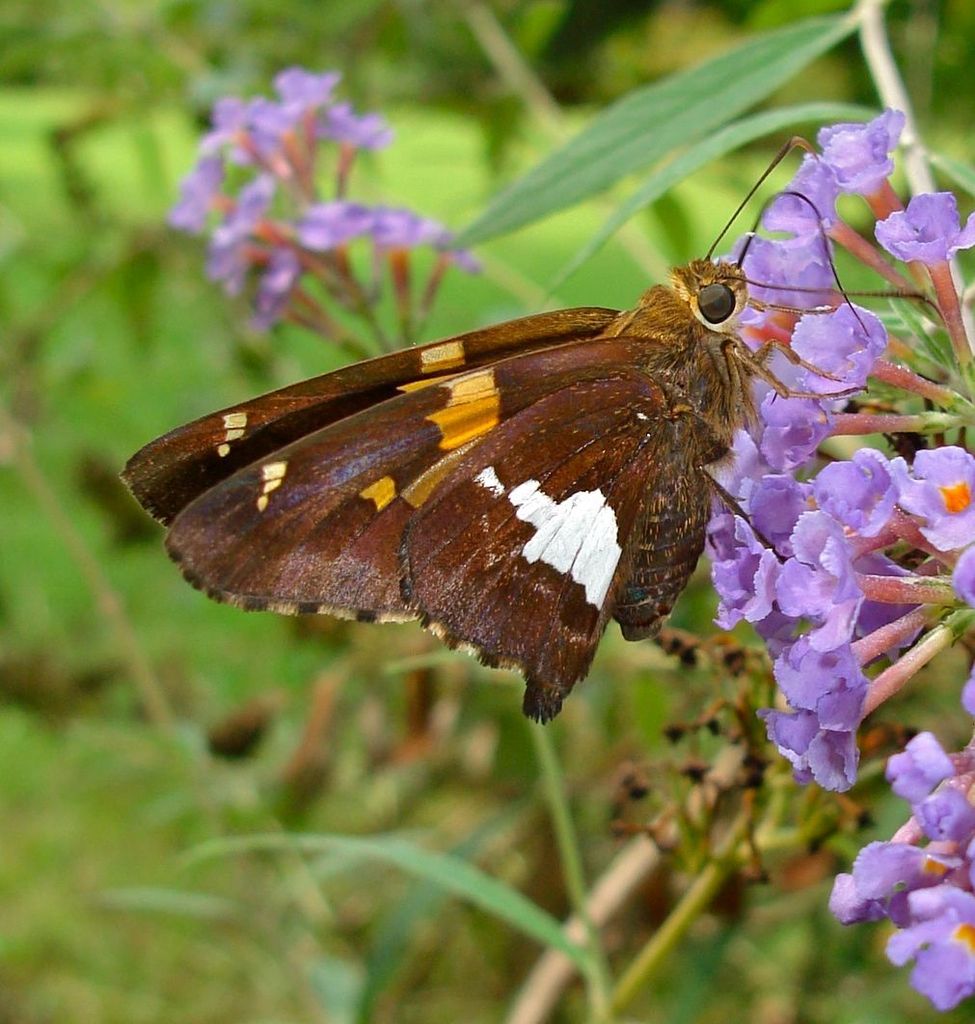
The silver-spotted skipper is a medium-sized butterfly about 2 inches long that lives in open fields, meadows and swamp edges across most of North America. Caterpillars are yellow with black stripes and orange legs, while adults have orange legs and orange eye-like spots on a dark head. Larvae eat a variety of legume plants and can nibble on beans and soybeans, though they rarely cause major crop loss.
Source: Wikipedia
How to recognize it
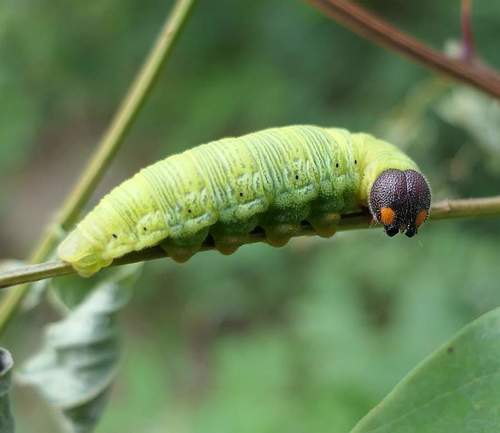
Caterpillars are yellow with black transverse stripes and have bright orange legs and false legs. The first thoracic segment is black with a brown shield and is thinner than the head and second segment. The adult head is dark with two large orange spots that look like eyes. All three true legs and the mid-abdominal false legs are bright orange.
Source: Wikipedia
Size
Adults are about 2 inches (5 cm) long.
Source: Wikipedia
Is it a pest in the house?
They can damage bean and soybean crops, but the impact is minor and does not require large-scale control.
Source: Wikipedia
How to get rid of it
No major control measures are needed because its pest activity is not severe.
Source: Wikipedia
Where it lives
They prefer open areas with nectar plants, such as forest edges, brushy spots, swamps and riparian zones at low elevations.
Source: Wikipedia
What it eats
Caterpillars feed on leaves of many legumes, including false indigobush, hog-peanut, groundnut, wisteria, pigeonwings, kudzu and others. Adults sip nectar, mud and animal feces with a long proboscis.
Source: Wikipedia
Life cycle
The butterfly lives about two months as an adult. Larvae build shelters on their host plants, making about five shelters in four styles during growth.
Source: Wikipedia
When you see it
They are found in fields, gardens and forest edges throughout their range during the warm months.
Source: Wikipedia
Lookalikes
It is the most widely recognized skipper butterfly in North America.
Source: Wikipedia
Where it is found in the US
Recorded in 49 of 51 states and DC. Most records: Illinois, North Carolina, Ohio, Virginia, Maryland, Pennsylvania, New York, Georgia.
Darker = more records. Counts are museum and citizen-science records, not population size.
Source: GBIF
Status: native in North America; native in Canada; native in United States. Source: iNaturalist
Months it is reported in the US
Source: GBIF
More photos


Questions people ask
Are they a problem for my garden?
They may eat some bean or soybean plants, but damage is usually light and does not require special treatment.
Source: Wikipedia
Where can I expect to see them?
Look for them in open meadows, forest edges, swamps and near water in most of the U.S., Canada and northern Mexico.
Source: Wikipedia
Same family (Hesperiidae)




Sources
- Wikipedia: https://en.wikipedia.org/wiki/Epargyreus_clarus
Look it up elsewhere: GBIF · iNaturalist · BugGuide · ITIS · Wikipedia
Text written 2026-10-22 from the sources above and checked sentence by sentence against them. Data fetched 2026-10-22.