 Bug FAQ
Yellownecked Dry-wood Termite
Kalotermes flavicollis · Order: Blattodea · Family: Kalotermitidae
Source: Wikipedia
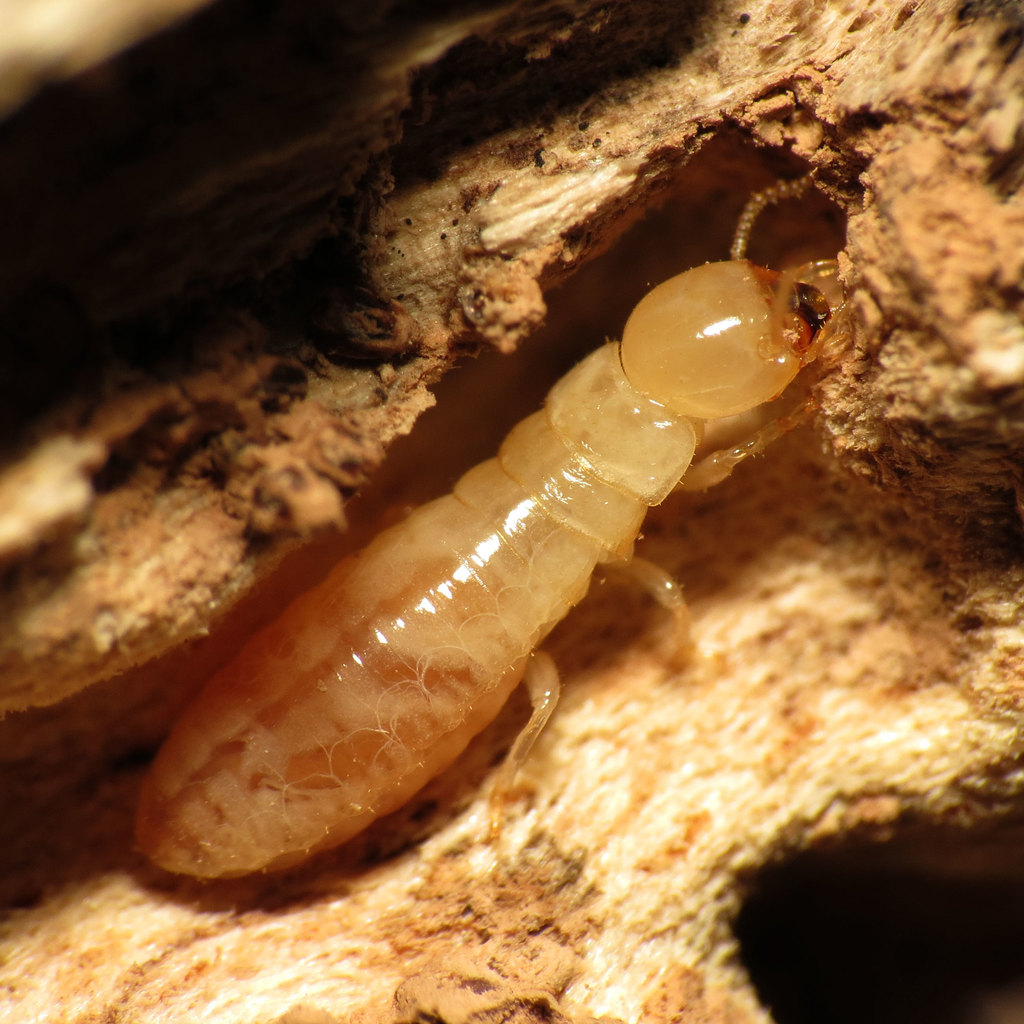
Adults are 8 to 10 mm long with a 20 mm wingspan and have a yellow-orange neck area. They live in wood, feeding on tree trunks, house beams, roofs and even books, which can kill trees and ruin structures.
Source: Wikipedia
How to recognize it
The body is pale yellow or dark brown, with a distinct yellow-orange pronotum and pale yellow antennae and leg tips.
Source: Wikipedia
Size
Adults measure 8 to 10 mm in length and have a wingspan of about 20 mm.
Source: Wikipedia
Is it a pest in the house?
They tunnel in wood, killing infested trees and damaging house beams, roofs and books.
Source: Wikipedia
Where it lives
It is a Mediterranean species found mainly near warm sea coasts.
Source: Wikipedia
What it eats
It feeds on wood, tunneling through tree trunks, house beams and books.
Source: Wikipedia
Life cycle
Winged males and females swarm at night from mid-July to October to start new colonies. After mating they shed their wings and the founding pair builds a colony of about 1,000 to 2,000 individuals.
Source: Wikipedia
When you see it
The nuptial flight occurs overnight from mid-July through October.
Source: Wikipedia
Questions people ask
How can I identify a Yellownecked Dry-wood Termite?
Look for a 8 to 10 mm adult with a yellow-orange neck (pronotum) and pale yellow antennae and leg tips; the wingspan is about 20 mm.
Source: Wikipedia
What damage does this termite cause?
It tunnels and feeds on wood, which can kill trees and damage house structures, roofs and even books.
Source: Wikipedia
When are they most active?
The winged adults swarm at night from mid-July to October to start new colonies.
Source: Wikipedia
Same family (Kalotermitidae)

Sources
- Wikipedia: https://en.wikipedia.org/wiki/Kalotermes_flavicollis
Look it up elsewhere: GBIF · iNaturalist · BugGuide · Wikipedia
Text written 2026-10-23 from the sources above and checked sentence by sentence against them. Data fetched 2026-10-23.