 Bug FAQ
Western Drywood Termite
Incisitermes minor · Order: Blattodea · Family: Kalotermitidae
Also called: Termite

These termites live in dry wood and can chew through structural lumber and furniture. They are most active in warm spring and summer months and become inactive for about nine months.
How to recognize it
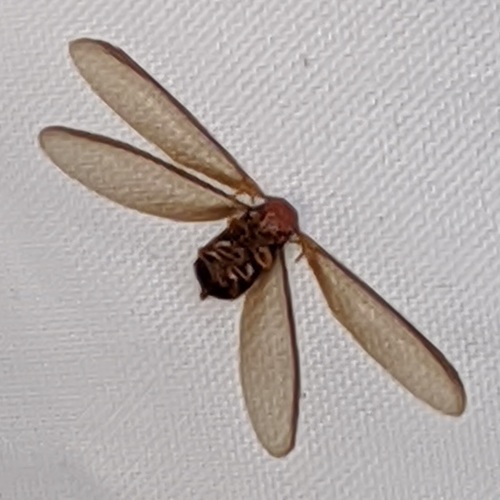
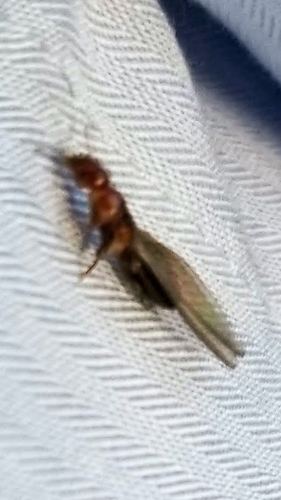
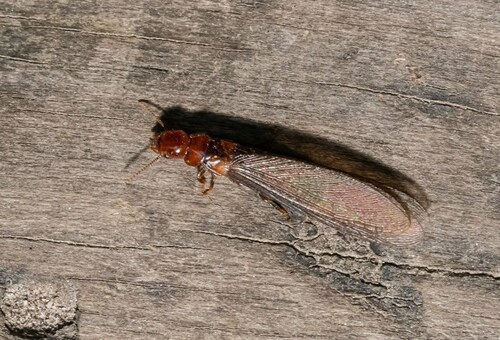
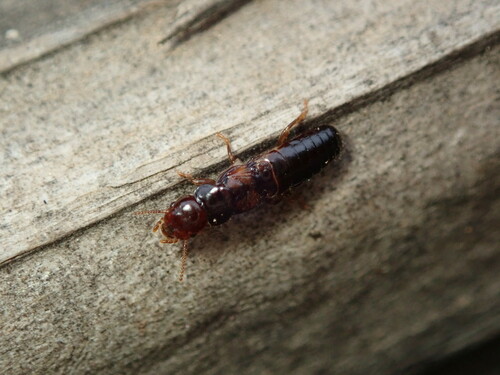
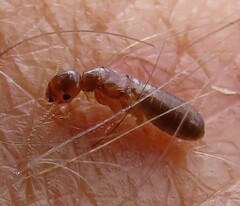
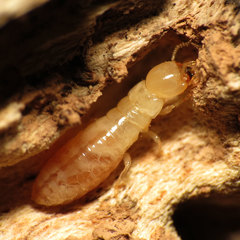
Workers are wingless, soft-bodied and light caramel colored, while soldiers and alates are dark brown with orange heads. Their fecal pellets have six flattened sides and often appear below surface openings.
Size
Alates measure about 11 to 12.5 mm long with dark brown abdomens and orange-brown heads. Soldier termites are larger, averaging about 0.4 inches in length.
Source: Wikipedia
Is it a pest in the house?
They infest dry, sound wood such as flooring, window and door frames, fascia boards, soffits, decks, fences, stored lumber, and furniture. Termites often push their distinctive pellets out through surface openings where they accumulate on horizontal surfaces.
How to get rid of it
Severe infestations may require tenting and fumigation with sulfuryl fluoride. Non-chemical methods such as wood replacement, heat, electrocution, or desiccants should be tried before pesticides. Liquid, dust, or foam insecticides can be injected directly into galleries or shelter tubes.
Where it lives
They inhabit trees in California oak woodlands and similar ecosystems.
Source: Wikipedia
Life cycle
The species passes through seven instar stages before reaching maturity. Development from egg to adult takes roughly one year.
Source: Wikipedia
When you see it
Colonies are most active in spring and summer when temperatures are higher. They undergo a long inactive period lasting about nine months.
Source: Wikipedia
Where it comes from
Native to western North America, they occur in the western United States and northern Mexico.
Source: Wikipedia
Lookalikes
Winged termites can be mistaken for flying ants; check antennae, wing length, and waist shape to tell them apart. The western subterranean termite is a more serious pest in California, with I. minor ranking second.
Where it is found in the US
Recorded in 12 of 51 states and DC. Most records: California, Arizona, Texas, Louisiana, Nevada, New York, Utah, Colorado.
Darker = more records. Counts are museum and citizen-science records, not population size.
Source: GBIF
Status: native in North America; native in Canada. Source: iNaturalist
Months it is reported in the US
Source: GBIF
More photos
Questions people ask
How can I tell if I have western drywood termites?
Look for six-sided fecal pellets on surfaces below openings and for dry, damaged wood in structures.
What should I do for a severe infestation?
A professional may need to tent the building and fumigate it with sulfuryl fluoride.
Source: Wikipedia
Can I treat them without chemicals?
Yes, options include replacing damaged wood, applying heat, using electrocution, or desiccants before resorting to pesticides.
Source: UC IPM
How do I distinguish these termites from flying ants?
Check the antennae, wing length, and the narrow waist; termites have straight, equal-length wings and a broader waist.
Source: UC IPM
Same family (Kalotermitidae)
Sources
- Wikipedia: https://en.wikipedia.org/wiki/Incisitermes_minor
- UC IPM: https://ipm.ucanr.edu/PMG/PESTNOTES/pn7415.html
Look it up elsewhere: GBIF · iNaturalist · BugGuide · ITIS · Wikipedia
Text written 2026-10-23 from the sources above and checked sentence by sentence against them. Data fetched 2026-10-22.