 Bug FAQ
West Indian Drywood Termite
Cryptotermes brevis · Order: Blattodea · Family: Kalotermitidae
Also called: Drywood termite, Furniture Termite, House Termite, Powderpost termite
Source: Wikipedia
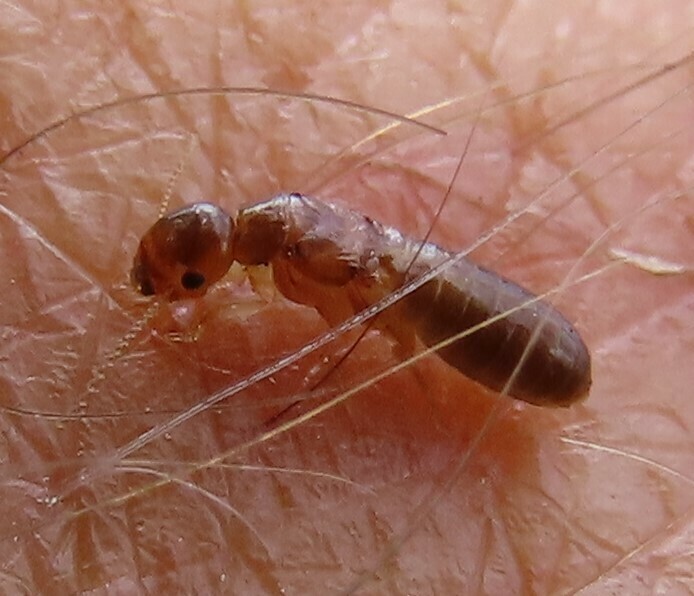
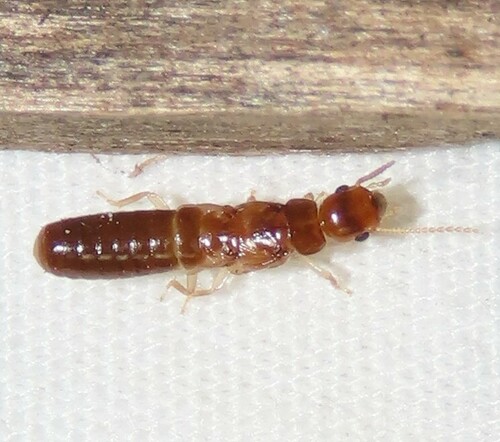
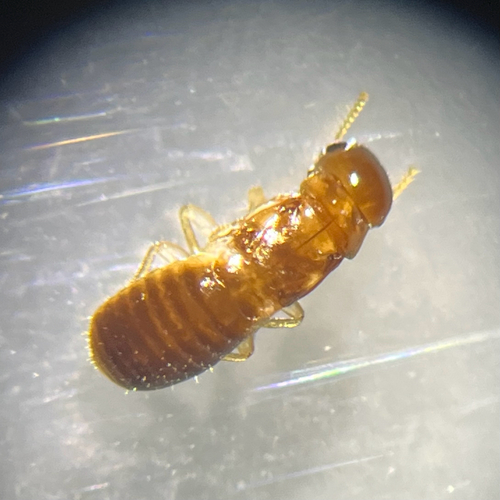
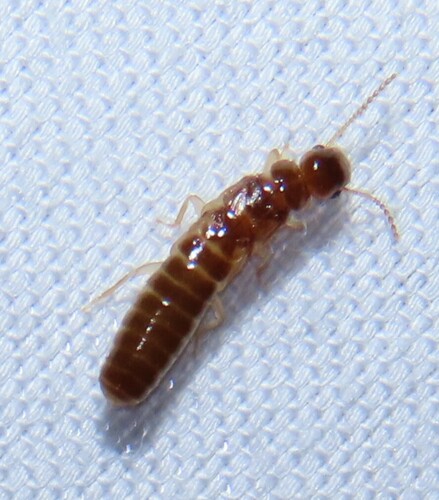
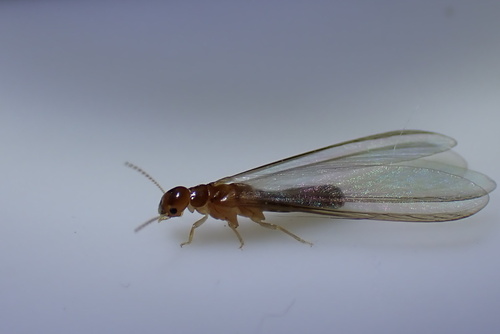
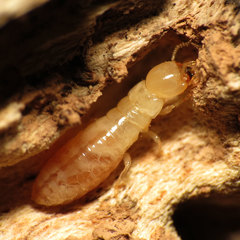
Soldier termites are about 4-5 mm long with pale bodies and black, wrinkled heads, while winged alates have clear wings with dark veins near the front edge. They live entirely inside sound soft- or hardwood timber, including structural beams and movable items, and can cause serious damage to buildings and furniture.
Source: Wikipedia
Size
Soldiers measure roughly 4 to 5 mm in length.
Source: Wikipedia
Is it a pest in the house?
The species is often unintentionally introduced to new areas and damages structural timbers and wooden objects. It attacks sound softwood and hardwood, affecting both building structures and movable items.
Source: Wikipedia
Where it lives
The termite can survive completely inside timber or wooden objects without needing external water. It infests both softwood and hardwood timbers, whether they are part of a building or movable objects.
Source: Wikipedia
What it eats
Workers have strong jaws for chewing wood fibers. Non-reproductive workers tunnel through wood while leaving a thin outer veneer intact.
Source: Wikipedia
Life cycle
The queen lays kidney-shaped eggs that are cared for by the workers. Winged alates exit the nest through temporary holes during swarming; in Florida this occurs at night from April to June.
Source: Wikipedia
When you see it
In Florida, dispersal flights happen at night between April and June. Alates are only present in the colony during certain times of the year.
Source: Wikipedia
Where it comes from
It likely did not originate in the West Indies. Its origin may be the Neotropics, spreading to places like Jamaica via wooden ships or furniture.
Source: Wikipedia
Lookalikes
Identifying termite species usually relies on the shape of the soldiers' heads. This species is more destructive in homes than other Cryptotermes species that need more moisture.
Source: Wikipedia
Where it is found in the US
Recorded in 2 of 51 states and DC. Most records: Florida, Hawaii.
Darker = more records. Counts are museum and citizen-science records, not population size.
Source: GBIF
Status: introduced in Canada. Source: iNaturalist
Months it is reported in the US
Source: GBIF
More photos
Questions people ask
How can I recognize West Indian drywood termites?
Look for tiny soldiers about 4-5 mm long with pale bodies and black, wrinkled, square heads, and for hexagonal pellets with one rounded and one tapered end.
Source: Wikipedia
Where do these termites live?
They live entirely inside sound soft- or hardwood timber, including structural beams and furniture, without needing external water.
Source: Wikipedia
When do they swarm?
Winged alates emerge at night during the swarming season, which in Florida runs from April to June.
Source: Wikipedia
What damage can they cause in a house?
They chew through wooden timbers and furniture, damaging structural components and movable wooden items.
Source: Wikipedia
Same family (Kalotermitidae)

Sources
- Wikipedia: https://en.wikipedia.org/wiki/Cryptotermes_brevis
Look it up elsewhere: GBIF · iNaturalist · BugGuide · ITIS · Wikipedia
Text written 2026-10-23 from the sources above and checked sentence by sentence against them. Data fetched 2026-10-22.