 Bug FAQ
Yellow Fly of the Dismal Swamp
Diachlorus ferrugatus · Order: Diptera · Family: Tabanidae
Also called: Doctor Fly, Yellow Fly
Source: Wikipedia

The yellow fly is a 1 cm long, aggressive biting horse-fly found near water and trees, often hiding in Spanish moss. Females need blood meals to develop eggs and their bites are painful, leaving itchy welts, especially from April to June.
Source: Wikipedia
How to recognize it
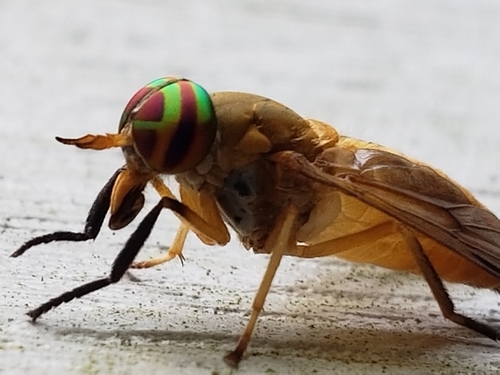
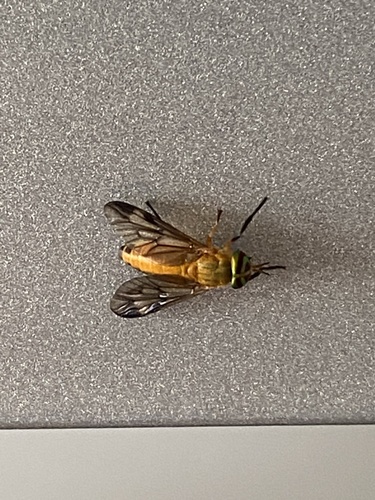
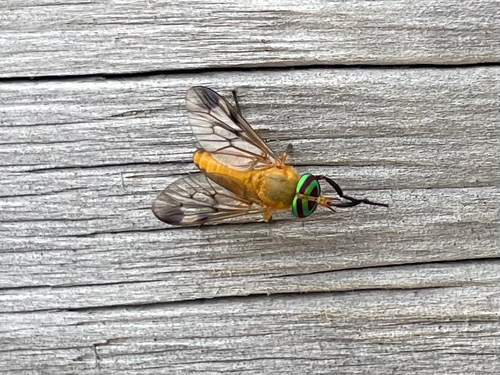
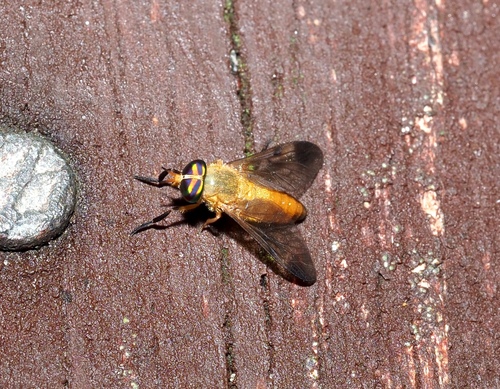
They have yellow bodies and legs except black fore-legs, and their eyes are blue-green with purple bands.
Source: Wikipedia
Size
Adults are about 1 cm (0.39 in) long.
Source: Wikipedia
Is it a pest in the house?
They may enter homes and disturb swimming, boating and fishing.
Source: Wikipedia
Does it bite or sting?
Their bites are painful, leaving itchy welts.
Source: Wikipedia
How to get rid of it
DEET works best, but in heavy infestations physical barriers like gloves and headnets are needed.
Source: Wikipedia
Where it lives
They are most often found near water with nearby trees, hiding in Spanish moss.
Source: Wikipedia
What it eats
Females need blood meals to develop eggs.
Source: Wikipedia
Life cycle
The larvae are thin white grubs covered in fine yellow hair, each segment bearing three pairs of pseudopodia.
Source: Wikipedia
When you see it
Adults are most active from April through June.
Source: Wikipedia
Where it comes from
They are native to North and Central America, ranging from the United States down to Costa Rica.
Source: Wikipedia
Where it is found in the US
Recorded in 13 of 51 states and DC. Most records: Florida, North Carolina, Maryland, Alabama, Georgia, New Jersey, South Carolina, Mississippi.
Darker = more records. Counts are museum and citizen-science records, not population size.
Source: GBIF
Status: native in North America. Source: iNaturalist
Months it is reported in the US
Source: GBIF
More photos
Questions people ask
How can I protect myself from bites?
Use DEET repellent, and if many flies are present wear gloves and a headnet.
Source: Wikipedia
Where do yellow flies live?
They are found near water with trees, often hiding in Spanish moss, and are native from the United States to Costa Rica.
Source: Wikipedia
Same family (Tabanidae)


Sources
- Wikipedia: https://en.wikipedia.org/wiki/Diachlorus_ferrugatus
Look it up elsewhere: GBIF · iNaturalist · BugGuide · ITIS · Wikipedia
Text written 2026-10-24 from the sources above and checked sentence by sentence against them. Data fetched 2026-10-24.