 Bug FAQ
Woodland Grasshopper
Omocestus rufipes · Order: Orthoptera · Family: Acrididae
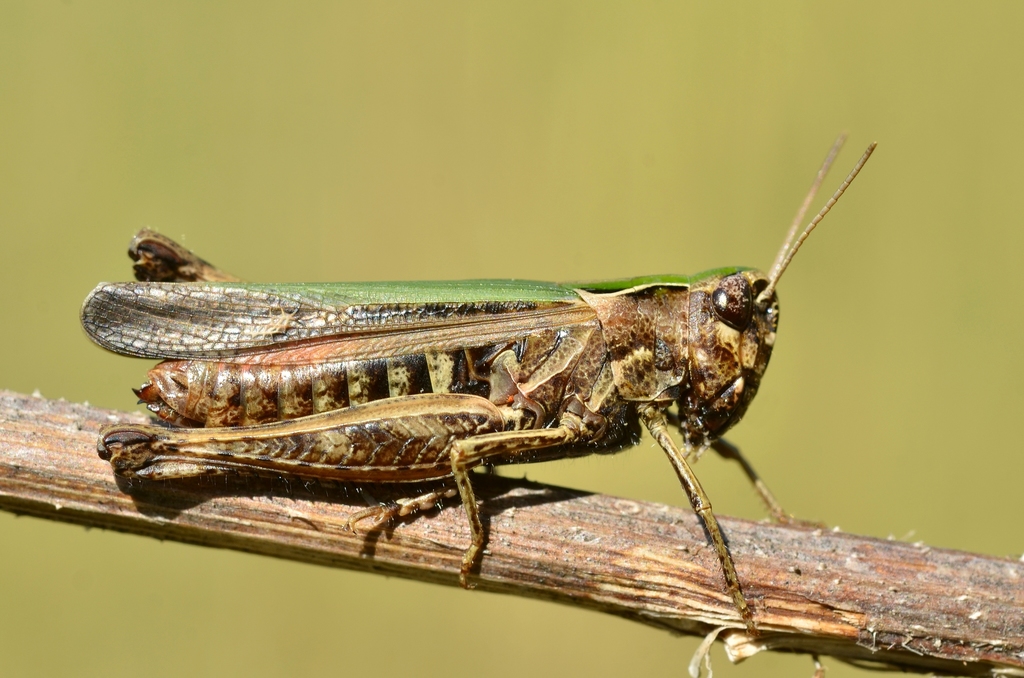
Adult males are 11 to 17 mm long and females 13 to 22 mm (0.43 to 0.87 in). They live in meadows, grasslands and sunny woodland clearings and are found across most of Europe, the eastern Palearctic, North Africa and the Near East, but only in southern England in the British Isles. They eat grasses and other herbaceous plants, lay eggs just below the soil surface, and can be seen from early June to late October.
Source: Wikipedia
How to recognize it
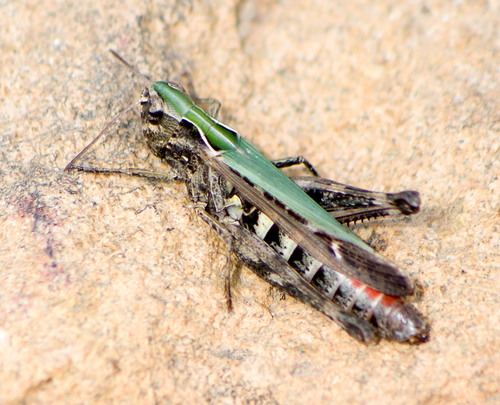
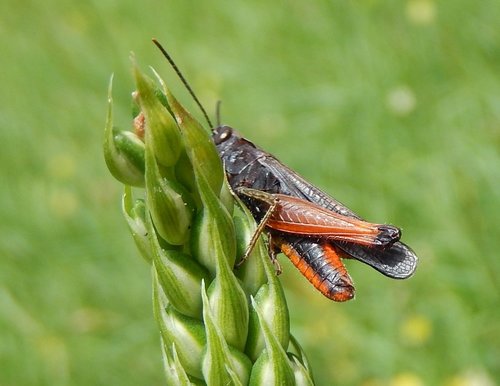
Body colour ranges from light brown to black; males are usually beige on top, females brown or green, with a white edge on the pronotum. The tip of the abdomen is red in males, and the rear tibiae are always red, often with red femora. The underside of the abdomen tip is orange or reddish in mature adults, and the maxillary palps end in an almost white tip.
Source: Wikipedia
Size
Males grow to 11 to 17 mm (0.43 to 0.67 in) and females to 13 to 22 mm (0.51 to 0.87 in).
Source: Wikipedia
Where it lives
They live in meadows, grasslands and sunny clearings within woodlands.
Source: Wikipedia
What it eats
Their diet consists mainly of grasses and various herbaceous plants.
Source: Wikipedia
Life cycle
Females lay eggs in clusters just below the soil surface or in plant roots; nymphs emerge in April or May.
Source: Wikipedia
When you see it
Adults can be seen from early June through late October.
Source: Wikipedia
Where it comes from
Found throughout most of Europe, the eastern Palearctic, North Africa and the Near East; in the UK only in southern England.
Source: Wikipedia
More photos
Same family (Acrididae)
 Differential GrasshopperMelanoplus differentialisDamages trees, gardens or crops
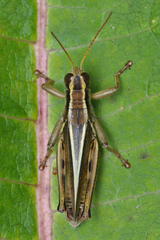 Two-striped GrasshopperMelanoplus bivittatusDamages trees, gardens or crops
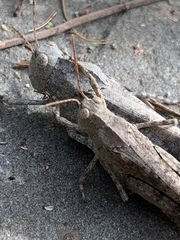 Carolina GrasshopperDissosteira carolinaDamages trees, gardens or crops
 Common Field GrasshopperChorthippus brunneus
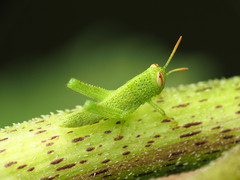 Egyptian Bird GrasshopperAnacridium aegyptium
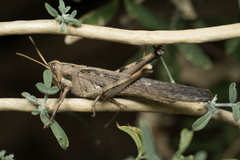 Gray Bird GrasshopperSchistocerca nitensDamages trees, gardens or crops
Sources
- Wikipedia: https://en.wikipedia.org/wiki/Omocestus_rufipes
Look it up elsewhere: GBIF · iNaturalist · BugGuide · Wikipedia
Text written 2026-10-22 from the sources above and checked sentence by sentence against them. Data fetched 2026-10-22.