 Bug FAQ
Two-striped Grasshopper
Melanoplus bivittatus · Order: Orthoptera · Family: Acrididae
Also called: Twostriped Grasshopper, Yellow-striped Locust
Source: Wikipedia
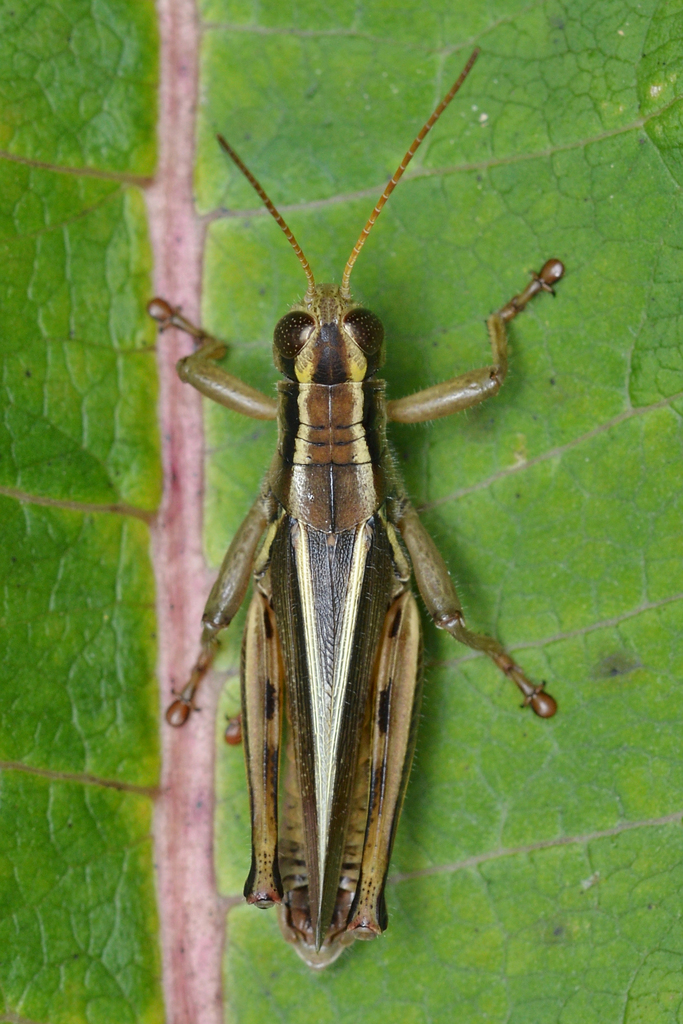
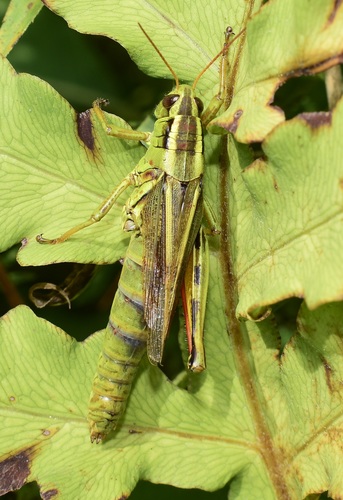
The two-striped grasshopper is a relatively large insect, measuring about 30 to 55 mm. It is yellow-green with two pale yellow stripes running from the eyes to the wing tips. Found mainly on the Canadian prairies, it feeds on many plants and can cause crop damage.
Source: Wikipedia
How to recognize it
Its body is generally yellow-green because of chromoprotein and carotenoids.
Source: Wikipedia
Size
Adults are 30 to 55 mm long.
Source: Wikipedia
Is it a pest in the house?
It can damage crops throughout its life cycle.
Source: Wikipedia
Where it lives
It is common in North America, especially on the Canadian prairies.
Source: Wikipedia
What it eats
It eats a wide variety of plants, including forbs and lentil crops. It needs linoleic or other unsaturated fatty acids to keep its wings from crumpling.
Source: Wikipedia
Life cycle
Nymphs pass through five instars before becoming adults.
Source: Wikipedia
When you see it
Eggs hatch when temperatures rise, with the peak hatching occurring between days 10 and 13 after warming.
Source: Wikipedia
Where it comes from
Its range is North America, with high abundance on the Canadian prairies.
Source: Wikipedia
Where it is found in the US
Recorded in 49 of 51 states and DC. Most records: Colorado, Michigan, New York, Vermont, Oklahoma, Maine, Idaho, Minnesota.
Darker = more records. Counts are museum and citizen-science records, not population size.
Source: GBIF
Status: native in North America; native in United States; native in Canada. Source: iNaturalist
Months it is reported in the US
Source: GBIF
More photos
Questions people ask
What plants does it damage?
It feeds on many plants, including forbs and lentil crops, and can damage crops throughout its life cycle.
Source: Wikipedia
When are they most active?
Eggs hatch in spring when temperatures rise, with the highest hatching rate about 10 to 13 days after warming.
Source: Wikipedia
Same family (Acrididae)
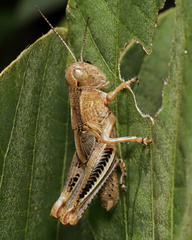 Differential GrasshopperMelanoplus differentialisDamages trees, gardens or crops
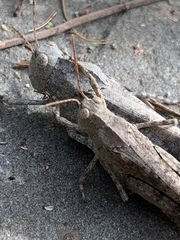 Carolina GrasshopperDissosteira carolinaDamages trees, gardens or crops
 Common Field GrasshopperChorthippus brunneus
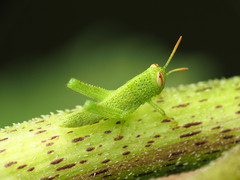 Egyptian Bird GrasshopperAnacridium aegyptium
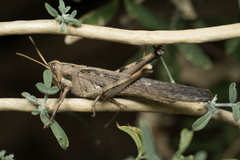 Gray Bird GrasshopperSchistocerca nitensDamages trees, gardens or crops
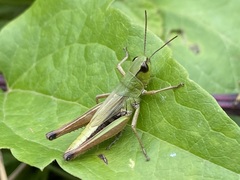 Meadow GrasshopperPseudochorthippus parallelus
Sources
- Wikipedia: https://en.wikipedia.org/wiki/Melanoplus_bivittatus
Look it up elsewhere: GBIF · iNaturalist · BugGuide · ITIS · Wikipedia
Text written 2026-10-22 from the sources above and checked sentence by sentence against them. Data fetched 2026-10-22.