 Bug FAQ
Woodland Dor Beetle
Anoplotrupes stercorosus · Order: Coleoptera · Family: Geotrupidae
Also called: dor beetle
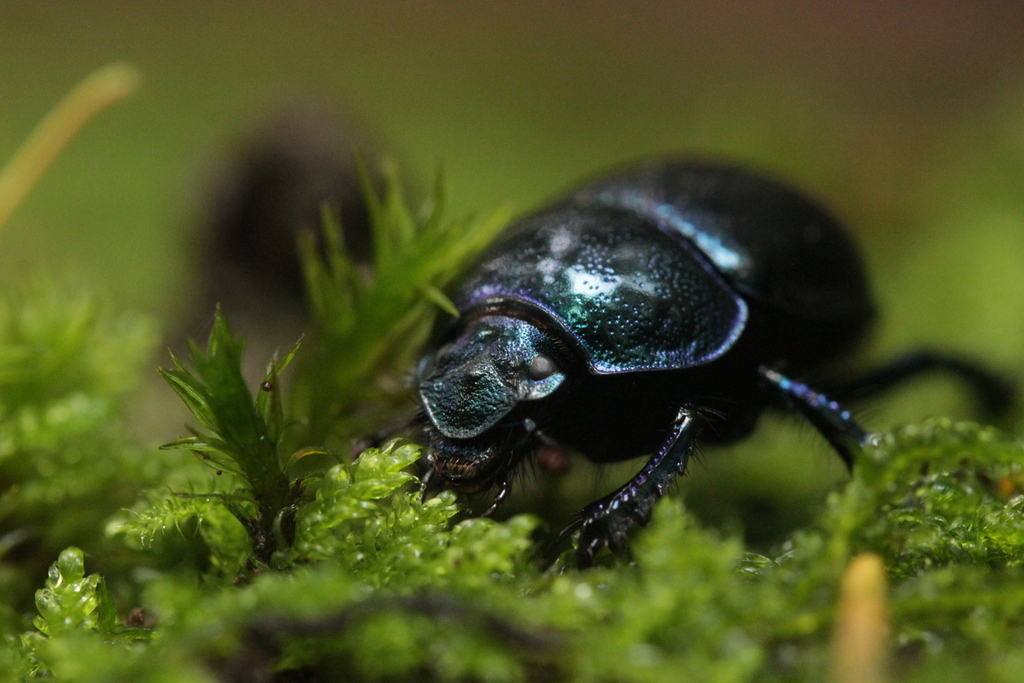
Adult woodland dor beetles are 12 to 19 mm long and have a blue-black body with a metallic blue underside; their elytra show seven faint longitudinal grooves and the antennae are reddish-brown. They live in moist broadleaf, mixed, and coniferous forests across most of Europe and parts of Asia, and adults are seen from June through the following spring. Adults feed on dung, carrion, moldy litter and certain fungi, while larvae develop in soil chambers stocked with dead plant material or animal feces, taking a year to mature.
Source: Wikipedia
How to recognize it
The beetle’s body is blue-black with a metallic blue underside, its elytra have seven faint grooves, wing colors range from blue to violet or green, and the antennae are reddish-brown.
Source: Wikipedia
Size
Adults measure between 12 and 19 mm in length.
Source: Wikipedia
Where it lives
They prefer fresh, moist areas of broadleaf, mixed, and coniferous forests, especially beech woods.
Source: Wikipedia
What it eats
Adults eat feces, carrion, moldy litter, decomposing fungi and the stinkhorn fungus Phallus impudicus. Females lay eggs in soil tunnels about 70 to 80 cm long, providing dead plant matter or herbivore/omnivore feces for the larvae.
Source: Wikipedia
Life cycle
Larvae overwinter and pupate in spring, needing a full year to complete development.
Source: Wikipedia
When you see it
Adults can be found from June through the following spring.
Source: Wikipedia
Where it comes from
The species occurs throughout most of Europe and parts of Asia.
Source: Wikipedia
Same family (Geotrupidae)

Sources
- Wikipedia: https://en.wikipedia.org/wiki/Anoplotrupes_stercorosus
Look it up elsewhere: GBIF · iNaturalist · BugGuide · Wikipedia
Text written 2026-10-22 from the sources above and checked sentence by sentence against them. Data fetched 2026-10-22.