 Bug FAQ
Minotaur Beetle
Typhaeus typhoeus · Order: Coleoptera · Family: Geotrupidae
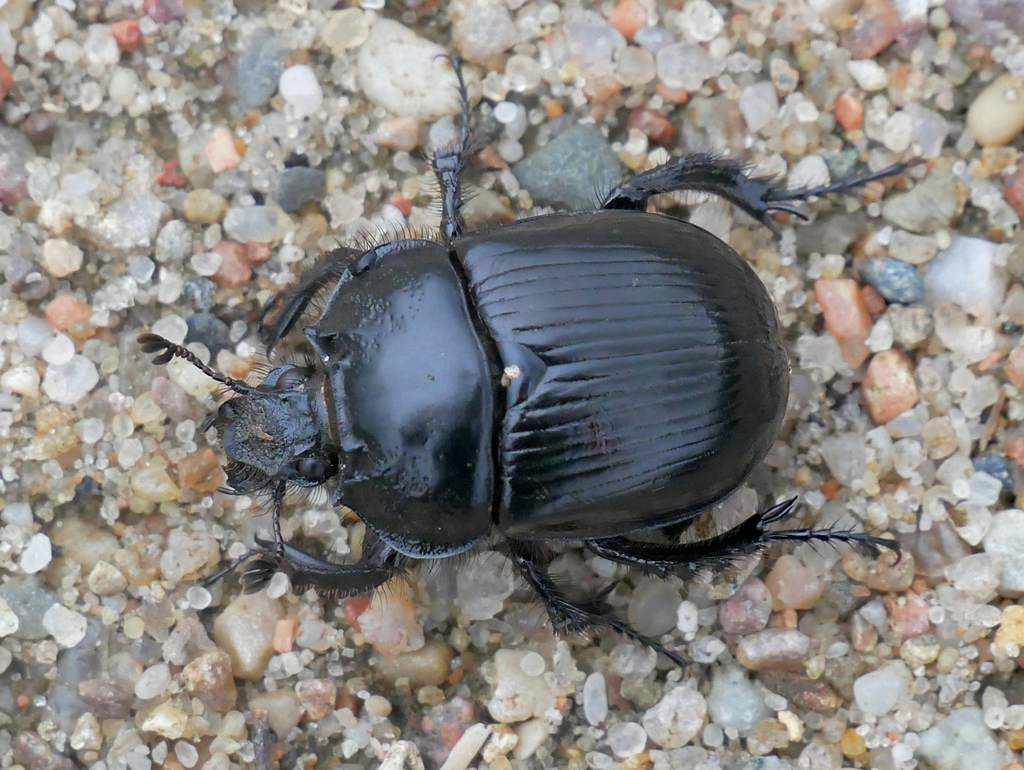
The Minotaur beetle measures about 15 to 24 mm long. It has a black, slightly shiny, stout, dome-shaped body with grooved elytra and distinct outer and middle protrusions (-). It lives in sunny, sandy spots of pine forests or moorland and is native to Europe (-).
Source: Wikipedia
How to recognize it
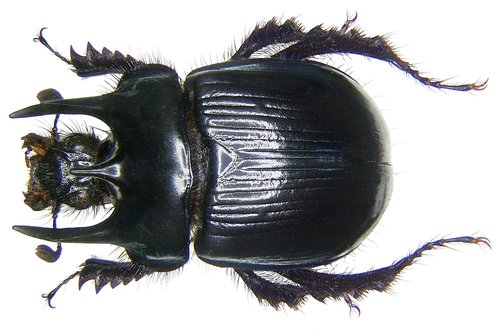
The beetle’s body is black, slightly shiny, stout and dome-shaped. Its wing covers have longitudinal grooves with punctures. The two outer protrusions on the elytra are long, while the middle one is short. Females show a few pointed humps where the protrusions occur.
Source: Wikipedia
Size
Adults grow to a length of 15 to 24 mm.
Source: Wikipedia
Where it lives
It inhabits sunny, sandy areas of pine forests and sandy moorland.
Source: Wikipedia
Where it comes from
The species is native to Europe.
Source: Wikipedia
More photos
Questions people ask
What does a Minotaur beetle look like?
It is a black, slightly shiny beetle with a stout, dome-shaped body, grooved elytra, long outer protrusions and a short middle one; females have a few pointed humps (-).
Source: Wikipedia
Where can I find Minotaur beetles?
They live in sunny, sandy parts of pine forests and sandy moorland, and are native to Europe (-).
Source: Wikipedia
Same family (Geotrupidae)

Sources
- Wikipedia: https://en.wikipedia.org/wiki/Typhaeus_typhoeus
Look it up elsewhere: GBIF · iNaturalist · BugGuide · Wikipedia
Text written 2026-10-22 from the sources above and checked sentence by sentence against them. Data fetched 2026-10-22.