 Bug FAQ
Wood Nettle Gall Midge
Dasineura investita · Order: Diptera · Family: Cecidomyiidae
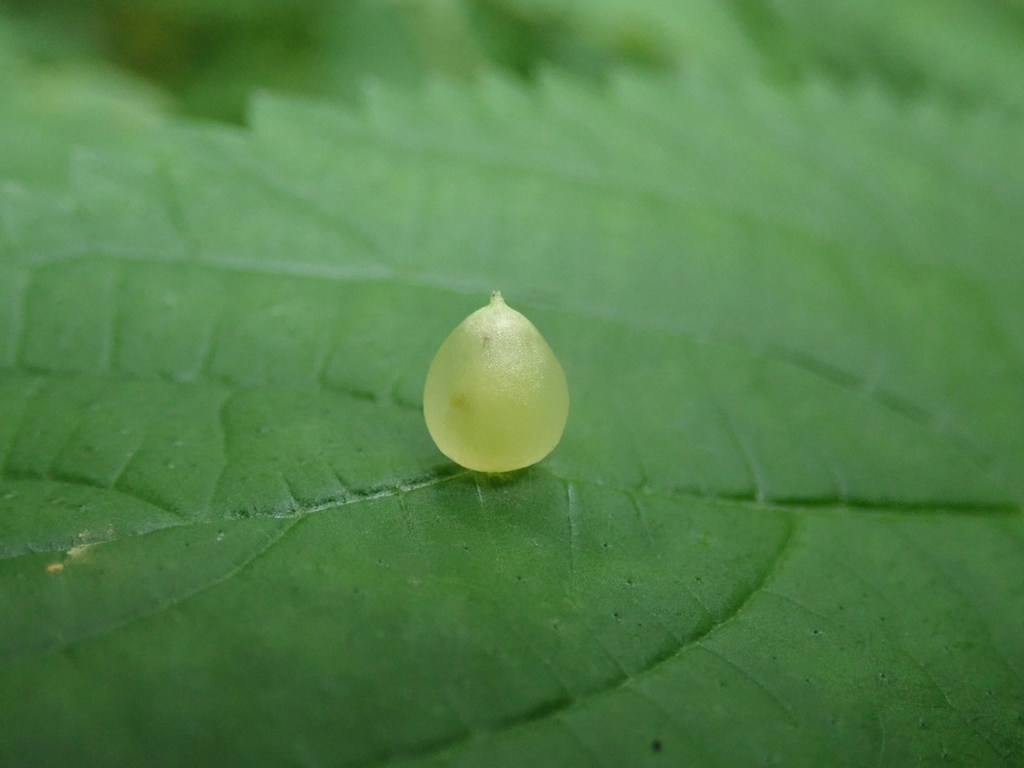
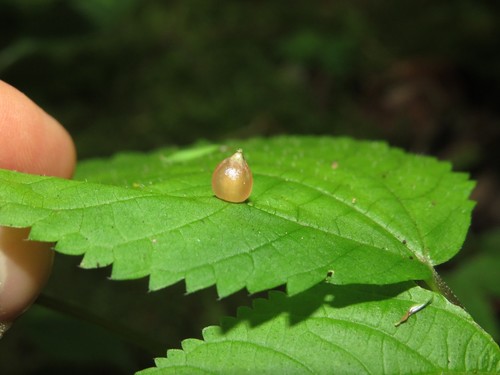
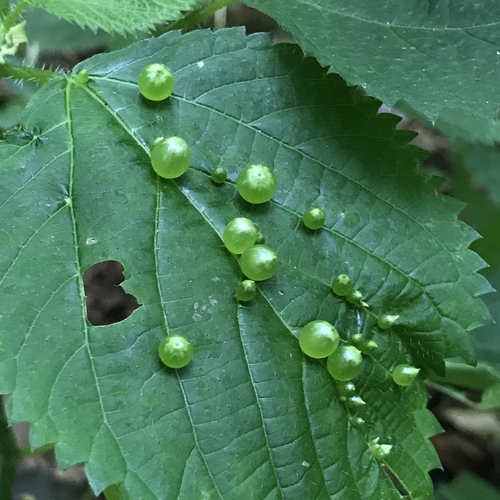
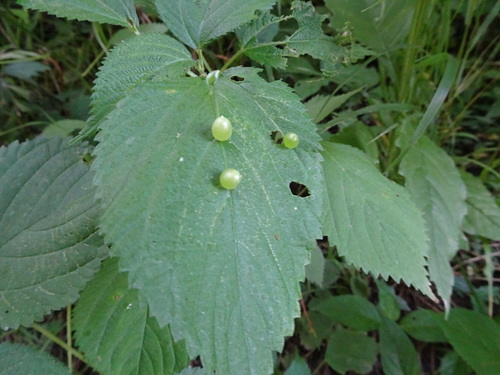
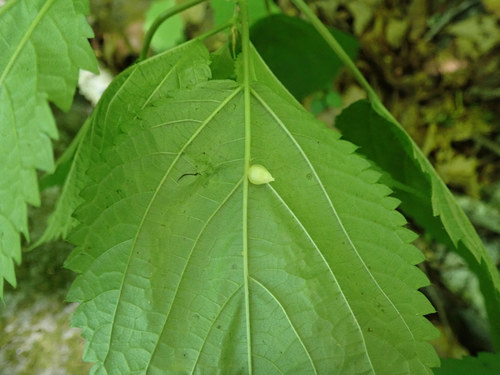
The wood nettle gall midge makes oval, globose galls that are about 4 to 5 mm wide and 8 to 12 mm long. The galls can appear pale, red, white, or greenish and are translucent. It has two generations each year, and the larva from the autumn generation overwinters inside the gall’s central chamber.
Source: Wikipedia
How to recognize it
Galls may be pale, red, white, or greenish and translucent.
Source: Wikipedia
Size
Galls are roughly 4 to 5 mm wide and 8 to 12 mm long, oval and globose in shape.
Source: Wikipedia
Life cycle
There are two generations per year; the autumn generation’s larva overwinters in the gall’s central chamber.
Source: Wikipedia
Lookalikes
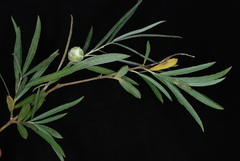
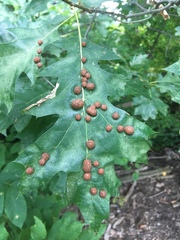
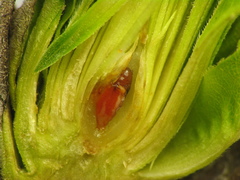
Many other Dasineura species also form galls, so identification can be tricky.
Source: Wikipedia
Where it is found in the US
Recorded in 29 of 51 states and DC. Most records: Ohio, Indiana, Illinois, Pennsylvania, Virginia, Minnesota, Missouri, Maryland.
Darker = more records. Counts are museum and citizen-science records, not population size.
Source: GBIF
Status: native in North America; native in United States; native in Canada. Source: iNaturalist
Months it is reported in the US
Source: GBIF
More photos
Same family (Cecidomyiidae)


Sources
- Wikipedia: https://en.wikipedia.org/wiki/Dasineura_investita
Look it up elsewhere: GBIF · iNaturalist · BugGuide · Wikipedia
Text written 2026-10-23 from the sources above and checked sentence by sentence against them. Data fetched 2026-10-22.